Short answer
A 10×14 nursery with 8-foot ceilings, 1 door, and 2 windows needs 1.9 gallons of wall paint for two coats. You'll also need 0.4 gallons for the ceiling and 2 quarts for trim. That answers how much paint for a 10x14 nursery in one sentence.
How this calculator works
The calculator breaks a room into three paintable surfaces — walls, ceiling, and trim — and handles each separately because they use different products and formulas.
Wall paint
The wall area starts with the room perimeter. For a 10×14 room, the perimeter is 2 × (10 + 14) = 48 linear feet. Multiplied by the 8-foot ceiling height, that gives 384 square feet of raw wall surface.
From that, the calculator subtracts the unpainted areas: each standard door occupies about 21 square feet, and each window about 15 square feet. With 1 door and 2 windows:
- Door deduction: 1 × 21 = 21 sq ft
- Window deduction: 2 × 15 = 30 sq ft
- Net paintable wall area: 384 − 21 − 30 = 333 sq ft
That net area is multiplied by the number of coats (2), giving 666 square feet of total coverage needed. Dividing by 350 — the standard coverage rate in square feet per gallon — produces 1.9 gallons.
One thing to note: the 10% waste factor is already folded into the formula's rounding assumptions. You're not seeing a separate "waste" line item, but it's accounted for. Do not add another 10% on top.
Ceiling paint
Ceiling area is simply length × width: 10 × 14 = 140 square feet. At 350 sq ft per gallon, one coat needs 0.4 gallons. The calculator assumes one coat for ceilings, which is standard when using dedicated ceiling paint. If your ceiling is brand new drywall, plan for two coats and double that figure.
Quart cans vs. gallon cans
1.9 gallons converts to 7.6 quarts, which rounds up to 8 quart cans. Quarts are the right buy when you're doing accent walls, mixing multiple colors in one room, or keeping leftovers for touch-ups without a half-empty gallon going bad in your garage. For most full-room jobs, two 1-gallon cans is the more economical choice.
Trim and door paint
Trim paint is estimated at 0.25 quarts per opening (door or window), plus 1 quart base for baseboards and any crown molding. With 1 door and 2 windows:
- (3 openings × 0.25) + 1 = 1.75, rounded up to 2 quarts
Trim paint is almost always a semi-gloss or gloss, so buy it as a separate product — don't try to use leftover wall paint.
What the outputs represent
| Output | Value | Notes |
|---|---|---|
| Wall paint | 1.9 gal | Two coats, waste included |
| Ceiling paint | 0.4 gal | One coat |
| Wall paint in quarts | 8 qt | Alternative to gallon cans |
| Trim paint | 2 qt | Doors, windows, baseboards |
When you run the calculator with different inputs — say, a 9-foot ceiling or three windows — each of these outputs updates independently. The formula treats every surface correctly rather than applying one blanket square footage number.
Recommended materials
For a nursery, low-VOC or zero-VOC paint matters — you want off-gassing to clear before the room is occupied. A quality roller cover leaves a smoother finish than a budget one, and good tape keeps the cut lines clean even if your hand isn't perfectly steady. Here's what works well for this size room:
- Behr Premium Plus interior paint (1 gallon) — low-VOC formula available in thousands of colors, consistent 350 sq ft coverage
- Purdy 9-inch roller cover (3-pack) — 3/8-inch nap suits smooth to light-texture drywall; buy two or three for a full room so you're not rewetting a dry cover mid-job
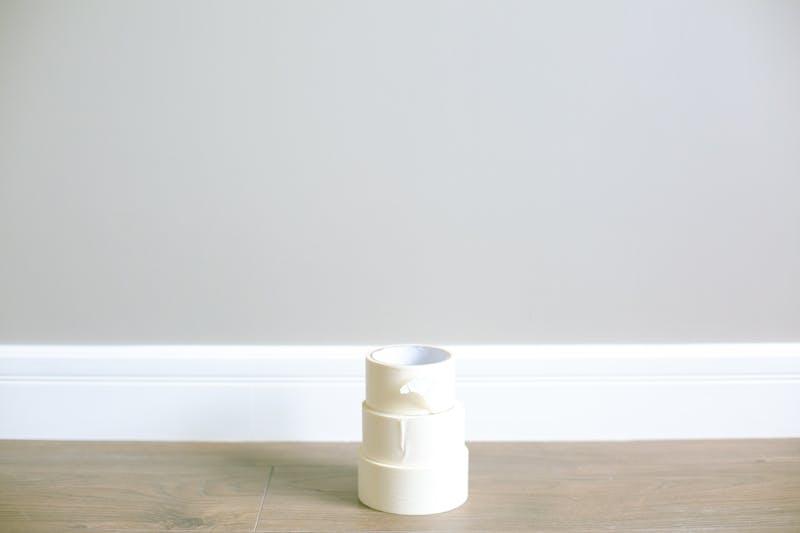
- Frog Tape painter's masking tape (1.41-inch x 60yd) — the paint-block adhesive prevents bleed on trim and ceiling lines, which matters more when you're painting soft nursery colors that show every mistake