Short answer
A 28×42 craftsman with a 6/12 pitch requires 13.15 roofing squares (1,315 square feet of sloped roof surface). To cover that area, order 44 shingle bundles (with 10% waste), 4 underlayment rolls, and 140 linear feet of drip edge.
How this calculator works
The core job of this calculator is to convert a house footprint into the actual sloped surface area your roofing crew will cover — then break that area into the materials you need to order.
From flat footprint to sloped area
Your house footprint is 28 ft × 42 ft = 1,176 square feet. That's the horizontal projection of the roof — what you'd see looking straight down from a helicopter. The actual roof surface is larger because the panels are tilted.
To get the real surface area, multiply the footprint by the pitch factor for your slope:
Roof area = length × width × pitch factor 1,314.77 sqft = 42 × 28 × 1.118
The pitch factor comes from the Pythagorean theorem. A 6/12 pitch means the roof rises 6 inches for every 12 inches of horizontal run. The ratio of the hypotenuse to the base of that triangle is √(6² + 12²) ÷ 12 = 1.118. Multiply that by the flat footprint and you get the sloped area.
Converting to roofing squares
A roofing square is simply 100 square feet. Divide the sloped area by 100:
Squares = roof area ÷ 100 13.15 squares = 1,314.77 ÷ 100
Everything downstream — shingles, underlayment, starter strips — is ordered in squares or as a multiple of squares.
Shingle bundles
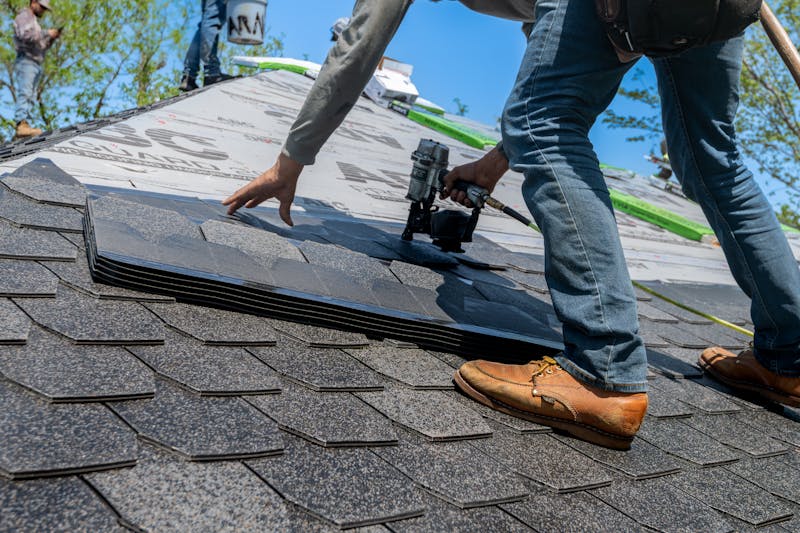
Most three-tab and architectural shingles come 3 bundles to the square (each bundle covers roughly 33.3 sqft). The calculator applies a 10% waste factor for cuts, starter course, and miscuts, then rounds up to a whole bundle:
Bundles = ceiling(13.15 × 3 × 1.10) = ceiling(43.4) = 44 bundles
Rounding up is mandatory — you can't install a fraction of a bundle, and running short mid-project means a second delivery charge and potential dye-lot mismatch.
Underlayment rolls
Synthetic underlayment rolls like GAF FeltBuster cover 10 squares (1,000 sqft) per roll. The calculator divides total squares by 4 squares per roll — a conservative figure that leaves room for overlaps at seams and around penetrations:
Rolls = ceiling(13.15 ÷ 4) = ceiling(3.29) = 4 rolls
For a 6/12 pitch without significant weather exposure, 4 rolls is the right number. If your craftsman design has a shed dormer or covered porch roof that connects at a valley, add a fifth roll.
Drip edge
Drip edge runs along every eave and rake. The calculator estimates it from the perimeter:
Drip edge = 2 × (length + width) = 2 × (42 + 28) = 140 linear feet
Drip edge comes in 10-foot sticks. 140 linear feet means 14 sticks at minimum — buy 16 to allow for overlaps (2 inches per joint) and end cuts.
Ridge cap
Ridge cap shingles are estimated at 10% of total roof area, rounded up to whole squares. For this roof that's 2 squares. Ridge cap is a separate product from field shingles — it's pre-bent and reinforced for the ridge line. Order it separately from your field shingle count.
What the calculator doesn't cover
The formula treats the roof as a simple rectangular gable. Craftsman homes often have eave overhangs that extend the drip edge run, plus hip returns or porch roofs. If your design has those features, add their footprints to the calculation separately and combine the totals.
Recommended materials
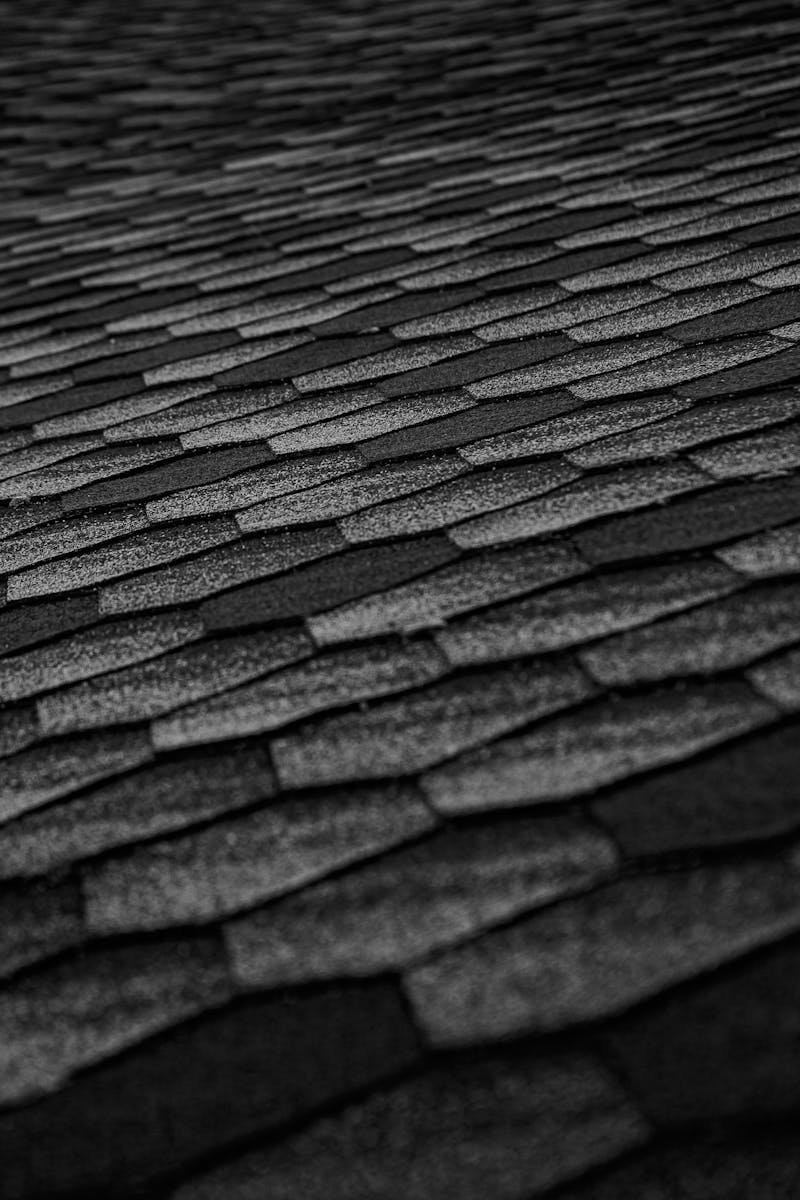
For a 28×42 roof at 6/12 pitch, the three products below cover the core material list. Architectural shingles perform better than three-tab on craftsman designs because the layered look suits the exposed rafter-tail aesthetic, and they carry longer warranties. Pair them with a quality synthetic underlayment rather than #15 felt — synthetic handles foot traffic during installation and doesn't absorb moisture if rain interrupts the job.
- GAF Timberline HDZ architectural shingles (33.3 sqft per bundle) — order 44 bundles for this roof with 10% waste included
- GAF FeltBuster synthetic underlayment (10 sq roll) — 4 rolls covers this footprint with standard overlap
- Amerimax Home Products 10 ft white drip edge — 16 sticks gives you 160 linear feet, enough for the 140 ft perimeter with overlap allowance
FAQ
How many roofing squares is a 28x42 house with a 6/12 pitch? A 28×42 footprint at a 6/12 pitch works out to 13.15 roofing squares, or roughly 1,315 square feet of actual roof surface. That accounts for the slope multiplier of 1.118 applied to the flat footprint.
What is a roofing square? One roofing square equals 100 square feet of roof surface. Contractors order shingles, underlayment, and other materials in squares because it simplifies job costing and delivery logistics.
How many shingle bundles do I need for 13.15 squares? With three bundles per square and a 10% waste factor, you need 44 bundles. Never order the exact theoretical number — cutting around valleys, hips, and penetrations always generates scrap.
What does the 6/12 pitch factor of 1.118 mean? A 6/12 pitch rises 6 inches for every 12 inches of horizontal run. The pitch factor 1.118 is the ratio of the actual rafter length to the horizontal run, so multiplying the flat footprint by 1.118 gives the true sloped surface area.
How many underlayment rolls do I need? This roof needs 4 rolls, based on one roll covering 4 squares (400 sqft). For a 6/12 pitch with synthetic underlayment, that's usually sufficient — but add a roll if you have skylights or complex valleys.
How much drip edge do I need? The perimeter of a 28×42 roof is 140 linear feet. Drip edge runs along the eaves and rakes, so order at least 140 linear feet plus 10% for overlaps and cuts.
Is 10% waste factor enough for a craftsman-style roof? Craftsman roofs often have eave overhangs and exposed rafter tails, which adds cutting complexity. If your design includes hips, multiple dormers, or decorative brackets, bump waste to 15%.
What pitch factor should I use for a different slope? Common pitch factors are: 4/12 = 1.054, 5/12 = 1.083, 6/12 = 1.118, 7/12 = 1.158, 8/12 = 1.202, 9/12 = 1.250. These come from the Pythagorean theorem applied to the rise/run triangle.
How many ridge cap shingles do I need? Ridge cap is estimated at roughly 10% of total roof area, which comes to 2 squares for this roof. Ridge cap bundles are sold separately and cover about 35 linear feet per bundle.
Should I measure the actual roof or use the footprint? The calculator uses the house footprint and multiplies by the pitch factor to get the sloped area — that's the standard approach when you're still in the planning or quoting stage. For final material orders on a complex roof, always verify with actual rafter measurements.
Does the calculator include hip and valley waste? No. The formula calculates total sloped surface with a flat 10% waste buffer. Hips and valleys generate more off-cuts than a simple gable — add an extra 5% for each hip or valley pair.
Can I use this calculator for metal roofing? The square and area outputs are valid for any roofing material. Metal panels and standing-seam systems use the same square footage, but coverage per panel and waste factors differ from shingles — check your specific product specs.