Short answer
A 30x40 house with a 6/12 pitch requires 13.4 roofing squares (1,342 square feet of roof surface). To cover that area you'll need 45 shingle bundles (with 10% waste), 4 underlayment rolls, and 140 linear feet of drip edge. This answers the question: how many roofing squares for a 30x40 house with 6/12 pitch.
How this calculator works
The core formula
Roofing squares are not the same as floor squares. Your house footprint is 30 × 40 = 1,200 square feet, but the roof surface is larger because it slopes. The calculator multiplies the footprint by a pitch factor before dividing by 100:
Roofing squares = (length × width × pitch factor) ÷ 100
For this variant:
(40 × 30 × 1.118) ÷ 100 = 13.4 squares
What the pitch factor means
The pitch factor for a 6/12 roof is 1.118. A 6/12 pitch means the roof rises 6 inches for every 12 inches of horizontal run. To find the actual rafter length per foot of run, you calculate the hypotenuse of a right triangle with legs of 6 and 12: √(6² + 12²) ÷ 12 = 1.118. Multiply your flat footprint by that number and you get the true sloped surface area.
Common pitch factors:
- 4/12 → 1.054
- 5/12 → 1.083
- 6/12 → 1.118
- 7/12 → 1.158
- 8/12 → 1.202
- 12/12 → 1.414
If you have a different pitch, swap in the correct factor before running your takeoff.
Inputs this calculator uses
House length and width — Enter the exterior footprint dimensions, not the roof overhang or fascia-to-fascia measurement. Overhangs typically add 12–18 inches per side; if you want to include them, add 2–3 feet to each dimension.
Pitch factor — The multiplier described above. The default is 1.118 (6/12 pitch). Change it to match your actual roof.
What the outputs mean
13.4 roofing squares / 1,342 sqft — This is the sloped roof surface area. Everything else is derived from it.
45 shingle bundles — Standard architectural shingles cover 33.3 sqft per bundle, so 3 bundles equal 1 square. The formula is: ceil(13.4 × 3 × 1.10). The 1.10 multiplier is the 10% waste factor covering cut shingles at valleys, rakes, hips, and any damaged pieces.
4 underlayment rolls — One roll of standard synthetic underlayment covers 4 squares (400 sqft). The formula rounds up: ceil(13.4 ÷ 4) = 4. A 10-square roll like GAF FeltBuster covers the whole roof in one shot.
140 linear feet of drip edge — Drip edge runs the full perimeter: 2 × (40 + 30) = 140 ft. Buy 10% extra for end laps and corner cuts, which puts your order at around 154 linear feet.
2 ridge cap squares — Ridge cap is estimated at 10% of total squares: ceil(13.4 × 0.10) = 2. This covers a standard ridge and any hip ridges if applicable. Verify against your actual ridge length before ordering.
A note on overhangs and penetrations
This calculator uses the footprint only. If your eaves extend 18 inches, add 3 feet to both length and width before entering values. Skylights and vents reduce net coverage slightly, but it's rarely worth deducting them — just let the waste factor absorb the difference on simple roofs.
Common mistakes and gotchas
Recommended materials
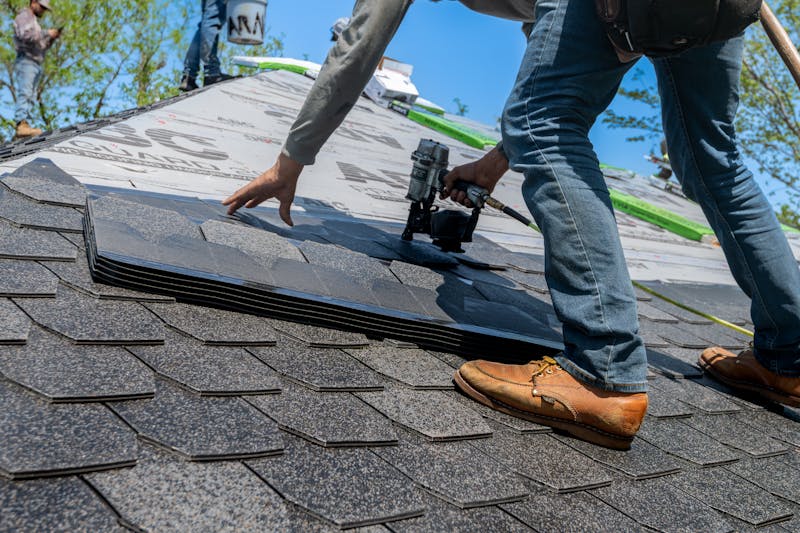
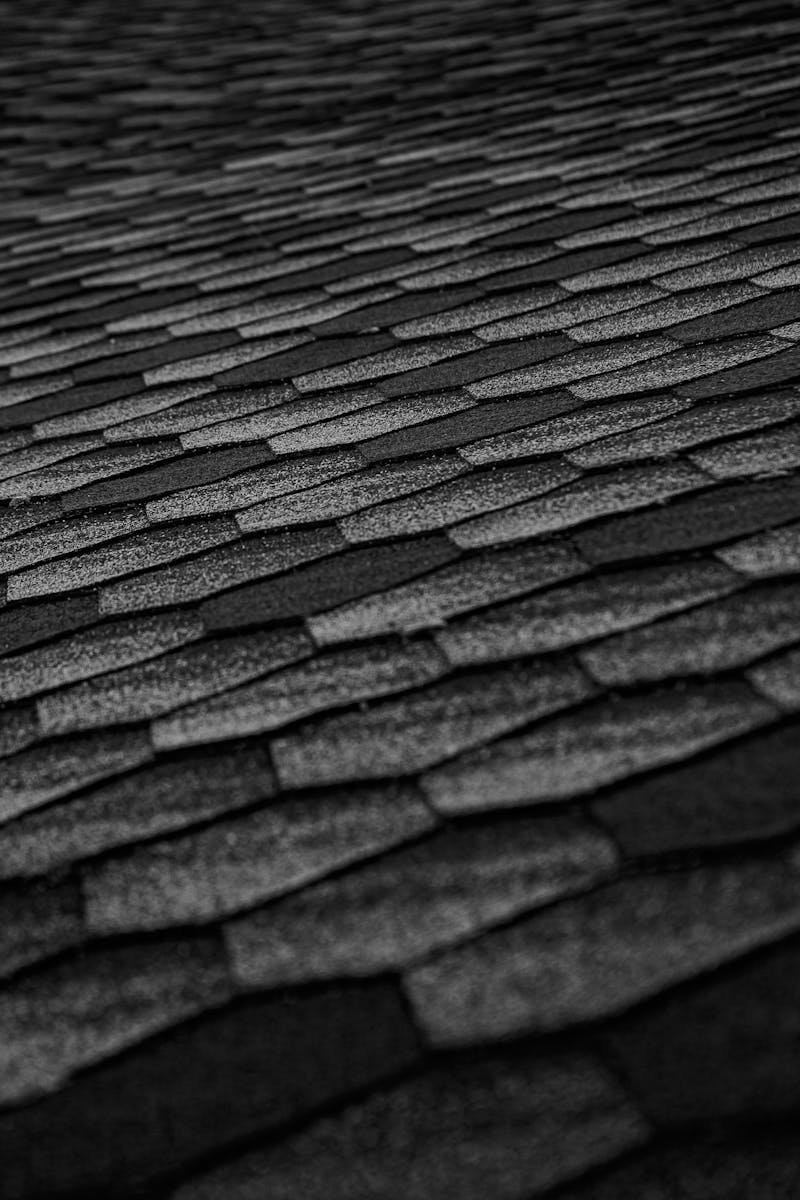
For a 30x40 house at 6/12 pitch, the materials below cover the core of any shingle roof installation. Architectural shingles are the default choice for residential re-roofs given their wind resistance and warranty terms. Pair them with a synthetic underlayment — it installs faster than felt and resists tearing in wind-exposed conditions during installation. Drip edge is required by most building codes and should be installed before underlayment on the eaves and over underlayment on the rakes.
- GAF Timberline HDZ architectural shingles (33.3 sqft per bundle) — 45 bundles covers this roof at 10% waste
- GAF FeltBuster synthetic underlayment (10 sq roll) — one roll covers the full 13.4-square roof surface
- Amerimax Home Products 10 ft white drip edge — need 15 sticks (150 linear feet) to cover the 140 ft perimeter with lap allowance
FAQ
How many roofing squares does a 30x40 house with 6/12 pitch require? A 30x40 footprint with a 6/12 pitch comes to 13.4 roofing squares, or roughly 1,342 square feet of roof surface. Order materials for at least 14 squares once you account for the 10% waste factor.
What is a roofing square? One roofing square equals 100 square feet of roof surface. Contractors and suppliers use this unit to standardize shingle orders, labor bids, and material takeoffs.
How many shingle bundles do I need for a 30x40 house at 6/12 pitch? You need 45 bundles. That figure includes 3 bundles per square and a 10% waste factor to cover cuts, starter strips, and damaged pieces.
What is a pitch factor and where does 1.118 come from? The pitch factor converts your flat footprint area into the actual sloped roof surface area. A 6/12 pitch rises 6 inches for every 12 inches of horizontal run, and its pitch factor is 1.118 — meaning the sloped surface is 11.8% larger than the footprint.
Does the 30x40 measurement refer to the house footprint or the roof edge? It refers to the house footprint — the outside dimensions of the exterior walls at ground level. The calculator multiplies that area by the pitch factor to get the true roof surface.
How many underlayment rolls do I need? For 13.4 squares you need 4 rolls, assuming each roll covers 4 squares (400 sqft). Synthetic underlayment like GAF FeltBuster comes in 10-square rolls, so a single roll covers the whole job with room to spare.
How much drip edge do I need for a 30x40 house? The perimeter of a 30x40 house is 140 linear feet. Purchase at least 150 linear feet to allow for overlaps at corners and any cuts you need to make.
Do I need ridge cap shingles in addition to regular shingles? Yes. Ridge cap covers the peak where two roof planes meet. For this roof, plan for roughly 2 squares of ridge cap material. Some contractors cut standard shingles for ridge cap; others buy dedicated ridge cap bundles.
Does a 6/12 pitch affect how long the job takes? A 6/12 pitch is walkable but steep enough to require roof jacks or a safety harness for most workers. Expect labor time to run 10–15% longer than a low-slope roof.
What waste factor should I use for a simple gable roof vs. a complex hip roof? A straightforward gable roof uses 10% waste, which this calculator applies by default. A hip roof or a roof with multiple valleys, dormers, or skylights warrants 15% waste or higher.
Can I use this calculator for a hip roof? Yes, with a caveat. Set the pitch factor for your roof's actual pitch. Add an extra 5% waste on top of the default 10% to account for the additional cuts hip roofs require.
What is the difference between architectural and 3-tab shingles for this calculation? The square footage math is the same. Both cover 33.3 sqft per bundle. The difference is weight, wind rating, and cost — architectural shingles like GAF Timberline HDZ are thicker and carry longer warranties.