Short answer
A cedar shake cottage with a 135 ft perimeter, 12 ft walls, 2 doors, and 8 windows needs approximately 10 gallons of body paint for 2 coats. That figure answers the question of how much paint for a cottage with cedar shake siding and accounts for 1,458 sq ft of paintable wall area at a 1.2 siding factor. You'll also need about 4.2 gallons of primer and 5 quarts of trim paint.
How this calculator works
The calculator breaks exterior painting into three separate quantities — body paint, trim paint, and primer — because they're bought and applied differently. Here's how each number is reached.
Step 1: Calculate paintable wall area
Start with gross wall area: perimeter multiplied by wall height. For this cottage, that's 135 ft × 12 ft = 1,620 sq ft. From that gross figure, subtract the openings. Each exterior door deducts 21 sq ft (a standard 3 ft × 7 ft door). Each window deducts 15 sq ft (a nominal 3 ft × 5 ft window). With 2 doors and 8 windows:
1,620 − (2 × 21) − (8 × 15) = 1,458 sq ft of paintable wall area.
That 1,458 sq ft number is what you're actually painting. It excludes glazing and door surfaces that take a different product.
Step 2: Apply the siding factor
Smooth siding has a 1.0 factor — meaning you paint exactly the square footage you calculate. Vinyl lap siding bumps that to 1.1 because the overlap adds hidden surface area. Cedar shake uses 1.2 because the rough, grooved texture both exposes more surface and absorbs more paint per coat.
1,458 sq ft × 1.2 = 1,749.6 effective sq ft per coat.
Step 3: Divide by coverage rate, multiply by coats
Standard exterior paint covers approximately 350 sq ft per gallon under real-world conditions. That's lower than the 400 sq ft/gal you'll see on some can labels, which assume smooth surfaces and ideal spray conditions. On cedar shake, 350 is the right number to use.
(1,749.6 sq ft ÷ 350) × 2 coats = ~10 gallons of body paint.
Step 4: Trim paint
Trim paint is estimated separately at 1 quart per 30 linear feet of trim perimeter. The cottage perimeter is 135 ft, so 135 ÷ 30 = 4.5, rounded up to 5 quarts. This covers fascia, corner boards, window casings, and door trim at one coat. Add a quart if your trim has deep profiles or you're making a dramatic color change.
Step 5: Primer
The primer estimate runs one coat at the same 350 sq ft/gal coverage but without the siding factor — primer's job is penetration, not film build. 1,458 sq ft ÷ 350 = 4.2 gallons of primer. If you're painting over previously painted shake in good condition, you may be able to spot-prime only and skip the full primer coat.
What to do with these numbers
Round up to the nearest full gallon when buying body paint. Rounding 10 gallons up to 11 gives you a practical 10% buffer for spills, sprayer waste, and touch-ups. Paint stores will mix custom colors in 1-gallon and 5-gallon increments; buying one 5-gallon bucket and six 1-gallon cans is a common approach for a project this size — it keeps some flexibility if one coat uses slightly more or less than expected.
For primer, 4.2 gallons rounds to a 5-gallon bucket, which is usually cheaper per gallon than buying individual quarts or gallons.
Recommended materials
For a cedar shake cottage, you want a paint with strong penetration and good flexibility to move with the wood through seasonal moisture swings. A high-hide formula also reduces the likelihood of needing a third coat on heavily weathered shake.
- Behr Marquee exterior paint (1 gallon) — dense, high-hide formula with good adhesion on wood substrates; self-priming on previously painted surfaces in good condition
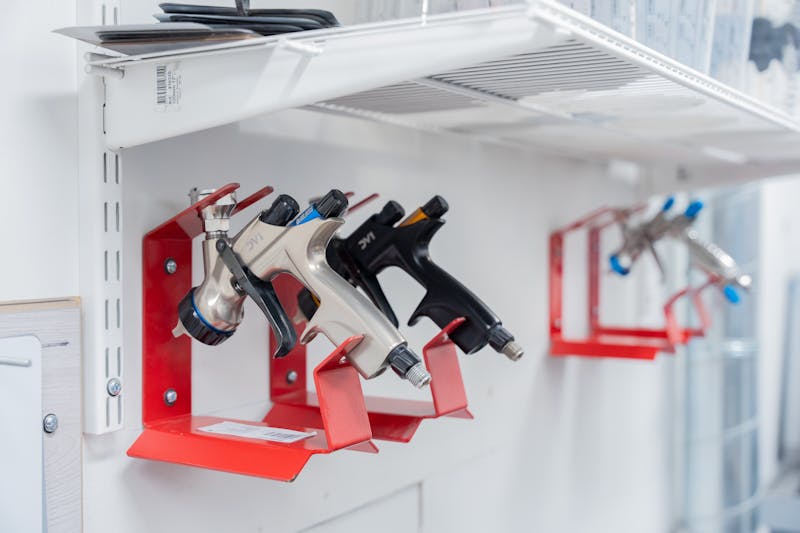
- Graco Magnum X5 airless paint sprayer — handles unthinned latex at the pressures needed to push paint into shake crevices; back-brush immediately after each pass
- Werner D1224-2 24-foot aluminum extension ladder — a 12 ft wall with soffit overhang typically puts your working height at 14–16 ft; a 24 ft ladder gives safe reach with margin
FAQ
How many gallons of paint does a cedar shake cottage need? A typical cottage with a 135 ft perimeter, 12 ft walls, 2 doors, and 8 windows needs roughly 10 gallons of body paint for 2 coats. Cedar shake's textured surface uses a 1.2 siding factor, which adds about 20% more paint compared to smooth siding.
Why does cedar shake require more paint than smooth siding? Cedar shake has deep grooves and rough face grain that absorb more paint and require more material to achieve full coverage. A 1.2 siding factor accounts for that extra surface area and absorption. Smooth painted hardboard or fiber cement uses a 1.0 factor by comparison.
Do I need primer before painting cedar shake? Yes, especially on bare or previously unpainted wood. This cottage's 1,458 sq ft of paintable wall area needs about 4.2 gallons of primer for one coat. Spot-prime any resin bleed spots with a shellac-based primer before applying latex topcoats.
How much trim paint do I need? The calculator estimates 5 quarts of trim paint for a 135 ft perimeter, based on roughly 1 quart per 30 linear feet of trim. Actual usage depends on trim width, profile complexity, and the number of coats.
Should I spray or brush cedar shake? Spraying is significantly faster and gets paint into the crevices between shakes more effectively. Back-brushing immediately after spraying pushes paint into gaps and ensures adhesion. Budget extra material — 10–15% more — when spraying because of overspray loss.
What coverage rate does this calculator use? The formula uses 350 sq ft per gallon, which is a standard conservative coverage rate for exterior paints. Premium paints marketed at 400 sq ft/gal often drop to 300–350 sq ft/gal on rough or porous surfaces like cedar shake.
How is the paintable wall area calculated? Wall area equals perimeter multiplied by wall height, then subtract 21 sq ft per door and 15 sq ft per window. For this cottage: (135 × 12) − (2 × 21) − (8 × 15) = 1,458 sq ft.
Does the 10-gallon estimate already include a waste factor? The base calculation does not automatically add a waste buffer. Add 10% — one extra gallon — to account for spills, touch-ups, and material left in the sprayer or roller tray. Buying 11 gallons is a reasonable target.
Can I use interior paint on exterior cedar shake? No. Interior paint lacks the UV inhibitors, mildewcides, and flexibility additives that exterior formulas include. Cedar expands and contracts with moisture; interior paint will crack and peel within a season.
How long does it take to paint a cottage exterior with cedar shake? A two-person crew using a sprayer with back-brushing typically covers 800–1,000 sq ft per day on cedar shake. This cottage's 1,458 sq ft of wall area would take roughly 2 days for one coat, or 4 days for two coats.
What is the best time of year to paint cedar shake? Paint when air and surface temperatures are between 50°F and 85°F, with no rain forecast for 24–48 hours. Spring and early fall are ideal in most climates. Avoid painting in direct afternoon sun, which causes the paint to dry too fast and creates lap marks.