Short answer
A 14×16 living room with 9-foot ceilings, 1 door, and 3 windows needs 2.71 gallons of wall paint for 2 coats. Buy 3 gallons to have a small amount left for touch-ups. You'll also need roughly 0.64 gallons (buy 1 gallon) for the ceiling and 2 quarts for trim and doors. That's the full paint order for this room.
How this calculator works
The calculator starts with the total wall area, subtracts the openings, multiplies by the number of coats, and divides by the paint's coverage rate. Here's what each piece means in practice.
Wall area
The four walls of a 14×16 room with 9-foot ceilings have a combined surface area of 540 square feet before subtracting anything. The formula computes this as the perimeter (2 × (length + width)) multiplied by the wall height: 2 × (14 + 16) × 9 = 540 sq ft.
Subtracting doors and windows
You're not painting the door or window glass, so those areas come off the total. The calculator deducts 21 sq ft per door (a standard 3 ft × 7 ft opening) and 15 sq ft per window. With 1 door and 3 windows in this room: 540 − 21 − 45 = 474 sq ft of actual paintable wall surface.
Coats
Two coats means you're covering that 474 sq ft twice: 474 × 2 = 948 sq ft total paint application.
Coverage rate
Most interior latex paints cover approximately 350 sq ft per gallon under normal conditions on smooth drywall. The calculation divides the total application area by 350: 948 ÷ 350 = 2.71 gallons.
The store sells gallons, so round up to 3.
Ceiling paint
Ceiling square footage is simply length × width: 14 × 16 = 224 sq ft. At 350 sq ft per gallon, one coat requires 0.64 gallons. Buy 1 gallon—you won't find anything smaller that covers this area, and leftover ceiling paint stores well for touch-ups.
Trim and doors
The calculator estimates trim paint separately using a rule of thumb: 0.25 quarts per opening (door or window) plus 1 base quart. For 1 door + 3 windows: (4 × 0.25) + 1 = 2 quarts. Trim is typically painted in semi-gloss or gloss, which is a different product from your wall paint, so treat this as a separate purchase.
Why 350 sq ft per gallon?
Paint manufacturers publish coverage rates on the can, and most interior paints land between 300 and 400 sq ft per gallon on smooth, primed surfaces. The calculator uses 350 as a practical middle figure. If your walls are textured (orange peel, knockdown), expect closer to 300 sq ft per gallon and adjust upward by about 15%. Check your specific product's label before finalizing your order.
What the output doesn't include
Primer is not factored in. If you're painting new drywall, covering a very dark or saturated color, or dealing with stains, add a primer coat—estimate the same coverage rate and add it to your total. This calculator also doesn't account for ceilings taller than the input value or irregular wall shapes like vaulted sections; for those, break the room into rectangular sections and add them up manually.
Reading the quart-can output
If you'd rather buy quarts, the secondary output shows 11 quarts for the walls. That's mathematically correct, but 11 quarts costs more than 3 gallons at any paint counter. The quart figure is most useful if you're ordering a custom-mixed color and want to confirm you're not buying more than you'll use.
Recommended materials
For a room this size, a high-hide interior latex in eggshell or satin finish works well on walls—eggshell for low-traffic areas, satin if the room sees kids or pets. A quality roller cover makes a measurable difference in finish smoothness and reduces the number of passes needed. Tape the trim before rolling to keep edges clean.
- Behr Premium Plus interior paint (1 gallon) — a widely available, mid-range paint with good hide; rated for 400 sq ft/gallon on smooth surfaces, though 350 is a safer planning figure
- Purdy 9-inch roller cover (3-pack) — 3/8-inch nap is the right choice for smooth to slightly textured drywall; swap covers between coats for a cleaner finish
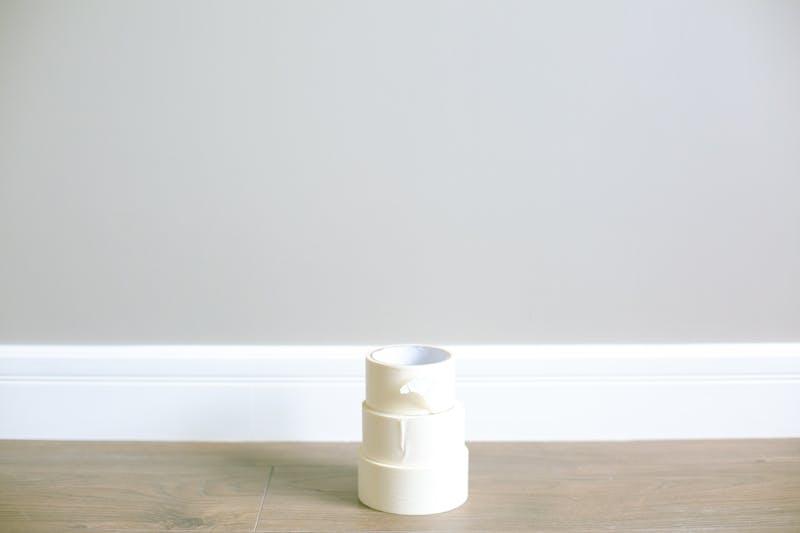
- Frog Tape painter's masking tape (1.41-inch x 60yd) — worth using along the ceiling line and around trim; the paint-block adhesive reduces bleed-through compared to standard blue tape
FAQ
How many gallons of paint do I need for a 14x16 living room with 2 coats? You need approximately 2.7 gallons of wall paint for two coats on a 14×16 room with 9-foot ceilings, 1 door, and 3 windows. Buying 3 full gallons gives you a small buffer for touch-ups.
Do I need a separate paint for the ceiling? Yes. Ceiling paint is formulated to resist spattering and hide lap marks. For a 14×16 ceiling, you need about 0.64 gallons—one quart won't cover it, so buy a full gallon and keep the rest for touch-ups.
How much trim paint do I need for 1 door and 3 windows? For 1 door and 3 windows, estimate 2 quarts of trim paint. Trim paint is typically a semi-gloss or gloss finish and is sold separately from wall paint.
Can I buy quarts instead of gallons for wall paint? You could, but it's less economical. You'd need 11 quarts to cover the walls with 2 coats, and 11 quarts costs significantly more than 3 gallons. Buy gallons unless you only need a small amount.
What coverage rate does this calculator use? The calculator uses 350 square feet per gallon, which is a standard mid-range coverage rate for most interior latex paints. Thick paints or textured walls may cover less—check your specific product's label.
Should I add a waste factor on top of the calculated amount? The formula already accounts for realistic coverage. Rounding up to the next whole gallon provides adequate buffer for most rooms. If your walls are heavily textured or you're painting over a dark color, add 10% extra.
Does the calculator include primer? No. If you're painting bare drywall, a new color over a very dark wall, or covering stains, you'll need a separate coat of primer. Primer coverage is also roughly 350 sq ft per gallon.
What counts as a standard door or window size in this formula? The formula deducts 21 sq ft per door (a standard 3×7 opening) and 15 sq ft per window. If your doors or windows are significantly larger, the actual paint needed may be slightly less than calculated.
How do I convert the gallon amount to paint cans at the store? Round 2.71 gallons up to 3 gallons. Most interior paint is sold in 1-quart, 1-gallon, and 5-gallon containers. Three 1-gallon cans is your best bet for this room size.
Does paint coverage change between brands or sheens? Yes. Flat and matte sheens tend to spread a bit further, while glossy finishes may require a thinner film and cover less. Always check the coverage rate printed on the can—most fall between 300 and 400 sq ft per gallon.
Is 2 coats always necessary? Two coats is standard for most color changes and for achieving a uniform finish. If you're repainting with the same color and the existing coat is in good condition, one coat may be enough—but two coats produces a noticeably better result.
Can I use the same paint for walls and ceiling? You can, but ceiling paint is formulated to minimize drips and spatter overhead. Using wall paint on the ceiling isn't wrong, but the finish may not be as clean and flat, and touch-up coverage can be inconsistent.