Short answer
A 16x20 great room with 10-foot ceilings, 2 doors, and 4 windows needs 3.6 gallons of wall paint for two coats. You'll also need 1 gallon for the ceiling (one coat) and 3 quarts for trim. Round wall paint up to 4 gallons to cover touch-ups.
How this calculator works
The calculator figures out how many gallons of paint you actually need by working through the paintable surface area step by step, then dividing by realistic coverage.
Wall area
The perimeter of a 16x20 room is 72 linear feet (2 × 16 + 2 × 20). Multiply that by the 10-foot ceiling height and you get 720 square feet of wall surface before any deductions.
Door and window deductions
Not every square foot of wall gets painted. Each standard door is treated as 21 sq ft (a 3×7 opening), and each window is treated as 15 sq ft (roughly 3×5). This room has 2 doors and 4 windows:
- Door deduction: 2 × 21 = 42 sq ft
- Window deduction: 4 × 15 = 60 sq ft
- Net wall area: 720 − 42 − 60 = 618 sq ft
Coats
Multiply the net wall area by the number of coats — 2 in this case — to get total paint-loaded square footage: 618 × 2 = 1,236 sq ft.
Coverage rate
Most paint manufacturers print 400 sq ft per gallon on the label. That number assumes a perfectly smooth, primed surface and ideal application conditions. Real drywall — especially with eggshell or flat finishes applied by roller — runs closer to 350 sq ft per gallon. Divide 1,236 by 350: 3.53 gallons, which rounds up to 3.6 gallons for planning.
Ceiling paint
The ceiling is simply floor area: 16 × 20 = 320 sq ft. At 350 sq ft per gallon, one coat takes 0.91 gallons. One gallon covers it with a small reserve.
Quart option
If you prefer to buy quarts instead of gallons, the calculator converts: 3.53 gallons × 4 = 14.1, rounded up to 15 quarts. In practice, four 1-gallon cans cost significantly less than 15 quarts, so gallons win unless you need multiple custom colors.
Trim estimate
Trim paint covers door casings, window casings, and baseboards. The formula adds the number of doors and windows together, multiplies by 0.25 quarts per opening, then adds 1 quart for baseboard. For this room: (2 + 4) × 0.25 + 1 = 2.5, rounded up to 3 quarts. Trim paint is usually semi-gloss or gloss and sold separately from wall paint.
What the output doesn't cover
The calculator handles walls, ceiling, and trim as three separate purchase decisions. It does not account for:
- Primer coats — if you're making a drastic color change, add a separate primer purchase
- Textured walls (heavy orange peel or knockdown) — increase your gallon estimate by 10–15%
- Waste from paint left in the roller tray or dried on the roller between sessions
For a great room this size, buying 4 gallons of wall paint, 1 gallon of ceiling paint, and 3 quarts of trim paint will cover the job with a small buffer.
Recommended materials
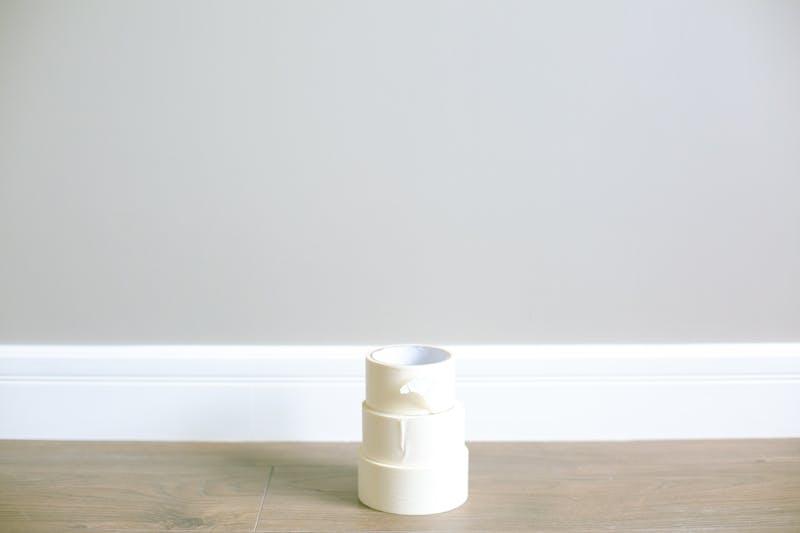
For a room this size, stick with a quality interior paint that has good hide — you don't want to discover thin coverage after the second coat is dry. A low-nap roller cover (3/8-inch) works well on smooth or lightly textured drywall and minimizes stippling. Painter's tape at the ceiling line and along trim makes cleanup fast and keeps edges sharp.
- Behr Premium Plus interior paint (1 gallon) — solid hide and washability for living areas; available in eggshell and satin finishes
- Purdy 9-inch roller cover (3-pack) — professional-grade covers that hold enough paint to work efficiently without shedding fibers
- Frog Tape painter's masking tape (1.41-inch x 60yd) — the micro-porous edge seals against bleed-through better than standard masking tape
FAQ
How many gallons of paint does a 16x20 great room need?
For walls with 10-foot ceilings, 2 doors, and 4 windows, you need about 3.6 gallons for two coats. Rounding up to 4 gallons gives you a safe margin for touch-ups.
How much ceiling paint do I need for a 16x20 room?
A 16x20 ceiling is 320 square feet. At 350 square feet per gallon, one coat takes just under 1 gallon — buy 1 gallon and you'll have a little left over.
Do I really need two coats of paint?
For most color changes, yes. Going from white to a dark color or from dark to light almost always requires two coats to avoid bleed-through. If you're painting over the same color with a quality paint, one coat can work.
How many square feet does a gallon of paint cover?
Most interior paints advertise 350–400 sq ft per gallon on smooth, primed surfaces. This calculator uses 350 sq ft per gallon, which is more realistic on drywall with texture.
Should I buy quarts or gallons?
For 3.6 gallons of wall paint, buying four 1-gallon cans is more economical than 15 quarts. Use quarts only if you're doing small accent walls or need a different finish for trim.
What size is a standard door for paint calculations?
This calculator deducts 21 square feet per door, which matches a standard 3-ft x 7-ft door. If you have double doors or unusually tall doors, the actual unpainted area is larger.
What size is a standard window for paint calculations?
Each window is treated as 15 square feet — roughly a 3-ft x 5-ft opening. Smaller or larger windows will shift your real totals slightly, but for planning purposes this is a solid average.
How much trim paint do I need for a 16x20 room?
With 2 doors and 4 windows, the calculator estimates 3 quarts for trim and door casings. That covers baseboards, window casings, and door frames for a room this size.
Does the calculator account for waste?
The formula is based on 350 sq ft per gallon, which already builds in a realistic coverage rate rather than the optimistic 400 sq ft figure on many paint cans. Add one extra quart if you anticipate significant roller waste or a heavily textured wall.
Can I use the same paint for ceiling and walls?
You can, but ceiling paint is typically flat sheen and formulated to minimize spatter and hide roller marks. Using wall paint on the ceiling works in a pinch but you may see more lap marks.
What if my great room has a vaulted ceiling?
Vaulted ceilings have more surface area than a flat ceiling. Measure the actual slope length from wall to peak rather than using the floor dimensions, and increase your ceiling estimate accordingly.
How do I handle an accent wall in my calculation?
Run the calculator for the full room first, then subtract one wall's square footage from the main color total and add it to a separate accent color purchase. For a 16x20 room with 10-ft ceilings, one long wall is 200 sq ft — about 1.2 gallons per coat.