Short answer
A 6×10 narrow walkway laid with 4×8 inch pavers needs 284 pavers, including a 5% waste allowance for cuts and breakage. The walkway covers 60 square feet and also requires 0.74 cubic yards of base aggregate, 5 cubic feet of setting sand, and 1 bag of polymeric sand.
How this calculator works
The calculator converts your walkway dimensions and paver size into a final count you can bring to the supply yard. Here's what's happening at each step.
Area calculation
Length (6 ft) × width (10 ft) = 60 square feet. Straightforward.
Pavers per square foot
A 4×8 inch paver covers 32 square inches. There are 144 square inches in a square foot, so each paver covers 32 ÷ 144 = 0.222 square feet. Flip that and you get roughly 4.5 pavers per square foot.
For 60 square feet: 60 × 4.5 = 270 pavers at perfect coverage with zero waste.
Waste factor
No real installation hits zero waste. Edge cuts, snapped pieces, and the occasional wrong measurement all pull from your paver count. The calculator applies a 5% waste factor:
270 × 1.05 = 283.5, rounded up to 284 pavers.
For a straight running-bond or stacked layout, 5% is tight but workable. If you're running herringbone at 45°, or your walkway has a curved section, bump the waste to 10–15% in your head.
Base aggregate
A 4-inch compacted crushed stone base over 60 square feet:
(60 sq ft × 4/12 ft depth) ÷ 27 = 0.74 cubic yards
Order this as "crusher run," "road base," or "3/4-inch compactable gravel" depending on your region. The base needs to compact to 4 inches after tamping — order a little extra because loose material compacts roughly 15–20%.
Setting sand (bedding layer)
A 1-inch sand bed over 60 square feet = 60 × (1/12) = 5 cubic feet. Use coarse concrete sand, not mason sand. Mason sand is too fine and will shift under load. Screed it flat, don't tamp it before laying pavers — you'll tamp everything together after setting.
Polymeric sand (joint fill)
One 50 lb bag covers approximately 80 square feet, so a 60-square-foot walkway needs 1 bag. Polymeric sand is swept into the joints dry, then activated by misting with water. It hardens to lock joints and resist weeds and ants.
Why the formula rounds up with ceil()
You can't buy 283.5 pavers. The formula always rounds up to the nearest whole paver so you don't arrive at the job site one piece short.
Inputs you control
- Patio/walkway length and width — measure the finished surface, not the excavation footprint.
- Paver width and length — this variant uses 4×8 inch pavers. If you switch to 6×9 inch pavers for the same area, the count drops to roughly 124 pavers (the calculator will recompute automatically when you change those inputs).
What the calculator doesn't account for
It doesn't factor in joint spacing. Most concrete pavers are installed tight or with a 1/16-inch gap, which has minimal effect on count at this scale. It also assumes a rectangular layout — for L-shaped or irregular walkways, run each rectangle separately and add the results.
Recommended materials
For a 6×10 walkway, the material list is short enough that one hardware store trip can cover everything except the bulk base gravel. Concrete pavers in the 4×8 range are widely stocked, and the other materials are standard paving supplies.
- Pavestone Holland 6x9 inch concrete paver — a close size to this layout; verify dimensions at the store if you want to stick to 4×8
- QUIKRETE all-purpose gravel (50 lb bag) — for base fill where bulk delivery isn't practical on a small walkway
- SAKRETE polymeric sand (50 lb) — one bag covers this entire walkway with coverage to spare
- Pavestone EdgePro paver restraint (8 ft) — two sections handles the perimeter of a 6×10 walkway; spike into the base, not just the soil
FAQ
How many 4x8 pavers do I need for a 6x10 walkway? You need 284 pavers, including a 5% waste factor. That accounts for cuts at the edges and any pieces that crack during installation.
Why does the calculator add a 5% waste factor? Edge cuts, breakage from a wet saw or splitter, and the occasional miscut all consume pavers that never end up in the ground. 5% is the standard minimum for a straight walkway; add another 5% if your pattern runs diagonal.
How much base gravel does a 6x10 walkway need? A 4-inch compacted base requires about 0.74 cubic yards of crushed stone or base aggregate. That's roughly one and a half standard contractor wheelbarrow loads.
How much setting sand do I need? A 1-inch bedding layer over 60 square feet requires 5 cubic feet of coarse concrete sand. Buy it in bulk if possible — bagged sand gets expensive fast for even a small walkway.
How many bags of polymeric sand do I need? One 50 lb bag covers about 80 square feet, so a 60-square-foot walkway needs just 1 bag. Buy two if you want a backup — leftover polymeric sand stores well if resealed.
What's the difference between polymeric sand and regular jointing sand? Polymeric sand contains a binder that activates when wet and locks the joint solid after drying. Regular sand washes out over time and lets weeds establish in the joints. For a permanent installation, polymeric sand is worth the extra cost.
Do I need paver edging restraints on a narrow walkway? Yes. Without edge restraints, the outside course of pavers migrates outward over time, opening joints and causing the whole field to shift. Plastic or aluminum restraint spiked into the base holds everything in line.
Can I lay 4x8 pavers without a wet saw? Straight layouts with perpendicular cuts can be done with a rented paver splitter, which is faster and cheaper than a wet saw. If you have angled cuts or radius edges, a wet saw gives cleaner results.
How thick should the compacted base be for a walkway? 4 inches of compacted crushed stone is the standard for foot-traffic walkways. In freeze-thaw climates, some installers go to 6 inches to prevent frost heave — recalculate your gravel quantity if you go deeper.
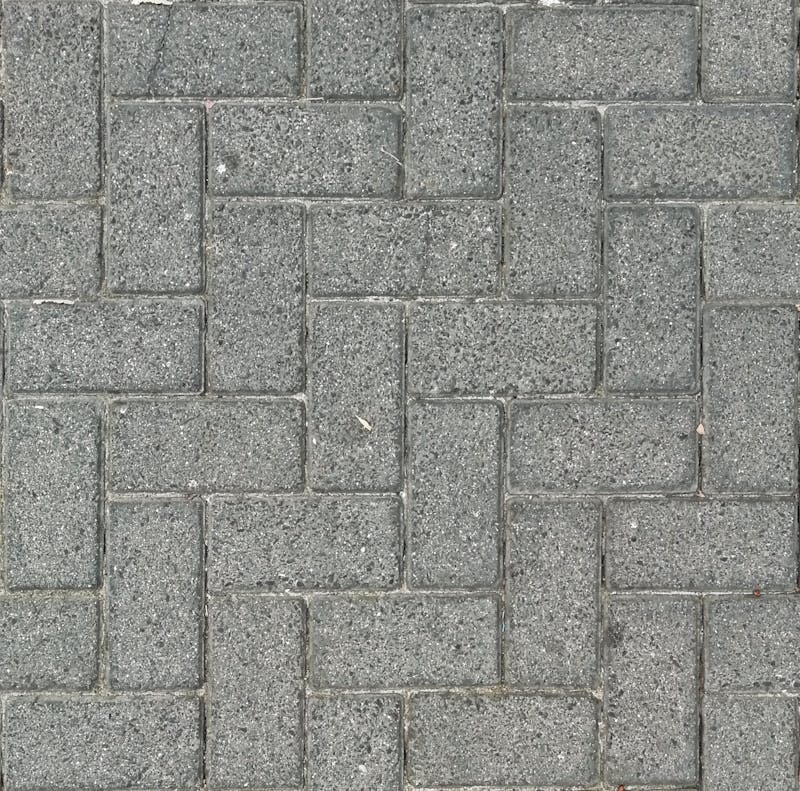
What pattern should I use for a narrow walkway with 4x8 pavers? Running bond (staggered like brickwork) is the most common for narrow walkways and gives good interlocking strength. Herringbone at 45° locks even better but wastes more material on the angled edge cuts.
How do I calculate pavers if my walkway is not a simple rectangle? Break the shape into rectangles, calculate each section separately, then add the totals together before applying the waste factor. If there are large curved sections, add 10–15% waste instead of 5%.
How long does it take to lay a 6x10 paver walkway? An experienced DIYer can complete a 60-square-foot walkway — including base prep, sand screeding, setting, and jointing — in a full weekend. Base excavation is usually the most time-consuming step.