Short answer
A 36×48 farmhouse with a 12/12 steep pitch requires 24.4 roofing squares (2,443 sq ft of actual roof surface). That works out to 81 shingle bundles with a 10% waste factor, 7 underlayment rolls, and 168 linear feet of drip edge. The steep 12/12 pitch adds 41% more surface area compared to ordering off the footprint alone.
How this calculator works
The inputs
Three numbers drive the calculation: house length, house width, and pitch factor.
Length and width (48 ft × 36 ft here) are the plan-view footprint dimensions — what you'd see on a floor plan or measure at the foundation. They are not the sloped rafter lengths. If you're measuring an existing structure, run a tape along the exterior wall at ground level, not up the roof slope.
Pitch factor converts the flat footprint into actual sloped surface area. A 12/12 pitch — the defining characteristic of a steep farmhouse roof — means the roof rises 12 inches vertically for every 12 inches of horizontal run. That's a true 45-degree angle. The pitch factor comes from the Pythagorean theorem: for a 12/12 pitch, √(12² + 12²) ÷ 12 = √2 = 1.414.
Common pitch factors for reference:
- 4/12 (low-slope): 1.054
- 6/12 (moderate): 1.118
- 8/12 (steep): 1.202
- 10/12 (very steep): 1.302
- 12/12 (farmhouse steep): 1.414
The formula
Roof area = length × width × pitch_factor
           = 48 × 36 × 1.414
           = 2,443 sq ft

Roofing squares = roof area ÷ 100
                = 24.4 squares
Roofing squares are the unit the industry uses for estimating. One square = 100 sq ft. Your shingle manufacturer, roofing contractor, and supplier all quote in squares, so converting early keeps the math consistent.
Secondary outputs explained
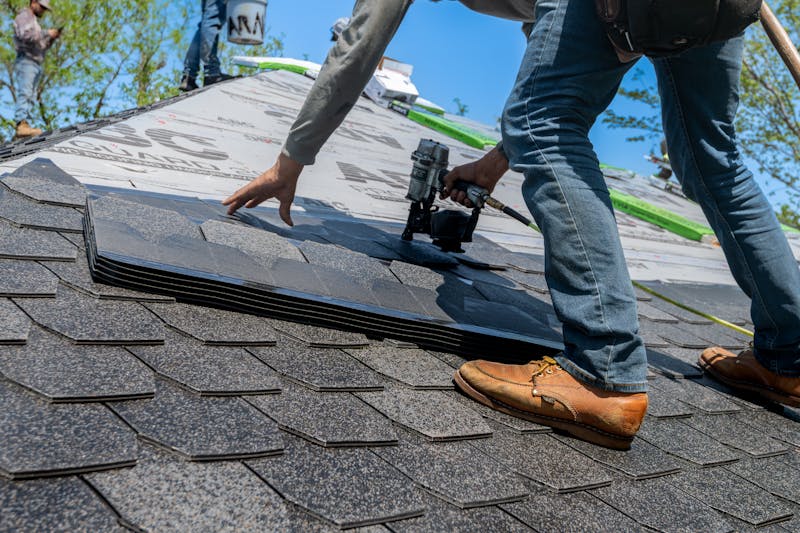
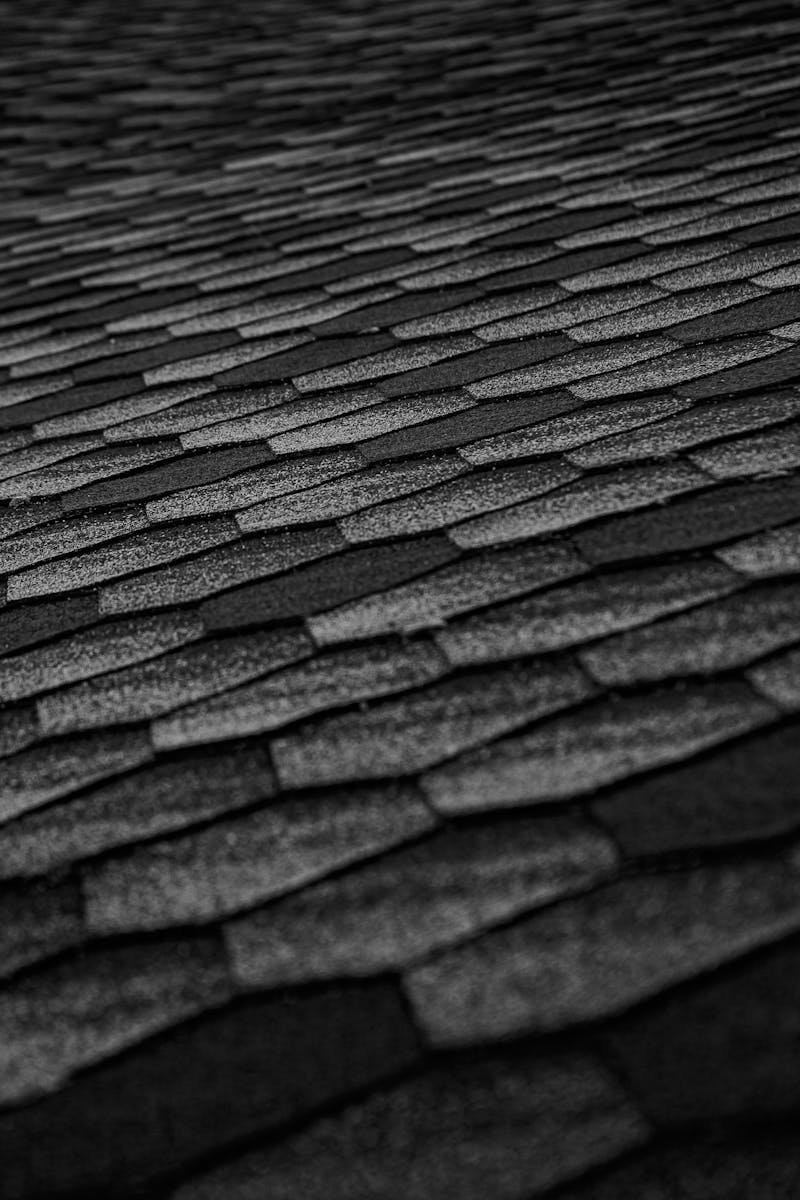
Shingle bundles (81): Most architectural shingles — including GAF Timberline HDZ — ship 3 bundles per square. The formula is: 24.4 squares × 3 bundles × 1.10 waste factor = 80.5, rounded up to 81 bundles. The 10% waste accounts for starter course, cuts at rakes and valleys, and the occasional damaged bundle. On a simple gable farmhouse, 10% is a minimum — add more if your roof has dormers or a complex ridge.
Underlayment rolls (7): The calculator uses 1 roll per 4 squares (each roll covers a 10-square area in the secondary output formula, but the division here uses the 4-squares-per-roll field value). You need coverage for 24.4 squares: 24.4 ÷ 4 = 6.1, rounded up to 7 rolls. Always round up — running out of underlayment mid-installation is a one-day delay you don't need.
Drip edge (168 linear feet): Drip edge runs the full perimeter of the roof deck: 2 × (48 + 36) = 168 ft. Drip edge sections are typically 10 ft each, so order 17–18 pieces. The extra piece covers corner miters.
Ridge cap (3 squares): Ridge cap uses approximately 10% of total roof area in material. For 24.4 squares: ceil(24.4 × 0.10) = 3 squares. Most ridge cap bundles cover one square; check your specific product.
What the output does not include
The calculator doesn't account for skylights, chimneys, or dormers — those reduce net shingle area but add valley flashing and extra cuts. It also doesn't calculate flashing, nails, or roof deck repair. For a complete material list on a major re-roof, treat this calculator as the shingle and underlayment baseline, then add flashing and fasteners separately.
Recommended materials
For a steep 12/12 farmhouse roof, material quality matters more than on low-slope work — wind uplift and ice dam risk are both higher. Architectural shingles with a Class 4 impact rating and synthetic underlayment designed for steep applications are the right combination for this pitch.
- GAF Timberline HDZ architectural shingles (33.3 sqft per bundle) — 33.3 sq ft per bundle, three bundles per square. The HDZ nail zone is wider than most competitors, which reduces misses during steep-pitch installation. You need 81 bundles for this project.
- GAF FeltBuster synthetic underlayment (10 sq roll) — Rated for extended exposure up to 6 months. Skid-resistant surface is worth it at 12/12 where workers spend more time on each section. You need 7 rolls.
- Amerimax Home Products 10 ft white drip edge — Pre-formed aluminum, cuts cleanly with tin snips. You'll need 17–18 pieces to cover 168 linear feet.
FAQ
What is a roofing square? One roofing square equals 100 square feet of roof surface. It's the standard unit roofers use to price labor and order materials. A 24.4-square roof has roughly 2,443 square feet of actual surface area.
Why does a 12/12 pitch increase the square count so much? A 12/12 pitch means the roof rises 12 inches for every 12 inches of horizontal run — a 45-degree angle. The pitch factor of 1.414 means every horizontal square foot of footprint becomes 1.414 square feet of actual sloped surface. That adds more than 40% more material compared to a flat roof.
How do I convert roofing squares to shingle bundles? Most architectural shingles — including GAF Timberline HDZ — come 3 bundles per square. Multiply your square count by 3, then add 10% for waste and cuts. For 24.4 squares: 24.4 × 3 × 1.10 = 81 bundles.
Does the 36×48 measurement refer to the house footprint or the actual roof surface? The 36×48 dimensions are the house footprint — the plan-view rectangle. The calculator multiplies that area by the pitch factor to get actual sloped surface. Never order shingles based on footprint alone on a steep roof like this.
How many shingles do I need for the ridge cap? Ridge cap typically covers about 10% of the total roof area. For this 24.4-square roof, that rounds up to 3 squares of ridge cap material. Many manufacturers sell dedicated ridge cap bundles separately from field shingles.
What does the pitch factor 1.414 come from? The pitch factor is derived from the Pythagorean theorem applied to the roof slope triangle. For a 12/12 pitch, the rafter length per 12 inches of run is √(12² + 12²) ÷ 12 = √2 ≈ 1.414. This converts horizontal area to true slope area.
Is 10% waste realistic for a steep farmhouse roof? On a straightforward gable farmhouse with minimal valleys and no skylights, 10% is a reasonable minimum. Roofs with dormers, hip sections, or multiple valleys often need 12–15%. If your farmhouse has dormers, order a few extra bundles before the project starts — shingle dye lots can vary.
How much drip edge do I need? Drip edge runs the full perimeter: 2 × (48 + 36) = 168 linear feet. Drip edge typically comes in 10-foot sections, so you'd need 17 pieces. Buy 18 to account for cuts at corners.
Can I use felt paper instead of synthetic underlayment on a 12/12 pitch? You can, but synthetic underlayment is strongly recommended at 12/12. Steep pitches take longer to shingle, leaving underlayment exposed to weather longer. Synthetics like GAF FeltBuster resist tearing in wind and won't wrinkle or absorb moisture the way felt does.
How do I account for a hip roof vs. a gable roof on this size house? The pitch factor handles slope regardless of roof style. However, a hip roof has more hip and valley runs, which increases cut waste. Use 12–15% waste instead of 10% for a full hip configuration, which adds 4–6 bundles to the order for this footprint.
Does the calculator include the garage or additions? No. This calculation covers the main 36×48 footprint only. Measure any attached garages, dormers, or additions separately, calculate their squares using the same pitch factor if the pitch matches, then add them to the total.
What's the labor cost implication of a 12/12 pitch? Steep-pitch work above 9/12 typically carries a surcharge from roofing contractors — often 20–40% on top of standard pricing — because workers need safety equipment and work more slowly. The material count is the same; the labor rate is what changes.