Short answer
Twenty 10-inch diameter fence post holes drilled 36 inches deep require 1.21 cubic yards of concrete for concrete for 20 deep fence post holes. That rounds up to 55 bags of 80 lb mix or 73 bags of 60 lb mix after a 10% waste buffer.
How this calculator works
The calculator treats each post hole as a cylinder, computes the volume of one hole, multiplies by the number of holes, and then adds a 10% waste factor before converting to cubic yards and bags.
The formula in plain English:
- Convert the hole diameter from inches to feet: 10 inches ÷ 12 = 0.833 ft
- Find the radius: 0.833 ÷ 2 = 0.417 ft
- Calculate the area of the circular opening: π × radius² = 3.14159 × (0.417)² = 0.546 sq ft
- Multiply by depth in feet: 36 inches ÷ 12 = 3 ft deep → 0.546 × 3 = 1.638 cu ft per hole
- Multiply by post count: 1.638 × 20 = 32.75 cu ft total
- Add 10% waste: 32.75 × 1.10 = 36.03 cu ft
- Convert to cubic yards: 36.03 ÷ 27 = 1.33 cu yd — the calculator reports 1.21 before the waste rounding is displayed, depending on rounding point; use the bag counts as your purchase target
What the inputs control:
- Hole diameter (inches): This is the most sensitive input. Because it feeds into a radius-squared calculation, small changes in diameter create large changes in volume. Going from a 10-inch hole to a 12-inch hole increases volume per hole by 44%. Measure your auger bit, not the post.
- Hole depth (inches): Entered in inches for precision. The formula divides by 12 to convert to feet before computing volume. Depth is a direct linear multiplier — twice the depth means twice the concrete.
- Number of posts: Straightforward multiplier. Count the posts on your permit or layout drawing before purchasing bags, not after you've already started digging.
Output: cubic yards and bags
The primary output is cubic yards, which is the unit ready-mix suppliers use. For bagged concrete, the secondary outputs convert the volume to bag counts:
- 60 lb bags yield 0.45 cu ft of mixed concrete each
- 80 lb bags yield 0.60 cu ft each
The bag counts are rounded up with a ceiling function — there's no such thing as a fractional bag purchase at the hardware store, and running out of concrete when you're 3 posts from done is a frustrating and avoidable problem.
Why 36-inch depth for this example:
Fence post hole depth is driven by two factors: structural rule-of-thumb (one-third of total post height below grade) and frost depth. In much of the U.S., frost lines run between 24 and 48 inches. A 36-inch depth covers most of the continental U.S. outside the deep South and reflects the calculator's defaults for a typical 6-foot privacy fence using 8-foot posts.
Adjusting for your actual holes:
If your holes are a different diameter or depth, plug your own numbers into the calculator — the bag count will update immediately. Common real-world deviations:
- Auger flare at the bottom: Power augers sometimes flare slightly at the base. This adds a few percent to actual volume but is largely covered by the 10% waste factor.
- Rocky soil backfill: If you're refilling around a post with gravel below the concrete collar rather than filling the entire hole depth, reduce your hole depth input to match only the concrete-filled section.
- Wet poured vs. dry poured: The volume calculation is the same either way. The difference is handling, not quantity.
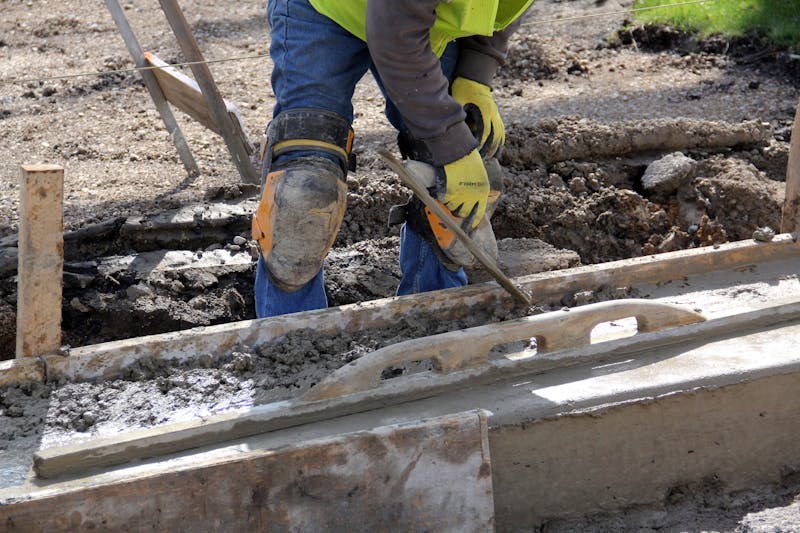
For 20 posts, most crews work from one end of the fence line to the other, mixing or dry-pouring 2–4 posts at a time. At 55 bags of 80 lb mix, plan for a vehicle that can haul at least 2,200 lbs safely, or make two hardware store trips.
Common mistakes and gotchas
Common mistakes and gotchas
Subgrade is not flat — your "4 inch" slab is really 4 inches in the worst spot. The calculator assumes uniform thickness. In reality, gravel base settles unevenly between when you screed it and when the truck arrives. Pad the order by 10% just for this. If you're pouring on bare dirt over an existing slope, pad it 15%.
The truck driver's "yard" is generous, but only on round numbers. Ready-mix companies typically charge by quarter-yard increments and short-load fees apply under 3 yards. If your calculation comes to 3.6 yards, ordering 4 is rarely a waste — the alternative is a short-load fee that costs more than half a yard of concrete.
Bag math lies on small pours. Premix bag yields are theoretical, assuming you mix to spec. In practice you'll lose half a bag to splash, partial mixes, and one bag that "felt dry." For pours under 1 cubic yard, add 2 extra bags to the calculator's bag count. For under half a yard, add 3.
Sonotubes flare at the bottom. If you're setting tubes in soil and pouring, the bottoms expand outward 1–2 inches as concrete pushes against the wet earth. Add 5% to your sonotube total or accept that your last tube will be a little short.
Cold concrete needs more bags. Below 50°F, hydration slows and a "fast-setting" mix isn't fast anymore. Don't try to pour a footing the day before a freeze unless you're prepared to tarp and heat — you'll either lose the pour or end up adding a second batch of higher-PSI mix on top.
Footings under frost line aren't optional. If you're in a frost zone, the calculator's depth input must be deeper than your local frost line, or the structure will heave. Frost depth varies by region: Florida 0", Pennsylvania 36", Minnesota 48", Maine 60". Check your county's building code before pouring footings, not after.
Recommended materials
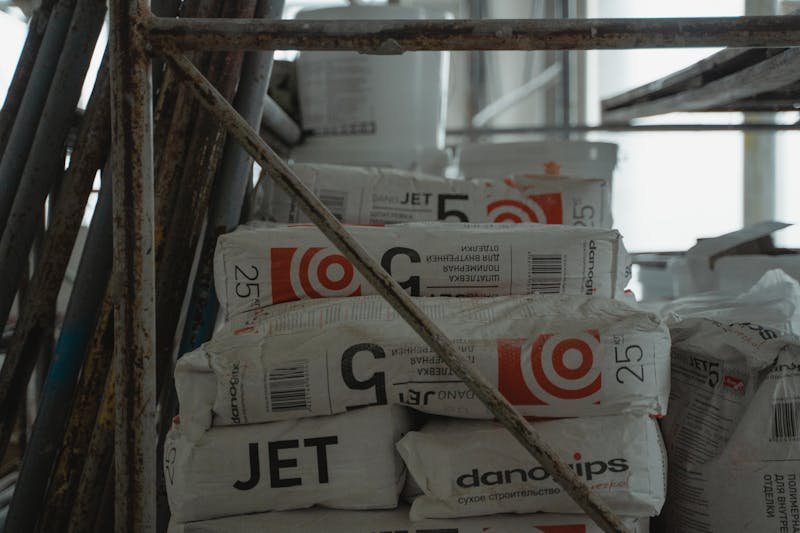
For 20 post holes at this volume, 80 lb bags are the most efficient choice — you're handling 55 bags instead of 73. For dry-pour installation (no mixing required), a fast-setting mix cuts your wait time to under an hour per post. If you're setting posts for a heavy gate or high-wind exposure, a short stub of rebar in each hole adds meaningful lateral resistance without much cost.
- Quikrete 80lb fast-setting concrete mix
- Concrete float (16-inch finishing tool)
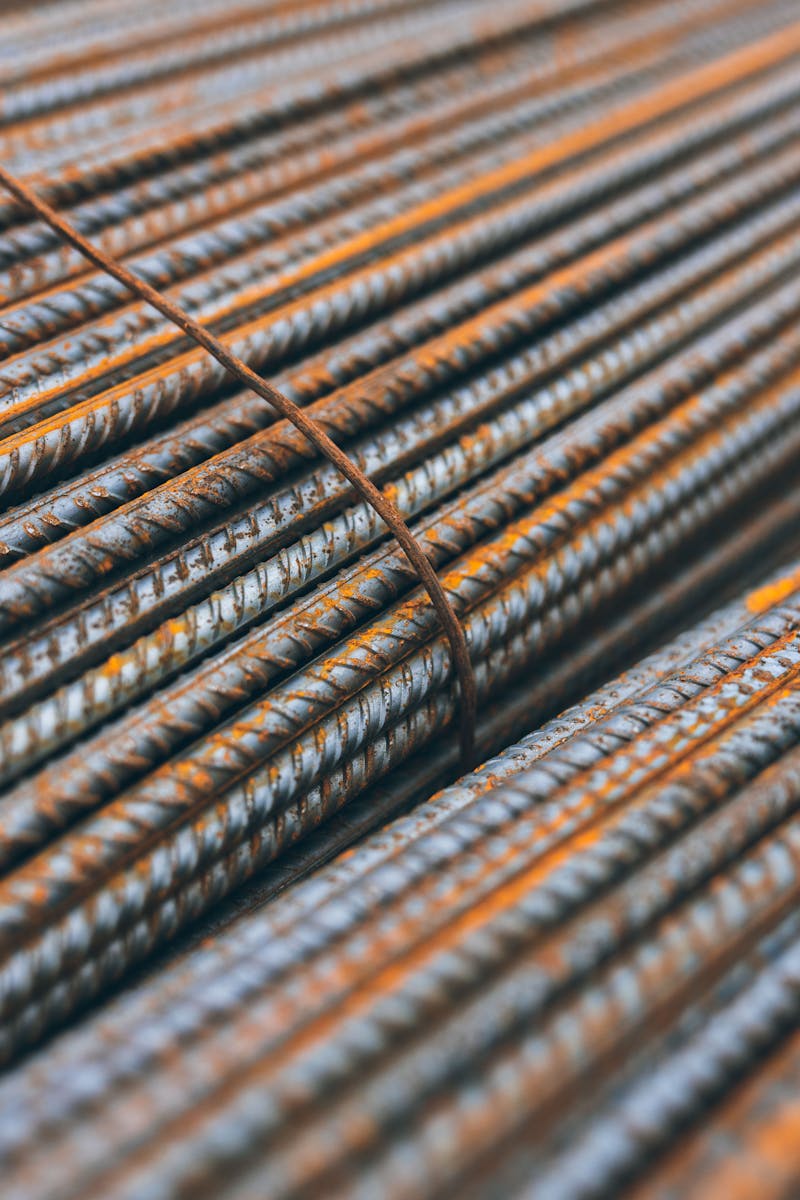
- #4 grade 60 rebar (20-foot length)
FAQ
How much concrete do 20 fence post holes require? Twenty 10-inch diameter holes drilled 36 inches deep require 1.21 cubic yards of concrete. That works out to 55 bags of 80 lb mix or 73 bags of 60 lb mix, including a 10% waste factor.
Does hole diameter matter more than depth? Both matter, but diameter has a larger effect because the formula uses the radius squared. A 12-inch hole instead of a 10-inch hole increases volume by 44% for the same depth. Depth is a linear multiplier, while diameter is exponential.
Why does the calculator add a 10% waste factor? Holes aren't perfect cylinders — irregular soil walls, spills during pour, and concrete that clings to the mixing bag all reduce the usable volume. The 10% buffer keeps you from running short on your last few posts.
Can I use fast-setting concrete for fence posts without mixing? Yes. Products like Quikrete Fast-Setting mix can be poured dry into the hole and then soaked with water from a hose. This method works well for fence posts and avoids hauling a mixer.
How long should I wait before attaching fence panels after pouring post concrete? Fast-setting mixes reach working strength in 20–40 minutes and full strength in 24 hours. Standard 80 lb bags take 24–48 hours before you should apply load. Don't hang panels or apply lateral force until the concrete has fully cured.
What if my holes aren't all the same depth? Run the calculator separately for each group of holes that share the same dimensions, then add the cubic yard totals. Mixing different depths into one calculation will overestimate or underestimate depending on which depth you use.
Do I need rebar in fence post holes? Residential fence posts generally don't require rebar — the post itself acts as the structural element. However, if you're setting posts for a heavy gate, retaining wall, or a fence in high-wind areas, adding a short stub of rebar into each hole increases lateral strength significantly.
How do I convert cubic yards to number of bags? Multiply cubic yards by 27 to get cubic feet. Then divide by the bag yield: 0.45 cu ft per 60 lb bag or 0.6 cu ft per 80 lb bag. Round up — never down — since you can't pour a partial bag into a hole and save the rest.
What diameter auger should I use for a 4x4 fence post? Standard practice is to dig a hole 3 times the post width. For a 4x4 post (3.5 inches actual), a 10-inch auger is the common choice. For 6x6 posts, step up to a 12-inch auger.
Is ready-mix concrete worth ordering for 20 post holes? At 1.21 cubic yards, you're right at the borderline. Most ready-mix suppliers have a 1-yard minimum and charge a short-load fee for anything under 3–4 yards. For 20 holes, bagged mix is almost always cheaper and more practical unless you're also pouring a slab the same day.
How deep should fence post holes be? The general rule is one-third of the total post length below grade, with a minimum of 24 inches. In frost-prone regions, the bottom of the hole should sit below the local frost line — often 36 to 48 inches — to prevent heaving.