Short answer
A 24x24 slab 6 inches thick requires 10.67 cubic yards of concrete. Add a 10% waste factor and you should order 11.7 cubic yards—in practice, plan for a 12-yard truck load. At that volume, ready-mix delivery is the only realistic option; 480 eighty-pound bags is what the math produces, but mixing that by hand or with a rented mixer would take days.
How this calculator works
The calculation converts all measurements to the same unit, multiplies them together to get cubic feet, then divides by 27 to reach cubic yards—the unit ready-mix suppliers and most contractors use.
The formula, step by step:
- Convert thickness from inches to feet: 6 ÷ 12 = 0.5 ft
- Multiply the three dimensions: 24 ft × 24 ft × 0.5 ft = 288 cubic feet
- Divide by 27 (cubic feet per cubic yard): 288 ÷ 27 = 10.67 cubic yards
That's the net volume. The calculator also applies a 10% waste factor to account for spillage, slight over-excavation, and the fact that real ground is never perfectly flat. The adjusted order quantity is 11.7 cubic yards.
Secondary outputs: bag counts
The calculator also tells you how many bags of pre-mixed concrete you'd need:
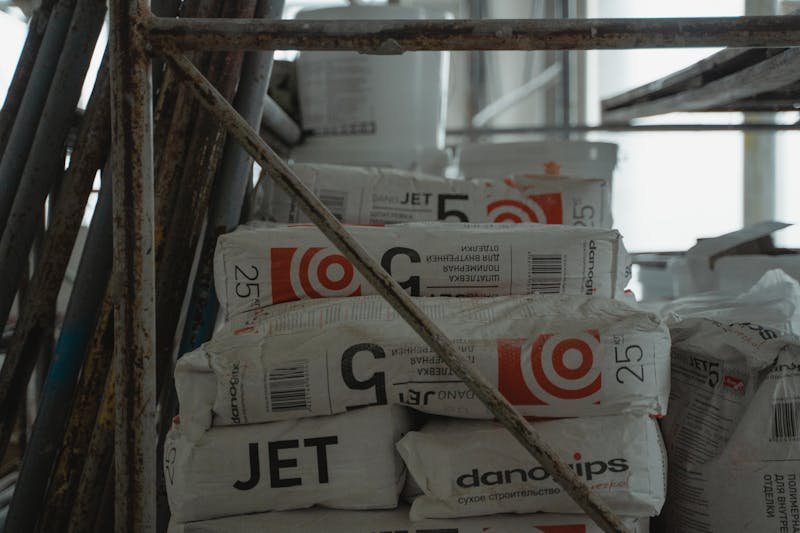
- 80 lb bags yield 0.6 cubic feet each: 288 cu ft ÷ 0.6 = 480 bags
- 60 lb bags yield 0.45 cubic feet each: 288 cu ft ÷ 0.45 = 640 bags
The bag counts are useful as a cross-check or for very small patch work, but at 10+ cubic yards, using bagged concrete is not practical. A standard 80 lb bag takes 2–3 minutes to mix properly; 480 bags would tie up a crew of three for the better part of two days, all while the first sections begin setting. Call a ready-mix supplier.
What the output does not include
- Reinforcement volume: Rebar and wire mesh displace a small amount of concrete, but the displacement is typically less than 1% for a residential slab and is ignored in standard calculations.
- Footing or grade beam volume: If your slab sits on a perimeter footing or interior piers, calculate those separately and add them to this number.
- Gravel base: A crushed stone sub-base is a separate material. It doesn't affect the concrete volume but is required under most slab applications for drainage and load distribution.
Why cubic yards?
Ready-mix concrete is sold and delivered in cubic yards. Batch plants price by the yard, and their trucks are rated by the yard. Always confirm your final order in cubic yards, not cubic feet, to avoid miscommunication.
Rounding and supplier minimums
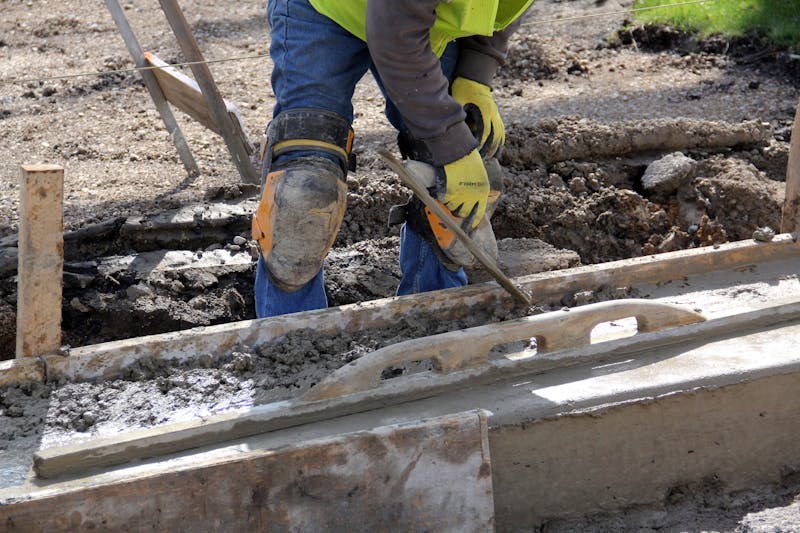
Most batch plants have a minimum order of 1 yard and charge short-load fees for anything below 8–10 yards. At 10.67 yards net (or ~11.7 with waste), this pour is at the upper edge of a standard truck load (typically 10–11 yards). You may need two trucks or one truck with a partial second load. Discuss staging and timing with your supplier before the pour date—concrete waits for no one.
Input precision matters
A seemingly minor measurement error changes the outcome significantly. Measure your slab dimensions twice. If the sub-base isn't perfectly level, your actual pour may be closer to 6.5 or 7 inches thick in spots—which would push the volume to 11.4–12.4 cubic yards. When in doubt, round up on the order, not down. Returning a partial yard is far easier than scrambling for a second truck mid-pour.
Common mistakes and gotchas
Subgrade is not flat — your "4 inch" slab is really 4 inches in the worst spot. The calculator assumes uniform thickness. In reality, gravel base settles unevenly between when you screed it and when the truck arrives. Pad the order by 10% just for this. If you're pouring on bare dirt over an existing slope, pad it 15%.
The truck driver's "yard" is generous, but only on round numbers. Ready-mix companies typically charge by quarter-yard increments and short-load fees apply under 3 yards. If your calculation comes to 3.6 yards, ordering 4 is rarely a waste — the alternative is a short-load fee that costs more than half a yard of concrete.
Bag math lies on small pours. Premix bag yields are theoretical, assuming you mix to spec. In practice you'll lose half a bag to splash, partial mixes, and one bag that "felt dry." For pours under 1 cubic yard, add 2 extra bags to the calculator's bag count. For under half a yard, add 3.
Sonotubes flare at the bottom. If you're setting tubes in soil and pouring, the bottoms expand outward 1–2 inches as concrete pushes against the wet earth. Add 5% to your sonotube total or accept that your last tube will be a little short.
Cold concrete needs more bags. Below 50°F, hydration slows and a "fast-setting" mix isn't fast anymore. Don't try to pour a footing the day before a freeze unless you're prepared to tarp and heat — you'll either lose the pour or end up adding a second batch of higher-PSI mix on top.
Footings under frost line aren't optional. If you're in a frost zone, the calculator's depth input must be deeper than your local frost line, or the structure will heave. Frost depth varies by region: Florida 0", Pennsylvania 36", Minnesota 48", Maine 60". Check your county's building code before pouring footings, not after.
Recommended materials
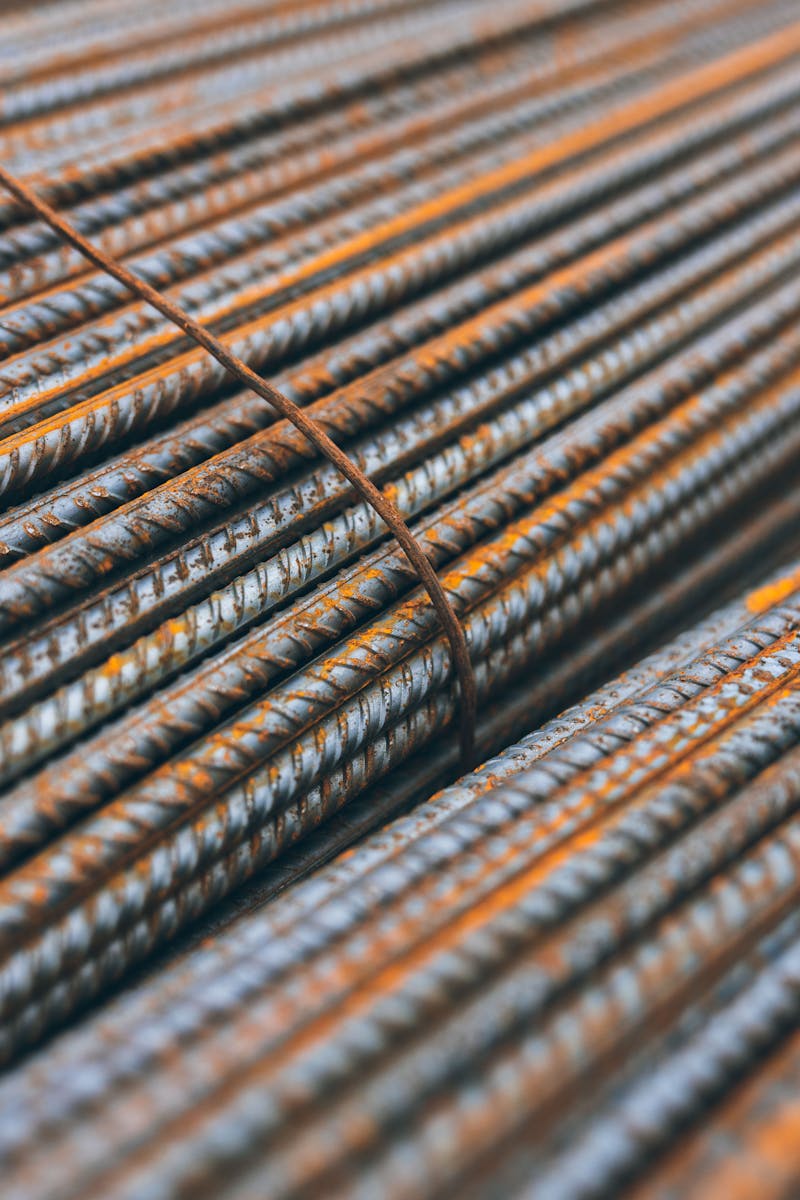
For a slab this size, ready-mix is the right call for the bulk of the pour. Keep a few bags on hand for filling low spots after screeding or for patching after form removal. Quikrete 80lb fast-setting concrete mix is useful for those finishing repairs without waiting for another truck. A flat slab at 6 inches needs proper finishing—dragging a bull float and then working the surface with a concrete float (16-inch finishing tool) produces a smooth, bleed-water-free surface before the concrete sets up. For reinforcement, #4 grade 60 rebar (20-foot length) is the standard choice for a vehicle-bearing garage slab at this thickness; cut and tie it on 18-inch centers in both directions before the truck arrives.
FAQ
How many cubic yards of concrete does a 24x24 slab 6 inches thick require? A 24x24 slab at 6 inches thick requires 10.67 cubic yards of concrete before adding a waste factor. With the standard 10% waste buffer, order 11.7 cubic yards—most suppliers will round that to a 12-yard load.
How many 80 lb bags of concrete do I need for a 24x24 slab at 6 inches? You need 480 bags of 80 lb concrete mix for this slab. Each 80 lb bag yields 0.6 cubic feet, so 480 bags cover the 288 cubic feet of concrete this slab requires.
How many 60 lb bags do I need instead? If you're using 60 lb bags, you'll need 640 bags. Each 60 lb bag yields 0.45 cubic feet. At this volume, bagged mix is not practical—this is firmly ready-mix truck territory.
Is 6 inches thick enough for a 24x24 slab? Six inches is suitable for most garage floors and heavy-load applications like parking a vehicle. The IRC doesn't mandate a specific residential slab thickness, but 4 inches is the minimum for a plain walking surface and 6 inches is standard for garages.
What PSI concrete mix should I use for a garage slab? Use 4,000 PSI mix for a vehicle-bearing garage slab. In freeze-thaw climates, specify air-entrainment as well. Standard 3,000 PSI mix is acceptable for a patio or utility slab with no vehicle traffic.
Do I need rebar in a 24x24 slab? Rebar is strongly recommended for a slab this size. Use #4 rebar on 18-inch centers in both directions for a vehicle-bearing slab, or 6x6 W1.4 welded wire mesh as a minimum for a pedestrian-only patio.
How much does a ready-mix truck load cost for this slab? Ready-mix concrete typically runs $130–$180 per cubic yard depending on region, mix design, and fuel surcharges. A 12-yard load for this slab could cost $1,560–$2,160 for the concrete alone, excluding delivery fees and short-load charges.
What is a short-load fee and will it apply here? Ready-mix trucks carry 10–11 yards at full capacity. At 10.67–12 yards, this pour is at or just above a standard truck load, so short-load fees likely won't apply. Confirm the minimum load threshold with your local batch plant.
How thick should the gravel base be under a 24x24 slab? A 4-inch compacted gravel base is standard. In areas with poor drainage or expansive soils, increase that to 6 inches. The gravel layer is not included in the concrete volume calculation—it's a separate material.
How long does a 24x24 slab take to cure? Concrete reaches about 70% of its design strength in 7 days and full strength at 28 days. You can walk on it after 24–48 hours and drive on it after 7 days, but avoid heavy loads until the 28-day mark.
Can I pour a 24x24 slab in sections? Yes. Many contractors pour large slabs in two or more pours with a cold joint between sections. Plan your control joints carefully—for a 24x24, a center joint creating two 12x24 sections is common.
How do I account for the post hole or footing below the slab? If your project includes footings or piers below the slab, calculate those volumes separately using the footing or sonotube calculator and add them to the slab total before calling the concrete supplier.