Short answer
A 20x20 slab at 6 inches thick requires 7.41 cubic yards of concrete. Add a 10% waste factor and you should order 8.15 cubic yards from your ready-mix supplier. If you're mixing bags, that's 334 bags of 80 lb mix or 445 bags of 60 lb mix — though at this volume, a ready-mix truck is the practical choice.
How this calculator works
The formula for a rectangular slab is straightforward: multiply length by width by thickness, then convert the result to cubic yards. Concrete is sold by the cubic yard, and there are 27 cubic feet in one cubic yard.
The formula:
(Length × Width × Thickness in feet) ÷ 27 = Cubic yards
For this slab:
- Length: 20 ft
- Width: 20 ft
- Thickness: 6 inches = 0.5 ft
(20 × 20 × 0.5) ÷ 27 = 200 ÷ 27 = 7.41 cubic yards
Why thickness matters so much
Doubling the thickness doubles the concrete — it's a linear relationship. A 20x20 slab at 4 inches thick needs about 4.94 cubic yards. At 6 inches it's 7.41. At 8 inches it's 9.88. Thickness is the single biggest driver of your material cost on a slab pour, so get it right before you order.
A 4-inch slab handles foot traffic, patio furniture, and light storage. Six inches is the standard for a single-car garage pad or anywhere a vehicle will park. If you're planning to park a loaded pickup or run small equipment over the slab, 6 inches with proper rebar is the minimum you should consider.
The waste factor
The calculator applies a 10% waste factor by default. That number isn't arbitrary — it reflects:
- Uneven subgrade: Even a well-compacted gravel base has slight variations. Low spots eat extra concrete.
- Form overfill: You'll slightly overfill the forms so you have enough material to screed flat.
- Drum residue: A ready-mix truck always leaves some concrete in the drum that can't be extracted.
On a 7.41 cubic yard order, 10% adds about 0.74 yards. Ordering 8.15 yards means you won't run short before the pour is finished — running short on a large slab is a serious problem because you can't just patch and expect a good result.
Bag counts and when they apply
The secondary outputs show bag equivalents: 334 bags of 80 lb mix or 445 bags of 60 lb mix. These numbers exist because some people genuinely do ask, and for small pours they make sense. For a 20x20 slab, they don't — 334 bags of 80 lb mix is about 13 tons of material, requiring a full day of mixing with a drum mixer, multiple laborers, and careful coordination to avoid cold joints where one section of concrete cures before the next is placed.
Use bag counts when your pour is under about 1 cubic yard (a small post footing repair, a set of steps, a short run of curb). Above that, price out ready-mix. Ready-mix is sold by the yard and delivered to your forms; the truck driver gives you roughly 5–7 minutes per yard to place the concrete.
What the output doesn't include
The calculator gives you volume. It doesn't account for:
- Subgrade preparation: The 4–6 inch compacted gravel base beneath the slab adds no concrete volume, but it's required for the slab to perform correctly.
- Rebar or wire mesh: Both add labor and material cost that aren't captured in the concrete volume number.
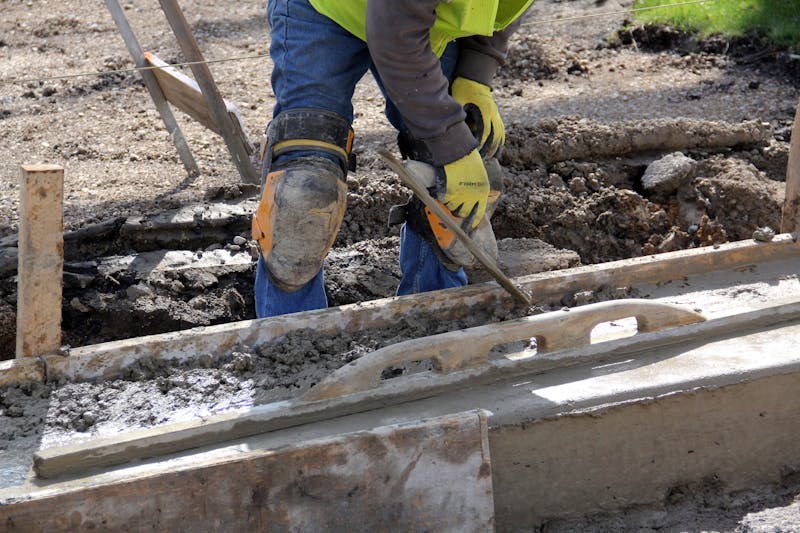
- Finishing labor: A 400 square foot slab at 6 inches sets quickly, especially in warm weather. Have your screeding and floating tools ready before the truck arrives.
Common mistakes and gotchas
Subgrade is not flat — your "4 inch" slab is really 4 inches in the worst spot. The calculator assumes uniform thickness. In reality, gravel base settles unevenly between when you screed it and when the truck arrives. Pad the order by 10% just for this. If you're pouring on bare dirt over an existing slope, pad it 15%.
The truck driver's "yard" is generous, but only on round numbers. Ready-mix companies typically charge by quarter-yard increments and short-load fees apply under 3 yards. If your calculation comes to 3.6 yards, ordering 4 is rarely a waste — the alternative is a short-load fee that costs more than half a yard of concrete.
Bag math lies on small pours. Premix bag yields are theoretical, assuming you mix to spec. In practice you'll lose half a bag to splash, partial mixes, and one bag that "felt dry." For pours under 1 cubic yard, add 2 extra bags to the calculator's bag count. For under half a yard, add 3.
Sonotubes flare at the bottom. If you're setting tubes in soil and pouring, the bottoms expand outward 1–2 inches as concrete pushes against the wet earth. Add 5% to your sonotube total or accept that your last tube will be a little short.
Cold concrete needs more bags. Below 50°F, hydration slows and a "fast-setting" mix isn't fast anymore. Don't try to pour a footing the day before a freeze unless you're prepared to tarp and heat — you'll either lose the pour or end up adding a second batch of higher-PSI mix on top.
Footings under frost line aren't optional. If you're in a frost zone, the calculator's depth input must be deeper than your local frost line, or the structure will heave. Frost depth varies by region: Florida 0", Pennsylvania 36", Minnesota 48", Maine 60". Check your county's building code before pouring footings, not after.
Recommended materials
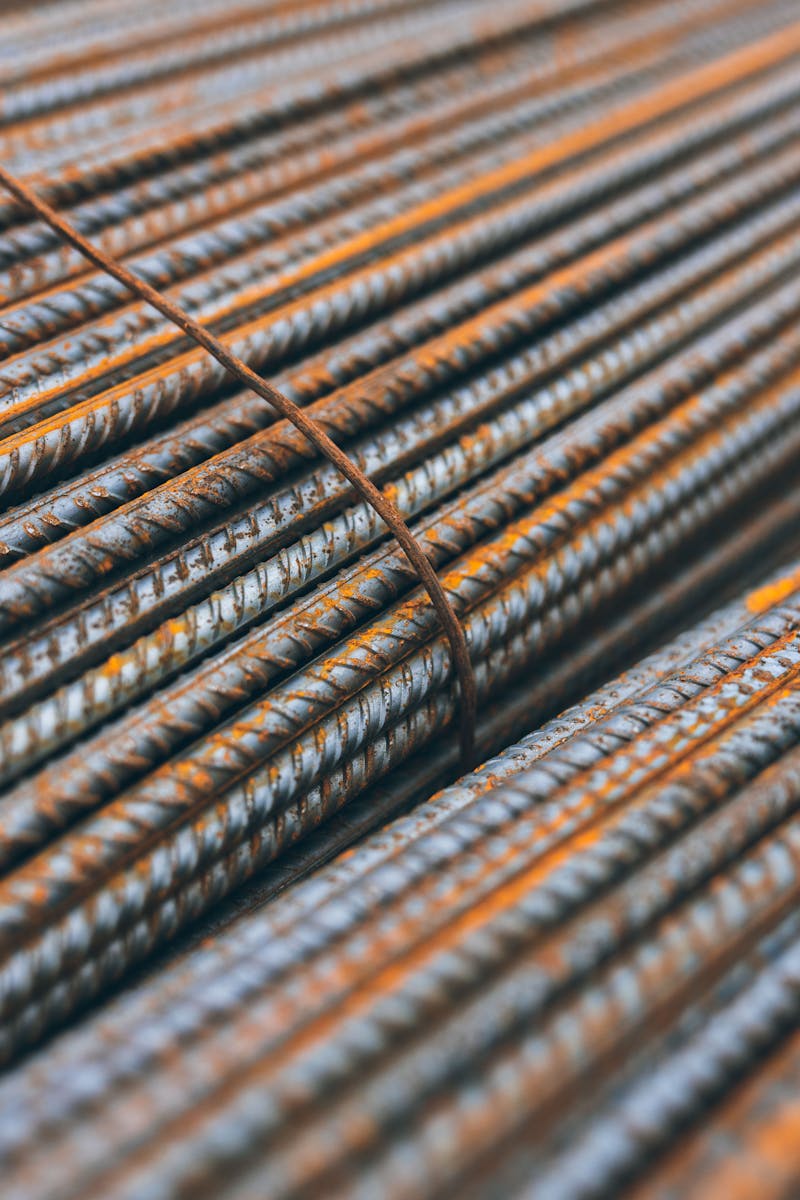
For a 20x20 garage slab or patio, ready-mix is the delivery method, but you still need materials for the finishing work, forming, and any repair or patch work that comes up. For smaller concrete tasks on the same job — mixing footing repair or setting anchor bolts — Quikrete 80lb fast-setting concrete mix is reliable and widely available. Once the slab is placed and screeded, you'll need a good finishing float; a Concrete float (16-inch finishing tool) gives you the control to pull the surface smooth before it stiffens. For the reinforcement inside the slab, #4 grade 60 rebar (20-foot length) is the standard spec for residential slabs — cut it to length and place it on chairs at 12-inch spacing each direction before the truck arrives.
FAQ
How many cubic yards of concrete does a 20x20 slab 6 inches thick require? A 20x20 slab at 6 inches thick requires 7.41 cubic yards. With a 10% waste factor added, order at least 8.15 cubic yards from your ready-mix supplier.
How many 80 lb bags of concrete do I need for a 20x20 slab at 6 inches? You need 334 bags of 80 lb concrete mix. That number already accounts for the full volume; add 10% more bags if you want a waste buffer, which brings it to about 368 bags.
How many 60 lb bags do I need for the same slab? You need 445 bags of 60 lb mix. Bags are a realistic option only for very small pours — at this volume, ready-mix concrete is far more practical and usually cheaper.
Is 6 inches thick enough for a 20x20 slab? Six inches is appropriate for a slab that will carry vehicles such as a single-car garage pad. For a patio or shed floor with foot traffic only, 4 inches is the typical minimum. Always check local building codes.
Do I need rebar in a 20x20 slab? Yes, for any structural slab — especially one supporting a vehicle — #4 rebar on a 12-inch grid is the standard starting point. Wire mesh alone is adequate for light-duty patios, but rebar provides significantly better crack resistance.
How much does 7.41 cubic yards of ready-mix concrete cost? Ready-mix pricing varies widely by region and season, but expect to pay for a minimum load fee if your order falls under the supplier's minimum (often 5–7 yards). Get at least two local quotes before ordering.
Can I pour a 20x20 slab by myself? A 20x20 slab at 6 inches is about 7.4 cubic yards — too much concrete to mix by hand or with a small rental mixer. You need a ready-mix truck and at least two additional people to screed, float, and finish while the truck is unloading.
How long does a 20x20 slab take to cure? Concrete reaches walkable strength in 24–48 hours, but full structural strength takes 28 days. Keep the slab moist for at least the first 7 days to prevent surface cracking.
What compressive strength concrete should I use for a 20x20 slab? Order 3,000 psi mix for a standard residential slab. Use 4,000 psi if the slab will support heavy vehicles or if you're in a freeze-thaw climate where durability is a concern.
How thick should the gravel base be under a 20x20 slab? A 4-inch compacted gravel base is standard for residential slabs. In areas with poor drainage or expansive clay soils, 6 inches of compacted base material is a better choice.
What is a reasonable waste factor for a slab pour? A 10% waste factor is standard — it accounts for spillage, uneven subgrade, and the concrete left in the truck's drum. On a 7.41 cubic yard pour, that means ordering approximately 8.15 cubic yards.
Do I need a permit for a 20x20 concrete slab? Most jurisdictions require a permit for any structural slab, especially one attached to or intended to support a garage or accessory structure. Check with your local building department before forming up.