Short answer
30 fence post holes at 10 inches in diameter and 30 inches deep require 1.52 cubic yards of concrete. That's 69 bags of 80 lb mix or 91 bags of 60 lb mix, with a 10% waste factor already included. This is the answer for concrete for 30 fence post holes at those standard dimensions.
How this calculator works
The calculator treats each fence post hole as a cylinder. The volume of a cylinder is π × r² × h, where r is the radius and h is the height (depth, in this case). Because construction measurements mix inches and feet, the formula converts everything to feet before calculating, then divides by 27 to convert cubic feet to cubic yards.
Step by step for a single 10-inch diameter, 30-inch deep hole:
- Convert diameter to feet: 10 in ÷ 12 = 0.833 ft
- Calculate radius: 0.833 ÷ 2 = 0.417 ft
- Convert depth to feet: 30 in ÷ 12 = 2.5 ft
- Volume per hole: 3.14159 × (0.417²) × 2.5 = 0.00459 cubic yards... (continued below)
More precisely: π × 0.417² × 2.5 = 1.364 cubic feet per hole ÷ 27 = 0.0505 cubic yards per hole. Multiply by 30 holes: 1.515 cubic yards. Add the 10% waste factor and you land at 1.52 cubic yards ready to order.
The inputs:
- Hole diameter (inches): The inside diameter of the bored or dug hole. The default is 10 inches, which suits most 4×4 and 6×6 posts. Use the actual bit or auger size you're drilling with.
- Hole depth (inches): How deep you're going. The default is 30 inches. Your local frost line and post height both influence this — deeper in northern climates.
- Number of posts: Straightforward count. Here, 30 posts.
What the outputs mean:
- Cubic yards is how ready-mix concrete is sold when ordered by truck. If you're pouring all 30 holes on the same day, calling a concrete company and ordering 1.52 yards (round up to 1.6 for safety) is legitimate — though most trucks have a minimum order of 1 yard, and short loads often carry a surcharge.
- Bag counts are for homeowners buying bagged mix at a hardware store. At 0.6 cubic feet per 80 lb bag, you need 69 bags. At 0.45 cubic feet per 60 lb bag, you need 91 bags. Note these are ceiling values — the calculator rounds up so you never come up short.
Diameter matters more than you might think. Going from a 10-inch hole to a 12-inch hole increases volume per hole by 44%. If you're drilling 12-inch holes instead of 10-inch holes, your 30-hole project goes from 1.52 cubic yards to roughly 2.19 cubic yards — that's an extra 22 bags of 80 lb mix. Always input your actual auger diameter, not an estimate.
Depth is equally sensitive. A 36-inch hole instead of 30 inches adds 20% more volume per hole. In colder climates (frost lines can reach 48 inches in northern states), check your local building code before assuming 30 inches is sufficient.
Waste factor: The 10% buffer isn't padding — real holes have rough, uneven walls. Soil can crumble back in. You may spill some mix. Post holes in rocky ground are particularly unpredictable. The 10% factor is minimal; some contractors use 15% on difficult soils.
Bag mix vs. ready-mix: For 30 post holes at 1.52 cubic yards, bagged mix is the standard choice. Ready-mix trucks are practical above roughly 3–4 cubic yards. Below that, you're paying a short-load fee and dealing with a truck for a job that a few bags and a mixing tub handle fine.
Common mistakes and gotchas
Subgrade is not flat — your "4 inch" slab is really 4 inches in the worst spot. The calculator assumes uniform thickness. In reality, gravel base settles unevenly between when you screed it and when the truck arrives. Pad the order by 10% just for this. If you're pouring on bare dirt over an existing slope, pad it 15%.
The truck driver's "yard" is generous, but only on round numbers. Ready-mix companies typically charge by quarter-yard increments and short-load fees apply under 3 yards. If your calculation comes to 3.6 yards, ordering 4 is rarely a waste — the alternative is a short-load fee that costs more than half a yard of concrete.
Bag math lies on small pours. Premix bag yields are theoretical, assuming you mix to spec. In practice you'll lose half a bag to splash, partial mixes, and one bag that "felt dry." For pours under 1 cubic yard, add 2 extra bags to the calculator's bag count. For under half a yard, add 3.
Sonotubes flare at the bottom. If you're setting tubes in soil and pouring, the bottoms expand outward 1–2 inches as concrete pushes against the wet earth. Add 5% to your sonotube total or accept that your last tube will be a little short.
Cold concrete needs more bags. Below 50°F, hydration slows and a "fast-setting" mix isn't fast anymore. Don't try to pour a footing the day before a freeze unless you're prepared to tarp and heat — you'll either lose the pour or end up adding a second batch of higher-PSI mix on top.
Footings under frost line aren't optional. If you're in a frost zone, the calculator's depth input must be deeper than your local frost line, or the structure will heave. Frost depth varies by region: Florida 0", Pennsylvania 36", Minnesota 48", Maine 60". Check your county's building code before pouring footings, not after.
Recommended materials
For 30 post holes, fast-setting bagged mix is the most practical approach — pour dry into the hole, add water, done. You'll also want the right finishing tools and possibly rebar if you're setting structural gate posts or corner posts that take extra lateral load.
- Quikrete 80lb fast-setting concrete mix — the standard for fence post installation; no mixing required in the hole
- Concrete float (16-inch finishing tool) — useful for leveling the collar around each post where the concrete meets grade
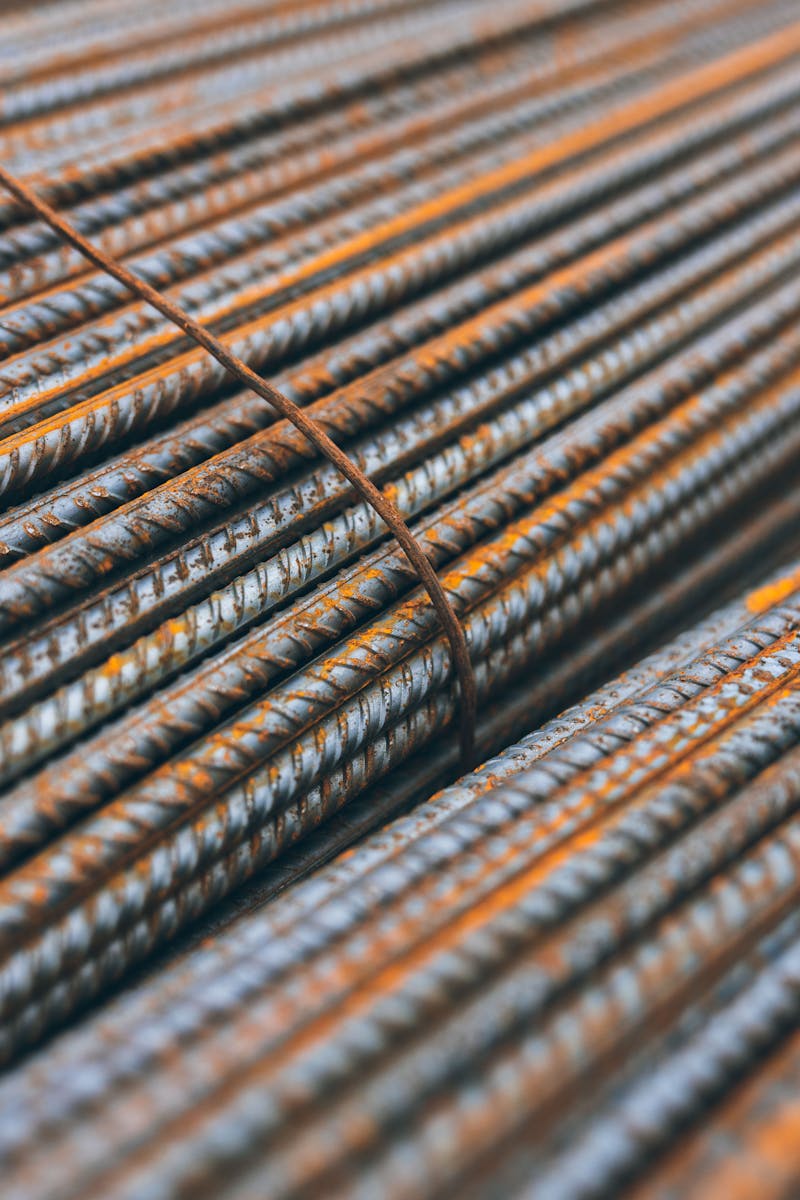
- #4 grade 60 rebar (20-foot length) — worth adding for gate posts, corner posts, or any post that takes significant horizontal load
FAQ
How much concrete do 30 fence post holes need? 30 holes at 10 inches in diameter and 30 inches deep require approximately 1.52 cubic yards of concrete. That works out to 69 bags of 80 lb mix or 91 bags of 60 lb mix with a 10% waste buffer included.
Does the calculator include a waste factor? Yes. A 10% waste factor is built into the output. Holes are rarely perfectly cylindrical — loose soil, crumbling edges, and minor spillage all eat into your material. The waste factor covers that.
Should I use fast-setting or standard concrete mix for fence posts? Fast-setting mix (like Quikrete Fast-Setting) is the most common choice for fence posts because you pour dry mix directly into the hole and add water on top — no mixing required. Standard mix works fine too but requires a mixer or mixing tub.
What diameter are these holes assuming? The calculator defaults to 10 inches in diameter, which is a common size for 4×4 and 6×6 fence posts. A good rule of thumb is to make the hole 3 times the post width.
How deep should fence post holes be? General guidance is to bury one-third of the total post length. For a 6-foot above-ground post, that means a 3-foot hole. The 30-inch depth used here is appropriate for a roughly 7.5-foot total post.
Can I mix concrete directly in the hole? For fence posts, yes — that's exactly how fast-setting dry mix is designed to be used. Pour the dry mix in, add water slowly, and let it cure. For larger holes or where precise strength matters, mix in a tub first.
How long should I wait before attaching fence panels? Fast-setting concrete typically reaches working strength in 20–40 minutes and full cure in about 24 hours. Standard mix takes 24–48 hours before you should load the posts. Full structural cure for either is 28 days.
What if my holes are a different diameter or depth? Use the calculator above with your actual measurements. Diameter has a big impact — going from 10 inches to 12 inches increases volume by 44% per hole, so even a small change adds up across 30 posts.
How many bags fit in a standard wheelbarrow? A standard contractor wheelbarrow holds about 3–4 cubic feet. One 80 lb bag yields 0.6 cubic feet, so you can mix roughly 5–6 bags per load. For 30 post holes, plan on about 13–14 wheelbarrow loads.
Do I need rebar in fence post holes? Rebar is not standard for typical residential fence posts. The post itself acts as the structural element. Rebar is more relevant for footings, columns, and slabs that bear significant loads.
What happens if I under-order concrete? Running out mid-project is a real problem — partially filled holes can shift and heave before the rest cures. Order at least the full calculated amount, including the 10% waste factor, before you start.