Short answer
A 30x40 slab poured at 4 inches thick requires 14.81 cubic yards of concrete. With a standard 10% waste factor added, order 16.3 cubic yards from your ready-mix supplier. At this volume, bagged concrete is not practical — you'd need 667 bags of 80 lb mix or 889 bags of 60 lb mix.
How this calculator works
The math behind a slab volume calculation is straightforward, but unit conversions are where most people go wrong.
The formula
Concrete volume is calculated in cubic yards because that's how ready-mix is sold. The formula is:
(Length × Width × Thickness) ÷ 27
Length and width are in feet. Thickness is in inches, so it must first be converted to feet by dividing by 12. There are 27 cubic feet in one cubic yard, which is where the final division comes from.
For this specific slab:
- Length: 30 ft
- Width: 40 ft
- Thickness: 4 in ÷ 12 = 0.333 ft
30 × 40 × 0.333 = 400 cubic feet 400 ÷ 27 = 14.81 cubic yards
Waste factor
The calculator applies a 10% waste factor on top of the raw volume. Concrete is lost in several ways: small variations in sub-grade depth (even a carefully graded base has low spots), concrete that sticks to the chute and drum, and occasional spillage during the pour. On a 14.81-yard pour, 10% adds about 1.5 yards. Running short mid-pour is a serious problem — a cold joint where fresh concrete meets concrete that has started setting creates a structural weak point and a visual seam. Ordering slightly more than you need is always the right move.
Bag count outputs
The secondary outputs convert cubic yards back to cubic feet (multiply by 27), then divide by the yield per bag. An 80 lb bag of standard mix yields 0.6 cubic feet; a 60 lb bag yields 0.45 cubic feet. The calculator uses a ceiling function so you never round down — you always end up with enough material.
For this pour:
- 80 lb bags: 667
- 60 lb bags: 889
Those numbers exist mainly to show you why bagged concrete stops making sense above about 1 cubic yard. At 667 bags, you're looking at roughly 26 tons of material to move, mix, and place. Two ready-mix trucks handle the same volume in under two hours.
What the output tells you
The 14.81-yard figure is the net volume of concrete your slab requires. Use that number as the baseline. When you call the ready-mix plant, give them the total with waste — 16.3 yards — and confirm the mix design (typically 3,000 PSI for residential slabs) and slump (4–5 inches is workable for most flatwork). A 1,200-square-foot pour requires two trucks; schedule them back-to-back so you can maintain a continuous wet edge across the entire slab.
Sub-grade and reinforcement don't change the volume calculation, but they're worth planning before you finalize your concrete order. A 4-inch slab sitting on 4 inches of compacted gravel base performs significantly better than one poured directly on native soil, and the gravel base is cheap insurance against settling and cracking.
Adjusting for different thicknesses
If your engineer or building department requires 5 or 6 inches instead of 4, just rerun the calculator with the updated thickness. A 30x40 slab at 5 inches is 18.52 cubic yards; at 6 inches it's 22.22. The thickness input has an outsized effect on total volume, so confirm your spec before ordering.
Common mistakes and gotchas
Subgrade is not flat — your "4 inch" slab is really 4 inches in the worst spot. The calculator assumes uniform thickness. In reality, gravel base settles unevenly between when you screed it and when the truck arrives. Pad the order by 10% just for this. If you're pouring on bare dirt over an existing slope, pad it 15%.
The truck driver's "yard" is generous, but only on round numbers. Ready-mix companies typically charge by quarter-yard increments and short-load fees apply under 3 yards. If your calculation comes to 3.6 yards, ordering 4 is rarely a waste — the alternative is a short-load fee that costs more than half a yard of concrete.
Bag math lies on small pours. Premix bag yields are theoretical, assuming you mix to spec. In practice you'll lose half a bag to splash, partial mixes, and one bag that "felt dry." For pours under 1 cubic yard, add 2 extra bags to the calculator's bag count. For under half a yard, add 3.
Sonotubes flare at the bottom. If you're setting tubes in soil and pouring, the bottoms expand outward 1–2 inches as concrete pushes against the wet earth. Add 5% to your sonotube total or accept that your last tube will be a little short.
Cold concrete needs more bags. Below 50°F, hydration slows and a "fast-setting" mix isn't fast anymore. Don't try to pour a footing the day before a freeze unless you're prepared to tarp and heat — you'll either lose the pour or end up adding a second batch of higher-PSI mix on top.
Footings under frost line aren't optional. If you're in a frost zone, the calculator's depth input must be deeper than your local frost line, or the structure will heave. Frost depth varies by region: Florida 0", Pennsylvania 36", Minnesota 48", Maine 60". Check your county's building code before pouring footings, not after.
Recommended materials
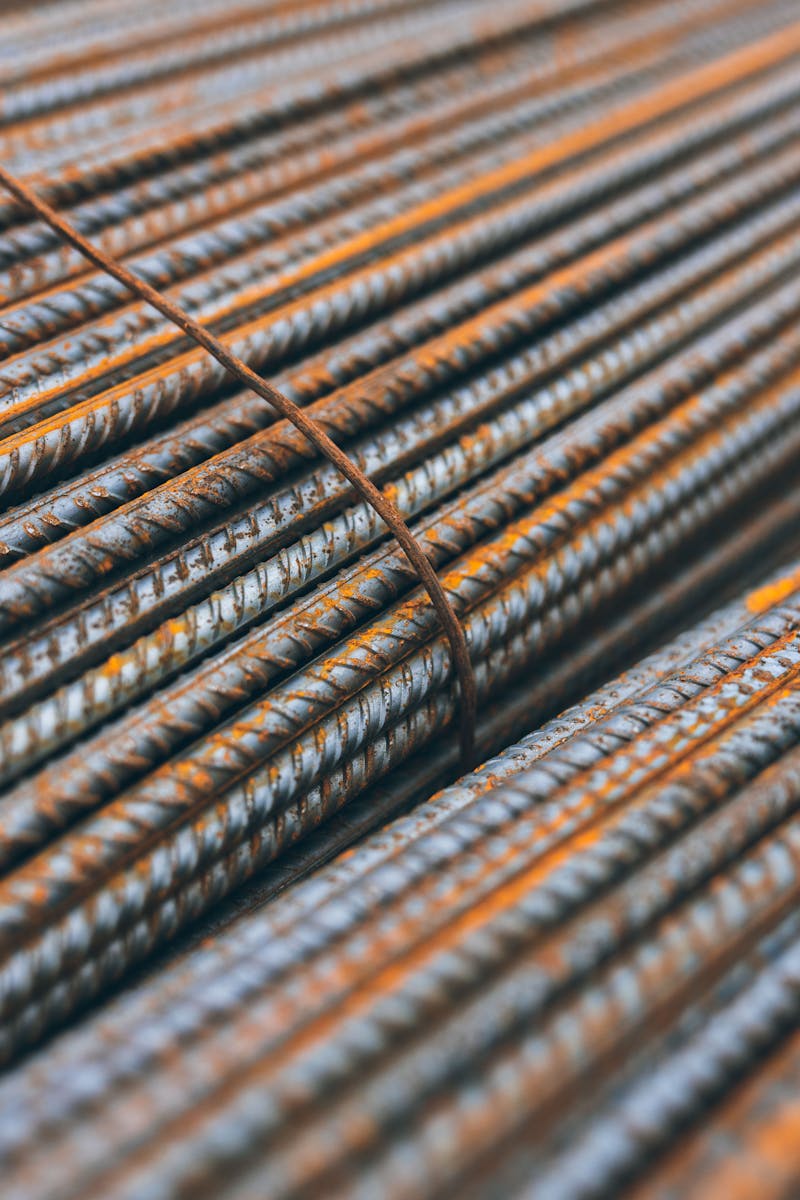
For a pour this size, ready-mix is the right call for the bulk of the concrete. That said, keep a few bags of Quikrete 80lb fast-setting concrete mix on hand for any low spots you need to fill or for setting anchor bolts after the main pour. Once the slab is placed, a good finishing tool makes a real difference in the final surface — a Concrete float (16-inch finishing tool) lets you close the surface properly before it sets. For reinforcement, #4 grade 60 rebar (20-foot length) is the standard for residential flatwork; run it on a 12-inch grid for a garage or workshop slab, and tie intersections with wire before the truck arrives.
- Quikrete 80lb fast-setting concrete mix
- Concrete float (16-inch finishing tool)
- #4 grade 60 rebar (20-foot length)
FAQ
How many cubic yards of concrete does a 30x40 slab at 4 inches thick require? A 30x40 slab at 4 inches thick requires 14.81 cubic yards before waste. Adding a 10% waste factor brings the order to about 16.3 cubic yards. Most ready-mix suppliers sell by the full or half yard, so round up accordingly.
How many 80 lb bags of concrete do I need for a 30x40 slab? You need 667 bags of 80 lb concrete mix for a 30x40 slab at 4 inches thick. That figure already accounts for 10% waste. At that volume, bagged concrete is impractical — a ready-mix truck is the right call.
How many 60 lb bags of concrete do I need for a 30x40 slab? The calculation comes out to 889 bags of 60 lb mix. Like the 80 lb count, this quantity makes bagged concrete uneconomical and physically unrealistic for one crew. Order ready-mix and have a pump truck on standby if access is tight.
Should I use ready-mix or bagged concrete for a 30x40 slab? Ready-mix is the only practical choice for a pour this size. Mixing 667+ bags by hand or with a small mixer would take multiple days and create cold joints in the slab. Ready-mix can fill the entire pour in one continuous session, which is critical for slab integrity.
What PSI concrete mix should I use for a 30x40 slab? For a standard residential slab — garage floor, workshop, patio — 3,000 PSI is the common spec. If the slab will see heavy vehicles or equipment, step up to 4,000 PSI. Tell your ready-mix plant what the slab is for and they'll recommend the right mix design.
How thick should rebar be for a 30x40 slab? #4 rebar (1/2-inch diameter) on a 12-inch grid is the typical residential spec for a 4-inch slab. For a garage slab that will hold heavy vehicles, many contractors run #4 on a 16-inch grid with two layers near the edges. Check your local building code before ordering.
Do I need a permit for a 30x40 concrete slab? Most jurisdictions require a permit for any slab attached to a structure, and many require one for detached slabs over a certain square footage. A 30x40 slab is 1,200 square feet — pull the permit. Unpermitted flatwork can complicate home sales and insurance claims.
How long does a 30x40 concrete slab take to cure? Concrete reaches about 70% of its design strength in 7 days and full strength around 28 days. You can walk on it after 24–48 hours and drive on it after about 7 days in normal conditions. Keep the surface moist for the first 7 days to prevent surface cracking.
What is the waste factor for a concrete order? A 10% waste factor is standard for slabs. It covers spillage during the pour, slight variations in sub-grade depth, and the concrete left in the chute. On a 14.81-yard pour, that's about 1.5 extra yards — worth having rather than coming up short mid-pour.
How do I calculate concrete for a slab in cubic yards? Multiply length (ft) × width (ft) × thickness (converted to feet) to get cubic feet, then divide by 27 to convert to cubic yards. For this slab: 30 × 40 × 0.333 = 400 cubic feet ÷ 27 = 14.81 cubic yards.
How many trucks does it take to pour a 30x40 slab? A standard ready-mix truck holds 10 cubic yards. A 14.81-yard pour (plus waste, roughly 16.3 yards) requires two trucks. Schedule them back-to-back so the first truck's concrete doesn't start setting before the second truck arrives.
Can I pour a 30x40 slab in sections? Yes, using control joints or isolation joints to divide the slab into panels is acceptable and common on large pours. Each panel should still be poured continuously without stopping mid-panel. Planned joints prevent random cracking; they don't weaken the slab when placed correctly.