Short answer
A 20-foot footing that is 1.5 feet wide and 12 inches deep requires 1.11 cubic yards of concrete. That translates to 50 bags of 80 lb mix or 67 bags of 60 lb mix. Add a 10% waste factor before you order — you'll want at least 1.22 cubic yards on hand to avoid running short during the pour.
How this calculator works
The footing calculator uses a simple rectangular volume formula. Every footing is treated as a box: length × width × depth. Because concrete is sold by the cubic yard, the result is converted from cubic feet to cubic yards by dividing by 27.
The formula in plain English:
(Length in ft × Width in ft × Depth converted to ft) ÷ 27 = cubic yards
For this specific variant: length is 20 feet, width is 1.5 feet, and depth is 12 inches — which converts to 1 foot. Multiply those three dimensions together: 20 × 1.5 × 1 = 30 cubic feet. Divide 30 by 27 and you get 1.11 cubic yards.
Inputs explained
Length is the total run of the footing in feet. If your foundation has multiple runs — say, a 20-foot front wall and a 16-foot side wall — calculate each run separately and add them together before accounting for waste.
Width defaults to 1.5 feet (18 inches), which is a common residential footing width for a standard 6-inch foundation wall. Your structural plans or local building code will specify the required width. Wider footings mean significantly more concrete — going from 18 inches to 24 inches wide increases volume by 33%.
Depth is entered in inches because that's how most specs are written — 12 inches, 18 inches, 24 inches depending on frost depth and load. The calculator converts it to feet internally before running the formula.
Secondary outputs: bag counts
The calculator also tells you how many bags to buy. Each 80 lb bag of concrete mix yields 0.6 cubic feet when mixed; each 60 lb bag yields 0.45 cubic feet. The formula takes your total cubic footage (cubic yards × 27) and divides by the yield per bag, rounding up to the nearest whole bag. You never want to be half a bag short when the trench is open.
For 1.11 cubic yards:
- Total cubic footage: 1.11 × 27 = 30 cubic feet
- 80 lb bags: 30 ÷ 0.6 = 50 bags
- 60 lb bags: 30 ÷ 0.45 = 67 bags
Waste factor
The default 10% waste factor isn't in the base formula — it's an adjustment you apply to the output before ordering. Multiply 1.11 × 1.10 = 1.22 cubic yards. For bagged mix, that's 55 bags of 80 lb or 74 bags of 60 lb. The waste factor covers uneven trench bottoms, minor overexcavation, spillage during mixing and placement, and residue left in bags or the drum. On a footing pour, running out of concrete mid-trench is a real problem — a cold joint (where fresh concrete is poured against concrete that has started to set) is a structural weak point.
What the output does not include
The formula calculates the volume of the trench as a rectangular prism. It does not subtract for post or form displacement, and it does not account for any gravel base layer beneath the footing. If your plans call for 4 inches of compacted gravel below the footing, measure your trench depth to the top of the gravel — not to native soil — when entering the depth value.
Common mistakes and gotchas
Subgrade is not flat — your "4 inch" slab is really 4 inches in the worst spot. The calculator assumes uniform thickness. In reality, gravel base settles unevenly between when you screed it and when the truck arrives. Pad the order by 10% just for this. If you're pouring on bare dirt over an existing slope, pad it 15%.
The truck driver's "yard" is generous, but only on round numbers. Ready-mix companies typically charge by quarter-yard increments and short-load fees apply under 3 yards. If your calculation comes to 3.6 yards, ordering 4 is rarely a waste — the alternative is a short-load fee that costs more than half a yard of concrete.
Bag math lies on small pours. Premix bag yields are theoretical, assuming you mix to spec. In practice you'll lose half a bag to splash, partial mixes, and one bag that "felt dry." For pours under 1 cubic yard, add 2 extra bags to the calculator's bag count. For under half a yard, add 3.
Sonotubes flare at the bottom. If you're setting tubes in soil and pouring, the bottoms expand outward 1–2 inches as concrete pushes against the wet earth. Add 5% to your sonotube total or accept that your last tube will be a little short.
Cold concrete needs more bags. Below 50°F, hydration slows and a "fast-setting" mix isn't fast anymore. Don't try to pour a footing the day before a freeze unless you're prepared to tarp and heat — you'll either lose the pour or end up adding a second batch of higher-PSI mix on top.
Footings under frost line aren't optional. If you're in a frost zone, the calculator's depth input must be deeper than your local frost line, or the structure will heave. Frost depth varies by region: Florida 0", Pennsylvania 36", Minnesota 48", Maine 60". Check your county's building code before pouring footings, not after.
Recommended materials
For a footing pour of this size, bagged fast-setting mix is the practical choice — you control the pace and don't need to schedule a ready-mix truck. Dense, well-graded aggregate in the mix matters for a footing's long-term bearing capacity, so don't substitute standard sand mix or mortar mix, which aren't rated for structural applications.
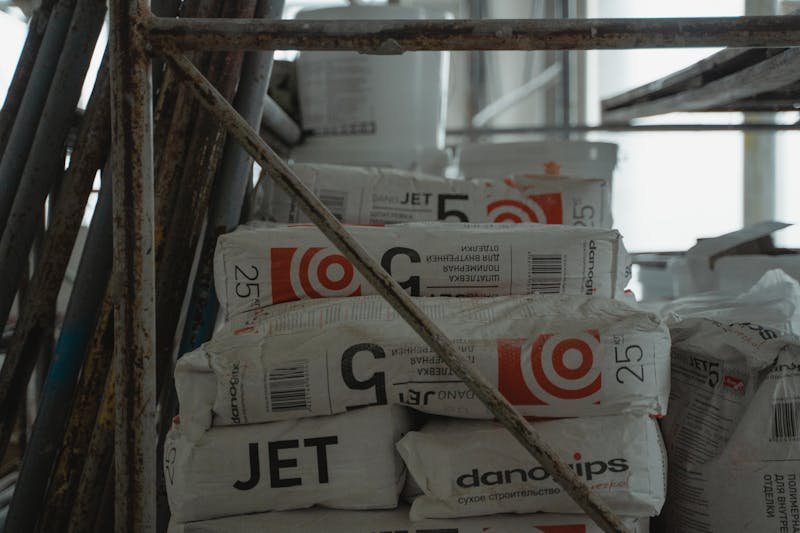
- Quikrete 80lb fast-setting concrete mix — 50 bags fills 1.11 cubic yards; sets firm enough for footing work in 20–40 minutes
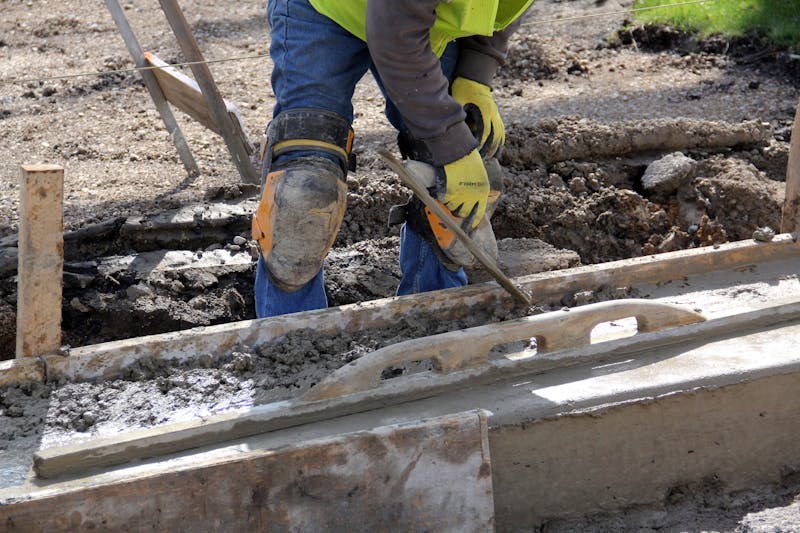
- Concrete float (16-inch finishing tool) — useful for screeding the top of the footing flat before placing sill plates or anchor bolts
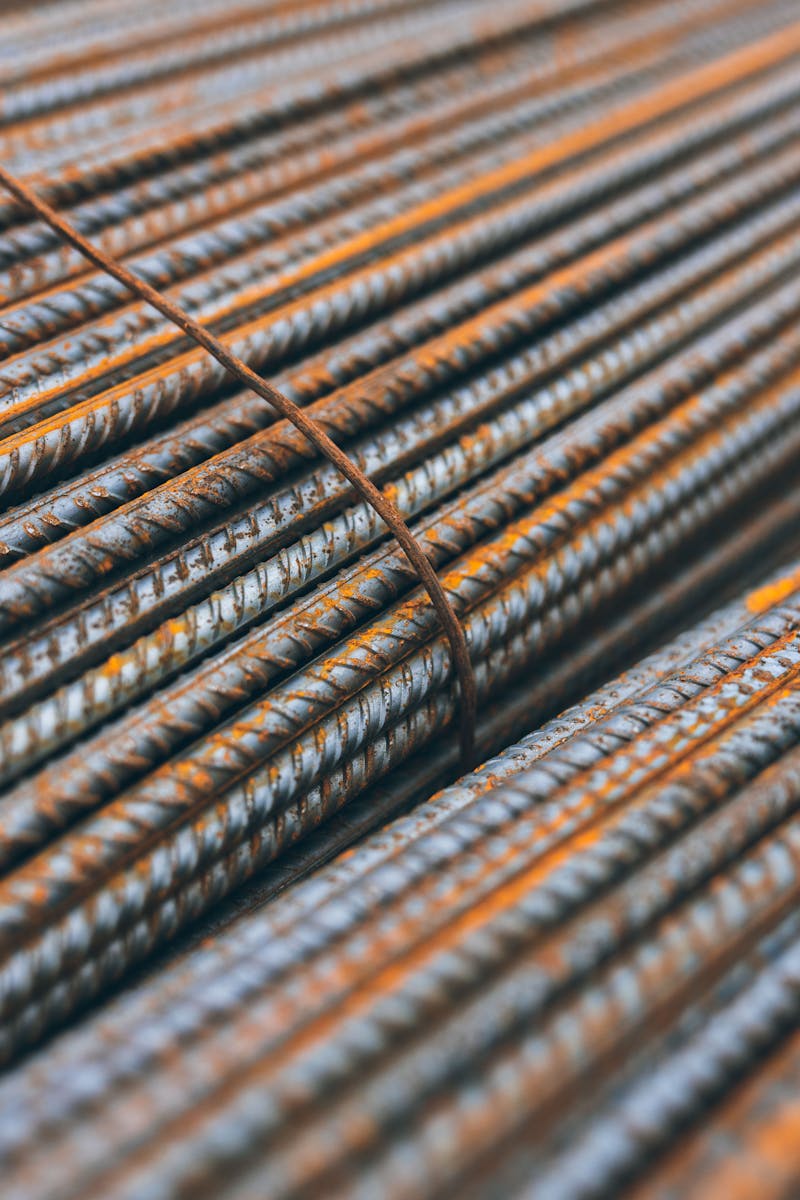
- #4 grade 60 rebar (20-foot length) — most residential footing specs require two continuous runs; a 20-foot length matches this footing exactly with no cuts needed
FAQ
How many cubic yards do 20-foot footings 12 inches deep require? A single continuous 20-foot footing at 1.5 feet wide and 12 inches deep requires 1.11 cubic yards. Always add a 10% waste factor, bringing your order to roughly 1.22 cubic yards.
How many 80 lb bags of concrete do I need for this footing? The calculation calls for 50 bags of 80 lb mix without a waste buffer. With a 10% waste factor, plan for 55 bags. Buy a few extra — returning unused sealed bags is easy at most suppliers.
How many 60 lb bags do I need instead? You need 67 bags of 60 lb mix to fill 1.11 cubic yards. Add 10% for waste and round up to 74 bags. The 80 lb bags are more economical per cubic foot if you can handle the weight.
Should I order ready-mix or use bags for a footing this size? At roughly 1.1 cubic yards, bagged mix is practical — a ready-mix truck typically has a 1-yard minimum plus a short-load fee that makes it expensive at this volume. Once you're above 2 yards, ready-mix usually wins on cost and labor.
What width did this calculation assume for the footing? The default footing width is 1.5 feet (18 inches). If your footing is narrower or wider, re-run the calculator with your actual dimension — the volume changes proportionally.
What does the 10% waste factor cover? Waste accounts for uneven trench bottoms, slight overcuts, spillage during placement, and the small residue left in bags or the mixer drum. Skipping it is the single most common reason people run short mid-pour.
Does this footing volume include the post or form displacement? No. The formula calculates the full rectangular volume of the trench. If you're setting posts directly in concrete, subtract the post's displaced volume — for a 4×4 post at 12 inches deep that's less than 0.01 cubic yards and usually not worth adjusting.
What concrete mix strength is right for footings? Most residential footings call for 3,000 PSI mix. In freeze-thaw climates, specify 3,500 PSI or use an air-entrained mix. Fast-setting bags like Quikrete 80 lb are pre-blended at appropriate strength for footing work.
Do I need rebar in a footing this size? Most residential footing specs require at least two continuous runs of #4 rebar. Check your local code — many jurisdictions mandate it regardless of footing size, and it dramatically reduces cracking over the long term.
How long does a poured footing need to cure before loading it? Standard concrete reaches roughly 70% of its design strength after 7 days and full strength at 28 days. For light residential framing, most contractors wait a minimum of 3 days before placing sill plates, longer in cold weather.
What if my trench isn't a perfect rectangle? Break irregular shapes into rectangular segments, calculate each one, and sum them. Add your 10% waste factor to the total. If your footing turns a corner, treat each run as a separate rectangle and overlap the corner volume conservatively.
Can I mix the concrete in a standard wheelbarrow? A standard contractor wheelbarrow holds about 6 cubic feet. For 50–67 bags, you'll want either a rented electric mixer or a larger towable mixer. Hand-mixing 50 bags is feasible but brutal — rent a mixer for any footing pour over 20 bags.