Short answer
A continuous footing 30 feet long, 1 foot wide, and 1 foot deep requires 1.11 cubic yards of concrete—50 bags of 80 lb mix or 67 bags of 60 lb mix at a 10% waste factor. That's the answer for concrete for a 30 foot continuous footing at standard residential dimensions.
How this calculator works
The footing calculator uses a straightforward rectangular volume formula, then converts the result from cubic feet into cubic yards—the unit ready-mix suppliers quote and the unit you need when ordering.
The inputs
Length (ft): The total run of the footing. For this variant, 30 feet. This is the centerline distance, measured along the trench.
Width (ft): The horizontal width of the footing cross-section. Here, 1 foot (12 inches). Residential footings typically run 12–24 inches wide depending on the wall width above and the soil bearing capacity below.
Depth (in): The vertical thickness of the footing, entered in inches. At 12 inches (1 foot), this is the minimum depth for most frost-free or shallow-frost climates. Colder regions routinely go 18–24 inches or deeper to get below the frost line.
The formula
Volume in cubic feet = Length × Width × (Depth ÷ 12)
That last step—dividing depth by 12—converts inches to feet so all three dimensions are in the same unit before multiplying.
30 ft × 1 ft × (12 ÷ 12) ft = 30 cubic feet
To convert to cubic yards, divide by 27 (there are 27 cubic feet in one cubic yard):
30 ÷ 27 = 1.11 cubic yards
Waste factor
The raw volume is 1.11 yards, but that assumes a perfectly formed, perfectly level trench with no spillage. A 10% waste factor is standard practice. Adding 10% gives you 1.22 cubic yards to order or about 55 bags of 80 lb mix when you include that buffer. The secondary outputs shown above (50 bags for 80 lb, 67 bags for 60 lb) reflect the net volume; add 10% to those numbers when you're making a purchase list.
Bag count outputs
The calculator converts cubic yards back to cubic feet (multiply by 27), then divides by the yield per bag:
- 80 lb bag: yields 0.6 cubic feet → 30 ÷ 0.6 = 50 bags
- 60 lb bag: yields 0.45 cubic feet → 30 ÷ 0.45 = 67 bags
The calculator always rounds up to a whole bag because a partial bag won't complete the pour.
What the output represents
The output is net concrete volume at the dimensions you entered. It does not account for rebar displacement (rebar displaces a negligible volume in a residential footing), but it does not factor in waste unless you manually add it. For a 30-foot footing at these dimensions, the difference between net volume and a 10%-padded order is about 5 bags of 80 lb mix—worth buying upfront rather than making a second trip mid-pour.
Adjusting for your actual footing
If your footing is wider or deeper than these defaults, the math scales directly. A 30-foot footing at 18 inches wide and 12 inches deep is 1.67 cubic yards—50% more material just from the width change. Run those numbers in the calculator before you finalize your order.
Common mistakes and gotchas
Subgrade is not flat — your "4 inch" slab is really 4 inches in the worst spot. The calculator assumes uniform thickness. In reality, gravel base settles unevenly between when you screed it and when the truck arrives. Pad the order by 10% just for this. If you're pouring on bare dirt over an existing slope, pad it 15%.
The truck driver's "yard" is generous, but only on round numbers. Ready-mix companies typically charge by quarter-yard increments and short-load fees apply under 3 yards. If your calculation comes to 3.6 yards, ordering 4 is rarely a waste — the alternative is a short-load fee that costs more than half a yard of concrete.
Bag math lies on small pours. Premix bag yields are theoretical, assuming you mix to spec. In practice you'll lose half a bag to splash, partial mixes, and one bag that "felt dry." For pours under 1 cubic yard, add 2 extra bags to the calculator's bag count. For under half a yard, add 3.
Sonotubes flare at the bottom. If you're setting tubes in soil and pouring, the bottoms expand outward 1–2 inches as concrete pushes against the wet earth. Add 5% to your sonotube total or accept that your last tube will be a little short.
Cold concrete needs more bags. Below 50°F, hydration slows and a "fast-setting" mix isn't fast anymore. Don't try to pour a footing the day before a freeze unless you're prepared to tarp and heat — you'll either lose the pour or end up adding a second batch of higher-PSI mix on top.
Footings under frost line aren't optional. If you're in a frost zone, the calculator's depth input must be deeper than your local frost line, or the structure will heave. Frost depth varies by region: Florida 0", Pennsylvania 36", Minnesota 48", Maine 60". Check your county's building code before pouring footings, not after.
Recommended materials
For a footing this size, bagged fast-setting mix is the most practical option for most homeowners and small crews—no truck access required, and you can stage the pour over a few hours. Two runs of #4 rebar running the length of the trench is standard in most codes, and proper finishing tools help consolidate the concrete against the form walls and rebar. Here are the products worth having on hand:
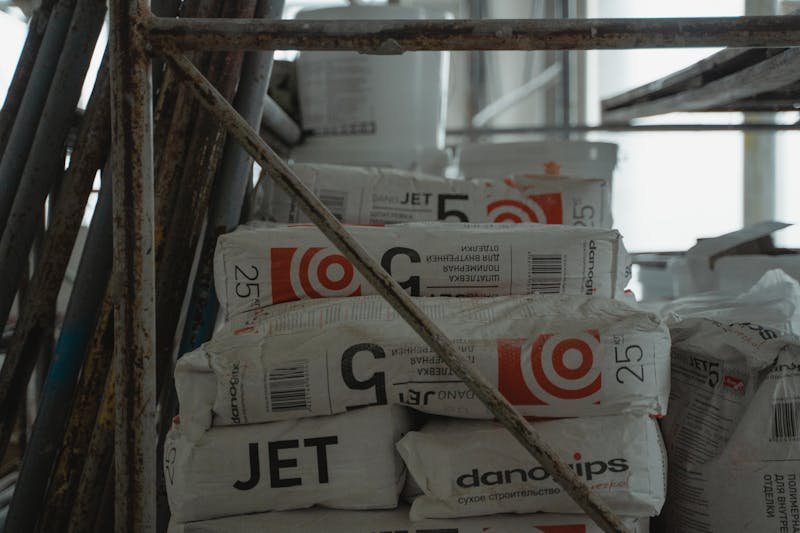
- Quikrete 80lb fast-setting concrete mix — 50 bags covers this footing at net volume; buy 55 to have the 10% buffer
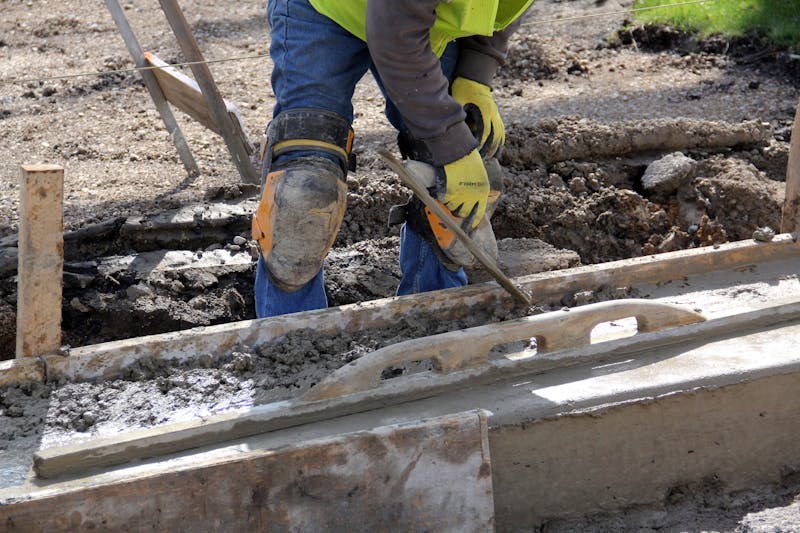
- Concrete float (16-inch finishing tool) — useful for striking off and consolidating the top surface of the footing before it sets
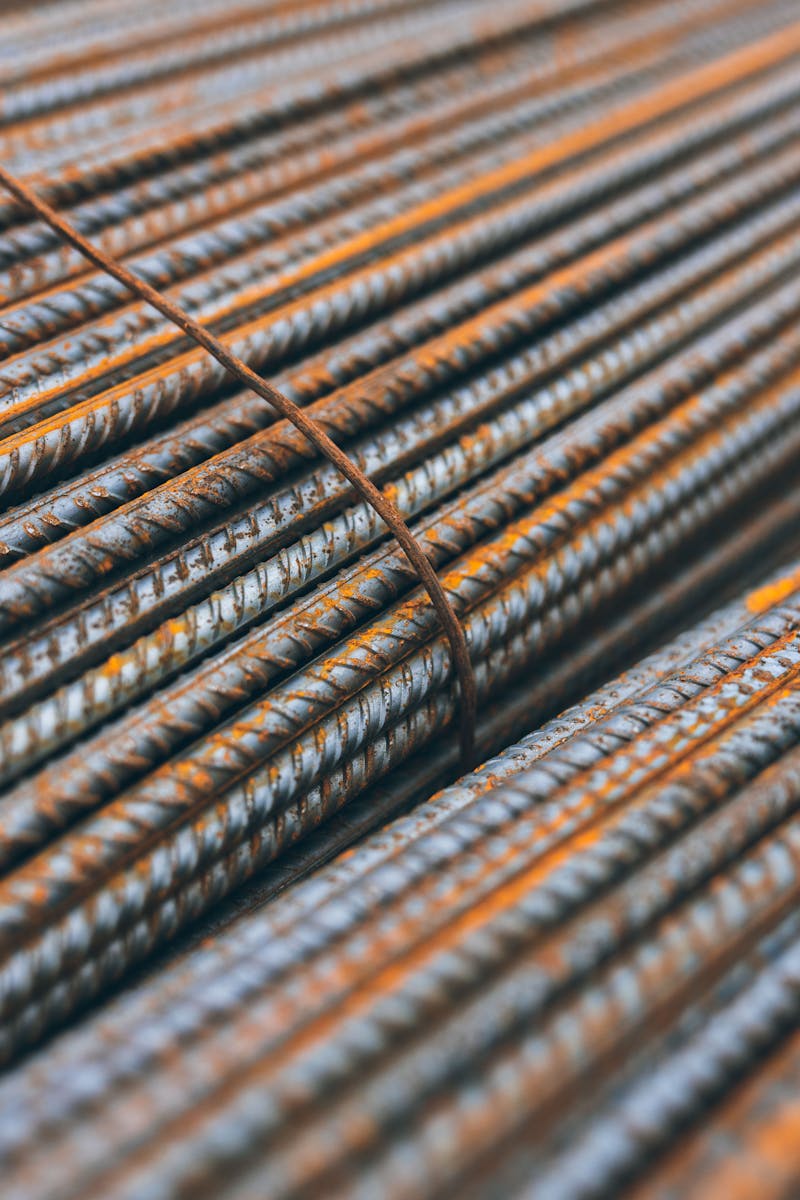
- #4 grade 60 rebar (20-foot length) — two continuous runs in the lower third of the footing; lap splices at least 20 bar diameters (10 inches for #4) where lengths meet