Short answer
An 8x12 shed foundation slab at 4 inches thick requires 1.19 cubic yards of concrete. That works out to 54 bags of 80 lb mix or 72 bags of 60 lb mix, both figures including a 10% waste factor.
How this calculator works
The calculator uses the standard slab volume formula, then converts the result to cubic yards—the unit ready-mix suppliers quote and the unit that drives your bag count.
The formula, step by step
Step 1 — Convert thickness to feet Slab thickness is entered in inches because that's how people spec slabs. The calculator divides by 12 to put all three dimensions in the same unit:
4 inches ÷ 12 = 0.333 feet
Step 2 — Calculate cubic feet Multiply length × width × thickness (all in feet):
8 ft × 12 ft × 0.333 ft = 32 cubic feet
Step 3 — Convert to cubic yards One cubic yard contains 27 cubic feet. Dividing gives the raw volume:
32 ÷ 27 = 1.185 cubic yards
Step 4 — Apply the 10% waste factor Slab pours never go perfectly. The subgrade is rarely perfectly flat, forms have a little flex, and some concrete gets lost to spillage and over-excavation at the edges. The calculator adds 10%:
1.185 × 1.10 = 1.30 cubic yards to order
Bag count outputs
Ready-mix trucks have minimum order quantities (usually 1 yard) and charge short-load fees on small pours. At under 1.5 yards, bagged concrete is almost always the more practical choice.
The calculator converts cubic yards back to cubic feet (multiply by 27), then divides by the yield per bag:
| Bag size | Yield per bag | Bags needed |
|---|---|---|
| 60 lb | 0.45 cu ft | 72 bags |
| 80 lb | 0.60 cu ft | 54 bags |
The calculator uses ceil() (round up) on the bag count—you can't buy a fraction of a bag, and running short mid-pour creates a cold joint.
What the inputs represent
- Length and width — the inside face-to-face dimensions of your forms, not the outside. For an 8×12 shed slab, the forms' inside dimensions should match the shed's floor footprint.
- Thickness — measured as the finished slab depth. 4 inches is the residential standard for light storage sheds. A riding mower or heavy workbench pushes you toward 5–6 inches.
- Waste factor — fixed at 10% in this calculator, which matches industry standard practice for slabs. If your subgrade has visible low spots or you're pouring in cold weather (where you may want to overfill slightly), budget 12–15%.
Ordering concrete
If you're using bags, buy in full cases when possible—retailers rarely take back opened bags, and leftover sealed bags absorb moisture and harden in storage within a few months. For 54 bags (80 lb), plan for a pickup truck with a payload capacity above 4,300 lbs, or make two trips. A standard half-ton pickup handles 30–35 bags safely per trip.
If you decide to order ready-mix, give the dispatcher 1.30 cubic yards and confirm they can pour that quantity. Some plants have a 1.5-yard minimum—ask before you commit.
Common mistakes and gotchas
Subgrade is not flat — your "4 inch" slab is really 4 inches in the worst spot. The calculator assumes uniform thickness. In reality, gravel base settles unevenly between when you screed it and when the truck arrives. Pad the order by 10% just for this. If you're pouring on bare dirt over an existing slope, pad it 15%.
The truck driver's "yard" is generous, but only on round numbers. Ready-mix companies typically charge by quarter-yard increments and short-load fees apply under 3 yards. If your calculation comes to 3.6 yards, ordering 4 is rarely a waste — the alternative is a short-load fee that costs more than half a yard of concrete.
Bag math lies on small pours. Premix bag yields are theoretical, assuming you mix to spec. In practice you'll lose half a bag to splash, partial mixes, and one bag that "felt dry." For pours under 1 cubic yard, add 2 extra bags to the calculator's bag count. For under half a yard, add 3.
Sonotubes flare at the bottom. If you're setting tubes in soil and pouring, the bottoms expand outward 1–2 inches as concrete pushes against the wet earth. Add 5% to your sonotube total or accept that your last tube will be a little short.
Cold concrete needs more bags. Below 50°F, hydration slows and a "fast-setting" mix isn't fast anymore. Don't try to pour a footing the day before a freeze unless you're prepared to tarp and heat — you'll either lose the pour or end up adding a second batch of higher-PSI mix on top.
Footings under frost line aren't optional. If you're in a frost zone, the calculator's depth input must be deeper than your local frost line, or the structure will heave. Frost depth varies by region: Florida 0", Pennsylvania 36", Minnesota 48", Maine 60". Check your county's building code before pouring footings, not after.
Recommended materials
For an 8×12 slab at this volume, bagged mix is the right call. Stock up on fast-setting or standard mix depending on your timeline—fast-setting is walkable in 20–40 minutes and doesn't require mixing in a separate container (just pour it dry, add water). You'll also want rebar or mesh to control cracking, and a good finishing float to close the surface before it sets.
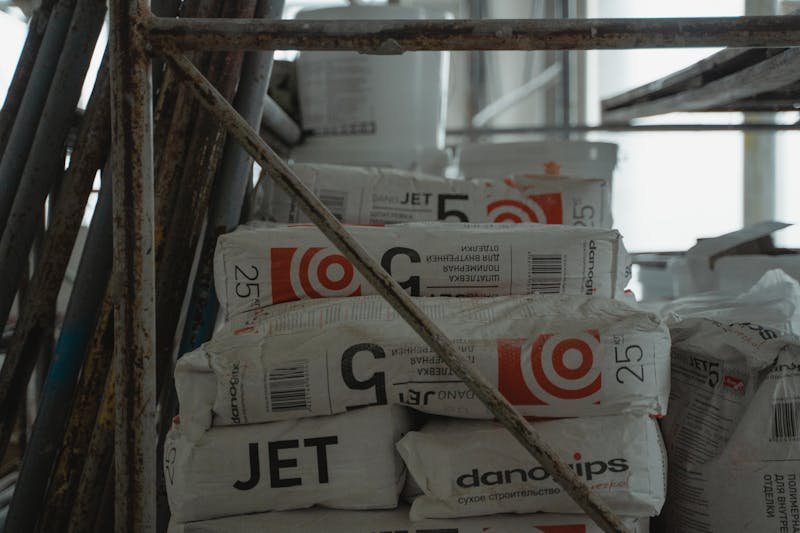
- Quikrete 80lb fast-setting concrete mix — 54 bags covers this pour with waste; fast-set formulas work well for small slabs where you want to strip forms the same day
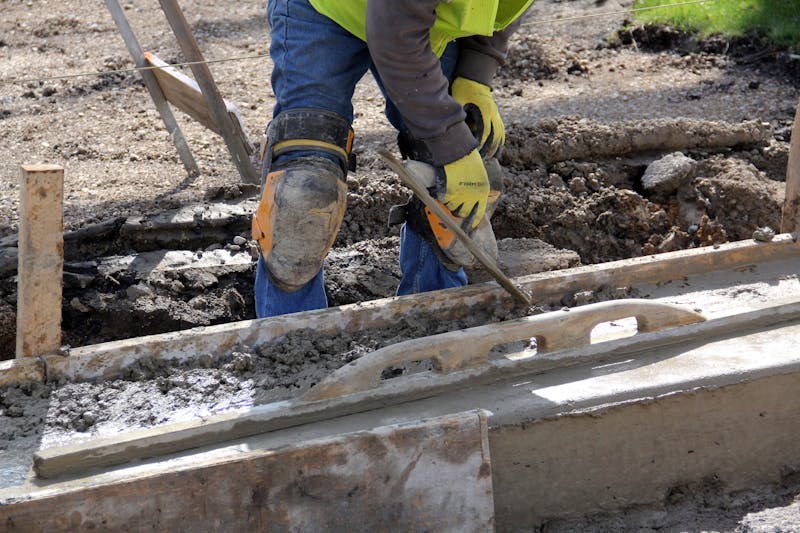
- Concrete float (16-inch finishing tool) — a 16-inch magnesium float gives you enough reach to finish from the form edges without stepping on the wet slab
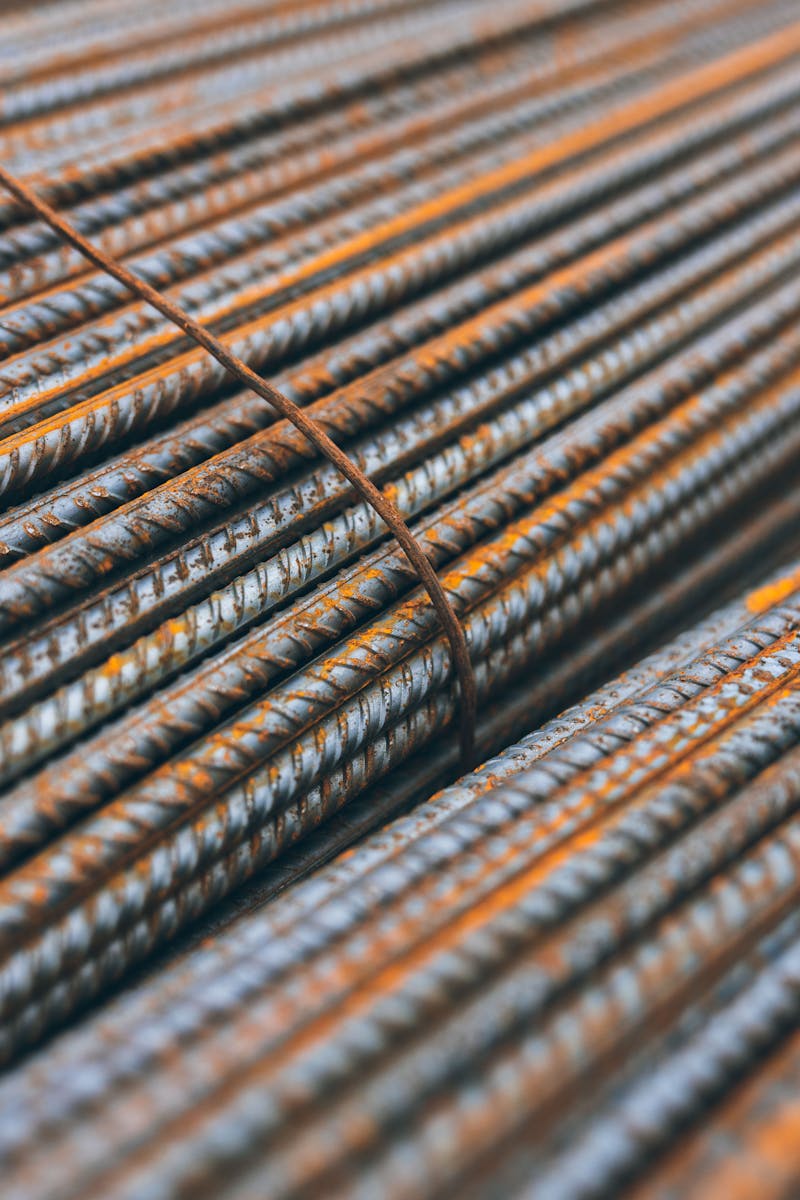
- #4 grade 60 rebar (20-foot length) — one 20-foot stick can be cut and bent into a single perimeter ring; for full coverage, space #4 bars at 16 inches on center in both directions
FAQ
How many cubic yards of concrete does an 8x12 slab require? A 4-inch-thick 8x12 slab requires approximately 1.19 cubic yards of concrete before waste. Adding a 10% waste factor brings the order quantity to about 1.30 cubic yards.
How many 80 lb bags of concrete do I need for an 8x12 slab? You need 54 bags of 80 lb concrete mix for an 8x12 slab at 4 inches thick. Each 80 lb bag yields 0.6 cubic feet, so 54 bags covers the full volume with waste factored in.
How many 60 lb bags of concrete do I need for an 8x12 slab? Plan on 72 bags of 60 lb mix for an 8x12 slab at 4 inches thick. Each 60 lb bag yields 0.45 cubic feet.
Is 4 inches thick enough for a shed foundation slab? 4 inches is standard for a shed slab that won't carry vehicles. If you're storing a riding mower or heavy equipment, consider stepping up to 5 or 6 inches and recalculating your concrete volume.
Should I order ready-mix or use bags for a slab this size? At 1.19 cubic yards, bagged mix is a practical choice—ready-mix trucks typically have a 1-yard minimum and charge short-load fees on small pours. Mixing bags by hand or with a rented drum mixer is cost-effective at this volume.
What does the 10% waste factor account for? The waste factor covers concrete lost to uneven subgrade, over-excavation at the edges, spillage during pour, and slight variations in form dimensions. Ordering 10% extra avoids a short pour.
Does an 8x12 shed slab need rebar? Most building codes don't require rebar in a residential shed slab, but adding a single layer of #4 rebar on 16-inch centers or 6x6 wire mesh significantly reduces cracking over time. Check your local code before pouring.
How long does it take to mix and pour 54 bags of concrete by hand? Mixing 54 bags by hand typically takes two people 3–5 hours including setup and finishing. A rented electric drum mixer cuts that time roughly in half.
What compressive strength mix should I use for a shed slab? A standard 3,000 PSI mix (common in most bagged products) is adequate for a shed slab. If the slab will see freeze-thaw cycles, look for a mix rated at 4,000 PSI or marked "high strength."
How thick should the gravel base be under an 8x12 shed slab? A 4-inch compacted gravel base is the minimum for drainage and frost protection in most climates. Cold climates with deep frost lines may warrant 6 inches of compacted crushed stone.
Can I pour an 8x12 slab in sections? You can, but a single monolithic pour is stronger for a slab this small. If you must pour in sections, place a keyed construction joint or use a bonding agent on the cold joint before the second pour.
How do I convert cubic yards to bags if my bag size isn't listed? Multiply cubic yards by 27 to get cubic feet, then divide by the bag yield in cubic feet. For example, a 50 lb bag yielding 0.375 cubic feet: 1.19 × 27 ÷ 0.375 = 86 bags.