Short answer
A 10x10 bedroom with 8-foot ceilings, one door, one window, and a drywalled ceiling needs 12 sheets of 4x8 drywall. That works out to 384 square feet of net surface area. You'll also need 360 screws, 840 linear feet of joint tape, and 2 five-gallon buckets of joint compound.
How this calculator works
The drywall calculator for a 10x10 bedroom takes six inputs and runs them through a single formula that accounts for wall area, ceiling area, and the area you don't need to drywall because a door or window is there.
The inputs
- Room length and width — The footprint of the room in feet. This example is 10 × 10.
- Ceiling height — 8 feet is the residential standard. Taller walls mean more square footage per wall.
- Number of doors — Each door subtracts 21 square feet from the total (a standard 3-foot-wide × 7-foot-tall rough opening).
- Number of windows — Each window subtracts 15 square feet (a standard 3 × 5 rough opening). You can adjust counts if your openings are larger than average.
- Include ceiling — Set to yes (1) for a full room drywall job. Set to no (0) if you're only doing walls, or if the ceiling is already finished.
The wall area formula
Wall area is the perimeter of the room times the ceiling height: 2 × (length + width) × height. For a 10 × 10 room at 8 feet that's 2 × 20 × 8 = 320 square feet of gross wall area.
Subtracting openings
From that 320 square feet, the formula removes 21 square feet for the one door and 15 square feet for the one window: 320 − 21 − 15 = 284 square feet of net wall area.
Adding the ceiling
With the ceiling option enabled, the formula adds length × width = 10 × 10 = 100 square feet. Total surface area: 284 + 100 = 384 square feet.
Converting to sheets
Each 4 × 8 sheet covers 32 square feet. Dividing 384 by 32 gives exactly 12 sheets. The formula uses a ceiling function (always rounds up), so a result of 12.1 would still call for 13 sheets. In this case the math lands perfectly on 12.
Secondary outputs
The calculator also estimates three consumables:
- Screws: 30 screws per sheet × 12 sheets = 360 screws. This reflects standard field screw spacing of roughly 12 inches along studs and joists, plus perimeter fasteners.
- Joint tape: 70 linear feet per sheet × 12 sheets = 840 linear feet. Every butt joint and tapered seam gets taped in the first coat.
- Joint compound: 1 five-gallon bucket per 8 sheets, rounded up = 2 buckets. All-purpose compound is used for all three coats in most DIY applications. Pre-mixed compound loses volume as it dries, so two buckets gives you enough material without running short on the finish coat.
These estimates assume a standard three-coat finish (tape, filler, skim) and normal screw spacing. If you're going for a Level 5 skim-coat finish, budget a third bucket of compound.
What the calculator does not account for
The formula uses average opening sizes. An oversized sliding glass door or a triple window bank will cause it to underestimate. It also does not account for irregular room shapes, knee walls, vaulted ceilings, or closet interiors—each of those should be measured and calculated separately.
Recommended materials
For a 10x10 bedroom job, you're buying in small enough quantities that product quality makes a noticeable difference in finishing time. Lightweight panels are easier to handle solo and cut down on fatigue when hanging the ceiling. For compound, all-purpose pre-mixed works for all three coats but dries slower; if you're in a hurry, use lightweight setting compound for the tape coat and all-purpose for the finish coats.
- USG Sheetrock UltraLight 1/2 inch drywall (4x8) — about 25% lighter than standard panels, worth it for ceiling work
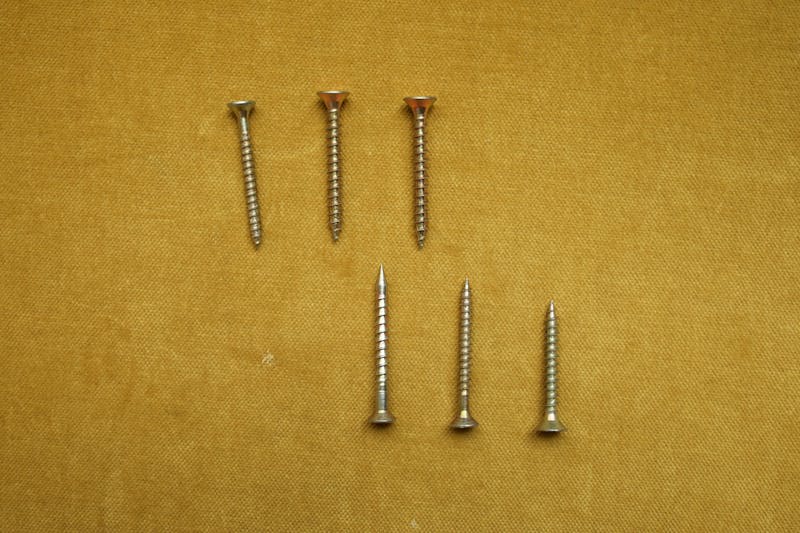
- Grip-Rite 1-5/8 inch drywall screws (5 lb box) — coarse thread for wood framing; one box covers this job
- USG Sheetrock all-purpose joint compound (5 gallon) — pre-mixed, sands easily, good for all three coats
- Saint-Gobain ADFORS FibaTape mesh joint tape (500 ft) — self-adhesive mesh eliminates the tape-bubbling problem; buy two rolls for a 12-sheet job
FAQ
How many drywall sheets do I need for a 10x10 bedroom? A standard 10x10 bedroom with 8-foot ceilings, one door, one window, and the ceiling included requires 12 sheets of 4x8 drywall. That covers 384 square feet of net wall and ceiling area after subtracting openings.
Does that 12-sheet count already include a waste factor? The calculator rounds up to whole sheets using the ceiling function, which absorbs most cut waste on a simple room. If your room has a lot of corners, angled walls, or built-ins, add 1–2 extra sheets manually.
Should I drywall the ceiling myself or use a different panel? You can use standard 1/2-inch 4x8 panels on the ceiling, but 1/2-inch can sag between joists spaced 24 inches on center. If your ceiling joists are 24 inches OC, use 5/8-inch panels or hang perpendicular to joists.
How many drywall screws will I need? For 12 sheets you'll need approximately 360 screws (1-5/8 inch). A 5-pound box contains roughly 500–600 screws, so one box covers this job with room to spare.
How much joint compound do I need for a 10x10 room? Two 5-gallon buckets of all-purpose joint compound is the estimate for 12 sheets. That accounts for three coats—tape coat, filler coat, and finish coat—which is standard for a smooth wall finish.
What's the 840 linear feet of joint tape for? Every seam between sheets needs tape embedded in joint compound. At roughly 70 linear feet of tape per sheet, 12 sheets generates about 840 linear feet of seams. A 500-foot roll covers most of the job; buy two to avoid a mid-project trip.
Does the formula subtract door and window area correctly? Yes. The calculator deducts 21 square feet per door (roughly a 3x7 opening) and 15 square feet per window (roughly a 3x5 opening). These are standard rough-opening averages—if your openings are unusually large, run the calculator with adjusted counts.
Can I use 4x12 sheets instead of 4x8? Yes, 4x12 sheets reduce seam count in an 8-foot room since one sheet spans floor to ceiling with no horizontal butt joint. Divide the total area (384 sqft) by 48 square feet per 4x12 sheet—you'd need 8 sheets. The trade-off is heavier panels and harder solo handling.
What thickness drywall should I use for bedroom walls? 1/2-inch drywall is standard for interior walls and ceilings with 16-inch OC framing. Use 5/8-inch Type X if the wall borders a garage or needs fire separation per code.
How do I handle the closet inside a 10x10 bedroom? The calculator treats the room as a simple rectangle. If your bedroom has a closet, measure and add its walls separately as a second calculation, or increase the room dimensions slightly and add the overage manually.
Is corner bead included in the material estimate? No. The calculator covers sheets, screws, tape, and compound. For a 10x10 room count your outside corners—typically 4 for the room plus any door casing corners—and buy metal or vinyl corner bead accordingly.
What does 'include ceiling' change in the calculation? When ceiling is included, the formula adds length × width (100 sqft for a 10x10 room) to the total wall area before dividing by 32. Excluding it drops total area to 284 sqft and reduces the sheet count to 9.