Short answer
A 10x12 office needs 10 sheets of 4×8 drywall for walls only. That figure assumes 8-foot ceilings, 1 standard door, and 2 windows, and includes a 10% waste factor. The net wall area works out to 301 square feet.
How this calculator works
The calculator takes five measurements — room length, room width, ceiling height, number of doors, and number of windows — plus a toggle for whether to include the ceiling. It then runs through a straightforward area calculation, subtracts the openings, applies a waste factor, and rounds up to whole sheets.
Wall area formula
The four walls of a 10×12 room at 8-foot height give you a gross perimeter area:
- Two walls of 10 ft × 8 ft = 160 sq ft
- Two walls of 12 ft × 8 ft = 192 sq ft
- Gross total: 352 sq ft
From that, the calculator subtracts standard opening deductions:
- 1 door × 21 sq ft = 21 sq ft
- 2 windows × 15 sq ft = 30 sq ft
Net wall area: 352 − 21 − 30 = 301 sq ft
Because the ceiling toggle is set to 0 (walls only), no ceiling area is added.
Waste factor
Raw area alone understates how much material you actually need. Drywall comes in fixed 4×8 panels (32 sq ft each), and every cut produces waste. Butt joints, outlet cutouts, corners where panels need to be trimmed — these off-cuts add up. The calculator applies a 10% waste factor, bringing the effective area to about 331 sq ft, then divides by 32 and rounds up:
331 ÷ 32 = 10.34 → 10 sheets
The ceiling function ensures you never under-order by rounding up, not down.
Sheet size assumption
This calculator uses standard 4×8 sheets (32 sq ft). Some contractors prefer 4×12 sheets for fewer seams on tall walls, but 4×8 is far more common at lumber yards and easier to handle solo. If you switch to 4×12 panels, divide your net area (with waste) by 48 instead of 32 — you'd need about 7 sheets.
Secondary outputs
The calculator also estimates the consumables needed for the job:
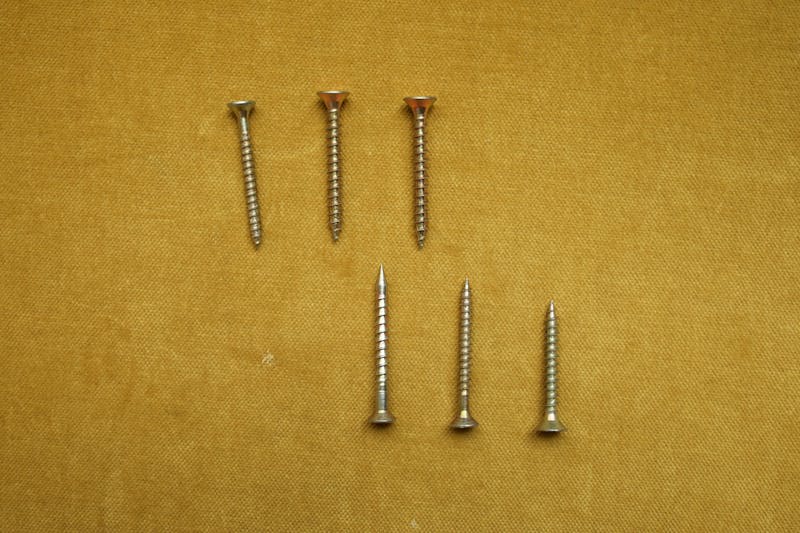
- 300 drywall screws — at 30 per sheet, which accounts for screws along studs and plates at proper 12-inch field spacing and 8-inch edge spacing
- 700 linear feet of joint tape — estimated at 70 feet per sheet to cover all seams and corner bead
- 2 buckets of joint compound — one bucket per 8 sheets, enough for three coats (tape coat, filler coat, finish coat)
These are working estimates. A very clean installation with minimal cuts may use slightly less tape and compound. A heavily detailed room with lots of outlets will push usage up. Buying exactly to estimate is fine for screws; for compound, one extra bucket is cheap insurance.
What the output doesn't cover
The sheet count is for field drywall only. Corner bead, setting compound (for embedding tape), and primer are separate line items. The calculator also doesn't account for specialty panels — moisture-resistant greenboard for walls adjacent to bathrooms, or fire-rated Type X if your local code requires it. Check with your inspector before buying standard panels for garage or utility room walls.
Recommended materials
For a 10-sheet walls-only job, 1/2-inch standard panels are the right call for an office. Lightweight panels are worth the modest price premium if you're hanging solo — they're about 25% lighter than standard boards and easier to manage on a pair of sawhorses. Pick up screws and compound at the same time so you're not making a second trip after your first wall is up.
- USG Sheetrock UltraLight 1/2 inch drywall (4x8)
- Grip-Rite 1-5/8 inch drywall screws (5 lb box)
- USG Sheetrock all-purpose joint compound (5 gallon)
- Saint-Gobain ADFORS FibaTape mesh joint tape (500 ft)
FAQ
How many drywall sheets do I need for a 10x12 room with no ceiling? A 10x12 room at 8-foot ceiling height, with 1 door and 2 windows, requires 10 sheets of 4x8 drywall for the walls only. That covers 301 square feet of net wall area after subtracting openings.
Why are doors and windows subtracted from the drywall count? Doors and windows are open framed areas — you don't hang drywall over them. Each standard door opening deducts about 21 square feet and each window deducts about 15 square feet from the total wall area.
Does the 10-sheet count already include a waste factor? Yes. The calculator applies a 10% waste factor before rounding up to the nearest whole sheet. Waste accounts for off-cuts around corners, outlets, and any panels that get damaged during installation.
What thickness drywall should I use for a home office? 1/2-inch drywall is standard for most interior walls and works well for an office. If sound isolation matters, consider 5/8-inch Type X or a double layer of 1/2-inch, but that changes your screw and compound quantities.
How many screws do I need for 10 sheets of drywall? Plan on 300 screws total — roughly 30 per sheet. 1-5/8-inch coarse-thread screws are the standard choice for attaching 1/2-inch drywall to wood studs.
How much joint tape do I need? For 10 sheets, estimate 700 linear feet of joint tape. Mesh tape is easier for beginners; paper tape produces a flatter seam but requires more skill to bed properly.
How many buckets of joint compound do I need? Two 5-gallon buckets of all-purpose compound is the right estimate for a 10-sheet job. One bucket might stretch if you're only doing a skim coat, but two gives you room for three full coats without running short.
Can I drywall a 10x12 office by myself? Yes, though hanging sheets on walls is easier with two people for positioning. A drywall lift or panel jack helps if you're working solo. Budget a full weekend for hanging, taping, and the first coat of mud.
Should I drywall the ceiling too? If the room has an existing ceiling in good condition, walls-only makes sense. If you're starting from bare framing, add the ceiling — a 10x12 ceiling adds 120 square feet and roughly 4 more sheets.
What do I do with leftover cut pieces? Save all off-cuts larger than about 12 inches. You'll use them to patch around outlets, switches, and any areas that need backing. Small pieces also work for closet walls or filling narrow framing bays.