Short answer
A 14×16 master bedroom with 9-foot ceilings requires 22 sheets of 4×8 drywall. That figure covers all four walls plus the ceiling, accounts for 2 doors and 2 windows, and includes a 10% waste factor. Total drywall area comes to 692 square feet.
How this calculator works
The calculator takes six inputs: room length, room width, ceiling height, number of doors, number of windows, and whether you're drywalling the ceiling. For this 14×16 room at 9 feet, here's what's happening under the hood.
Wall area
The perimeter of the room is 2 × (14 + 16) = 60 linear feet. Multiply by the 9-foot ceiling height and you get 540 square feet of gross wall area. That's before any deductions.
Opening deductions
Each door subtracts 21 square feet — a standard 3×7 rough opening rounded slightly for how the sheet falls. Two doors remove 42 square feet. Each window subtracts 15 square feet, representing a typical 3×5 opening. Two windows remove another 30 square feet. Net wall area: 540 − 42 − 30 = 468 square feet.
Ceiling area
With the ceiling option enabled, the calculator adds 14 × 16 = 224 square feet. Total net area: 468 + 224 = 692 square feet.
Sheet count
A standard 4×8 sheet covers 32 square feet. Dividing 692 by 32 gives 21.625. The formula rounds up to the next whole sheet, landing at 22 sheets. The 10% waste factor is embedded — it's already applied to the area before this division, so you don't need to add extra on top unless your conditions are unusual.
Secondary outputs
Once the sheet count is set, the calculator scales three consumables:
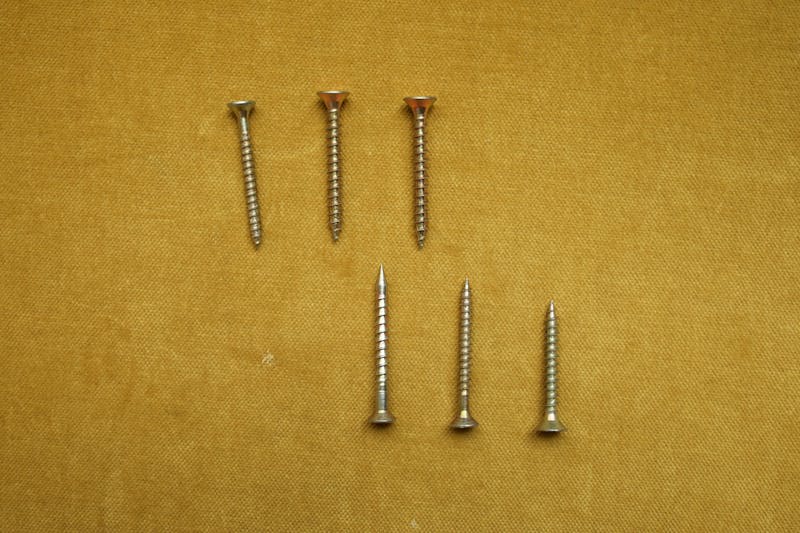
- Screws: 30 per sheet × 22 = 660 screws (1-5/8 inch coarse thread). This matches typical stud spacing at 16 inches on center with perimeter screws every 8 inches.
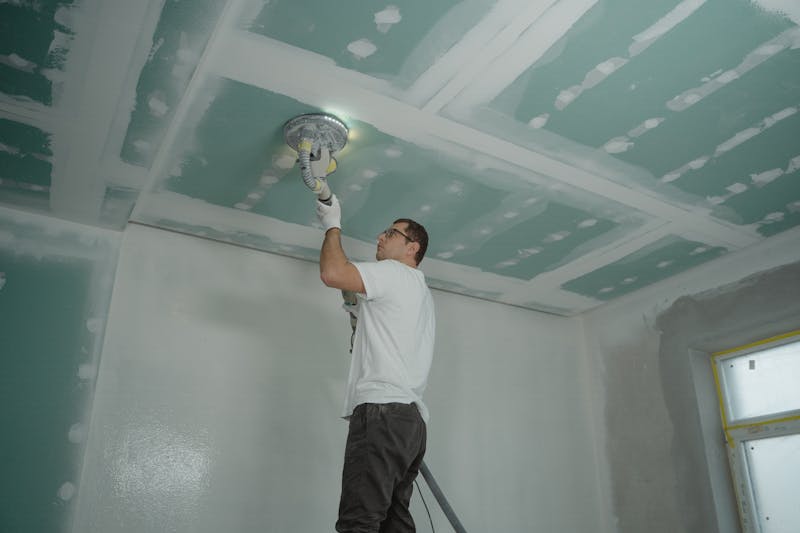
- Joint tape: 70 linear feet per sheet × 22 = 1,540 linear feet. Mesh tape is measured generously here because inside corners, butt joints, and ceiling-to-wall angles all consume more than a simple seam count would suggest.
- Joint compound: 1 five-gallon bucket per 8 sheets, rounded up = 3 buckets. Three coats (tape coat, second coat, finish coat) are baked into this ratio. One bucket could technically stretch further in skilled hands, but running short mid-project is worse than having a bucket left over.
What the output doesn't cover
The formula assumes flat rectangular walls. If your master bedroom has a tray ceiling, a vaulted section, or a soffit over a closet, add those surfaces manually. The door and window deductions also assume standard residential sizes — an oversized picture window or a 36-inch exterior door would need a custom adjustment.
The ceiling estimate is flat square footage. If you're working with a coffered ceiling or any stepped detail, measure each plane separately and add to the wall number before running the sheet count.
Recommended materials
For a room this size, material quality matters more than you'd think — cheaper board tends to sag on ceilings and dents more easily during finishing. A mesh tape is faster to apply than paper but needs more compound buildup, so pair it with a full-purpose mud rather than a lightweight formula.
- USG Sheetrock UltraLight 1/2 inch drywall (4x8) — about 25% lighter than standard 1/2-inch board, which matters when you're lifting sheets to a 9-foot ceiling solo or with one helper.
- Grip-Rite 1-5/8 inch drywall screws (5 lb box) — coarse thread, bugle head; a 5 lb box gives you roughly 700–750 screws, just enough for this job with a small margin.
- USG Sheetrock all-purpose joint compound (5 gallon) — all-purpose works for all three coats; buy 3 buckets per the estimate and keep lids sealed between sessions to prevent skinning.
- Saint-Gobain ADFORS FibaTape mesh joint tape (500 ft) — a 500-ft roll covers this room with tape to spare; mesh embeds faster than paper but requires slightly more compound fill.