Short answer
A 12×14 bedroom with 8-ft ceilings, one door, two windows, and a drywalled ceiling requires 17 sheets of 4×8 drywall. That covers 533 sq ft of surface area with a 10% waste factor built in. If you skip the ceiling, the count drops to 12 sheets.
How this calculator works
The drywall calculator takes six inputs and works through a straightforward sequence of area math before dividing by sheet size.
The six inputs:
- Room length (12 ft) and room width (14 ft) — the interior floor dimensions
- Ceiling height (8 ft) — measured from finished floor to finished ceiling
- Number of doors (1) — each deducts 21 sq ft for a standard 3×7 rough opening
- Number of windows (2) — each deducts 15 sq ft for a typical 3×5 rough opening
- Include ceiling (yes/no) — adds the full floor area as a ceiling surface when enabled
Wall area:
The perimeter of the room is 2 × (length + width), or 2 × (12 + 14) = 52 linear feet. Multiply by the 8-ft ceiling height: 52 × 8 = 416 sq ft of gross wall area.
Subtract openings:
One door at 21 sq ft and two windows at 15 sq ft each: 416 − 21 − 30 = 365 sq ft of net wall area.
Add the ceiling:
12 × 14 = 168 sq ft. Net total: 365 + 168 = 533 sq ft.
Apply waste and convert to sheets:
A 10% waste factor is folded in before rounding. Each 4×8 sheet covers 32 sq ft. The formula divides total area by 32 and rounds up to the nearest whole sheet: ceil(533 / 32) = 17 sheets.
Why 21 sq ft per door and 15 sq ft per window?
These are representative rough-opening sizes — 3 ft wide × 7 ft tall for a standard interior door, and 3 ft × 5 ft for a common double-hung window. If your openings are significantly different (a 6-ft slider or a small bathroom window, for example), use the custom inputs to get a more precise number.
Why 10% waste?
Drywall cuts rarely come out perfectly. The sheet you rip to 30 inches for a corner leaves an off-cut that often isn't reusable elsewhere. Boards get dinged, snapped along a bad score line, or cut wrong. Ten percent is a widely used trade standard for a basic rectangular room. In rooms with multiple corners, vaulted ceilings, or heavy window/door counts, bump it to 15%.
Secondary outputs and what to do with them:
The calculator also spits out three consumable estimates for the same 17-sheet job:
| Material | Quantity |
|---|---|
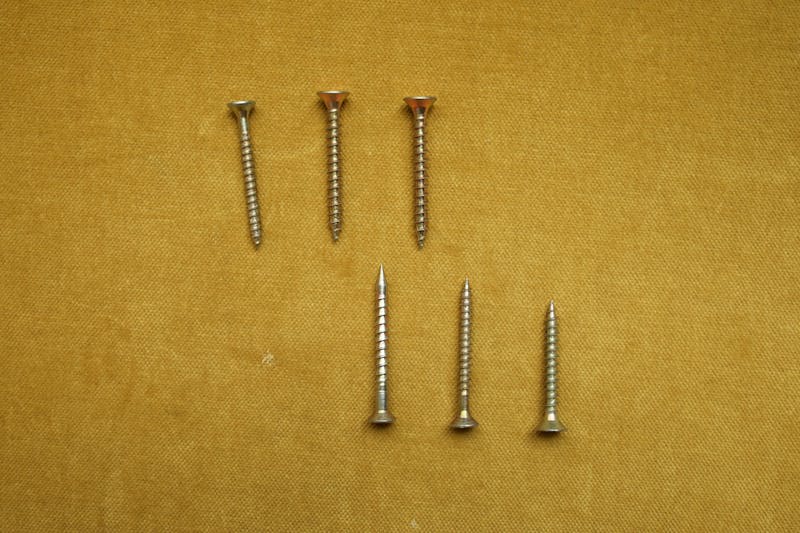
| 1-5/8 inch drywall screws | 510 |
| Joint tape | 1,190 linear ft |
| All-purpose joint compound | 3 five-gallon buckets |
The screw count uses 30 screws per sheet — about right for 16-inch stud spacing with field screws 12 inches apart and edge screws 8 inches apart. The tape estimate runs 70 linear feet per sheet to cover all seams and inside corners. Joint compound at one 5-gallon bucket per 8 sheets is a rough guide for three-coat finishing; heavy-handed mudders or rooms with lots of seams should buy one extra bucket.
Recommended materials
For a standard 12×14 bedroom, lightweight 1/2-inch drywall makes hanging and lifting easier, especially on the ceiling. Mesh tape is faster for seams than paper tape in less experienced hands, though paper tape produces a flatter finish. Drywall screws are non-negotiable — nails pop over time as the framing dries.
- USG Sheetrock UltraLight 1/2 inch drywall (4x8) — lighter than standard board, easier to manage as a two-person crew
- Grip-Rite 1-5/8 inch drywall screws (5 lb box) — coarse-thread for wood framing; buy two boxes for this job
- USG Sheetrock all-purpose joint compound (5 gallon) — works for taping, topping, and finish coats so you're not managing multiple products
- Saint-Gobain ADFORS FibaTape mesh joint tape (500 ft) — self-adhesive mesh; three rolls covers the 1,190 linear feet this job requires
FAQ
How many drywall sheets do I need for a 12x14 bedroom? You need 17 sheets of 4×8 drywall for a 12×14 bedroom with 8-ft ceilings, one door, and two windows. That figure includes the ceiling and a 10% waste factor.
Does the calculator include the ceiling? Yes, by default it adds the ceiling area (12 × 14 = 168 sq ft) to the wall area. If you're only drywalling the walls, the sheet count drops to 12 sheets.
What size drywall sheets does the calculator use? The formula uses standard 4×8 sheets, which cover 32 square feet each. If you plan to use 4×12 sheets (48 sq ft each), divide the total square footage of 533 by 48 instead.
How much do standard doors and windows subtract from the sheet count? The calculator deducts 21 sq ft per door opening and 15 sq ft per window opening. These are typical rough-opening sizes; adjust in the calculator if your openings differ.
How many drywall screws do I need for 17 sheets? Plan on 510 screws — roughly 30 per sheet at standard 12-inch spacing in the field and 8-inch spacing at edges. A 5-lb box of 1-5/8-inch screws holds about 400–500 screws, so buy two boxes.
How much joint compound do I need? For 17 sheets you need approximately 3 five-gallon buckets of all-purpose joint compound. That estimate covers taping, two fill coats, and a finish coat.
How much joint tape do I need? The estimate is 1,190 linear feet of tape for 17 sheets. A 500-ft roll covers roughly 8 sheets, so buy three rolls to have enough for all seams and inside corners.
Should I use 1/2-inch or 5/8-inch drywall in a bedroom? 1/2-inch is standard for interior bedroom walls and ceilings on 16-inch stud spacing. Use 5/8-inch Type X if the bedroom wall is adjacent to a garage or if local code requires a fire-rated assembly.
What is the waste factor used in this calculation? The formula applies a 10% waste factor before rounding up to the nearest whole sheet. This accounts for off-cuts at corners, around openings, and damaged sheets.
Can I reduce waste by using longer sheets? Yes. 4×12 or 4×16 sheets reduce the number of horizontal butt joints, which means less taping and less waste from short cuts. They're harder to handle alone but save finishing time.
How long does it take to hang drywall in a 12x14 bedroom? An experienced crew of two can hang the walls and ceiling of a 12×14 bedroom in 3–5 hours. Finishing (taping, mudding, and sanding) typically adds two to three days to allow drying time between coats.
Do I need special drywall for a bedroom ceiling? Standard 1/2-inch drywall works on ceilings with 16-inch joist spacing. If joists are 24 inches on center, use 5/8-inch sheets or sag-resistant ceiling board to prevent sagging over time.