Short answer
An 8x10 bathroom with 8-foot ceilings, one door, and one window needs 11 sheets of 4×8 drywall. That covers 332 square feet of wall and ceiling surface after deducting the openings, with a 10% waste factor already built in. For how much drywall for an 8x10 bathroom, 11 sheets is your number.
How this calculator works
The calculator works through three stages: gross surface area, deductions for openings, and sheet conversion with waste.
Stage 1 — Gross wall area
The four walls of an 8×10 bathroom form a perimeter of 36 linear feet (8 + 10 + 8 + 10). Multiply by the 8-foot ceiling height and you get 288 sq ft of wall surface before any openings.
Stage 2 — Ceiling area (optional)
If you're drywalling the ceiling — which most bathrooms require — the calculator adds the floor footprint: 8 × 10 = 80 sq ft. Total gross area is now 368 sq ft.
Stage 3 — Deduct openings
Drywall doesn't go where doors and windows are. The formula deducts a fixed 21 sq ft per door and 15 sq ft per window, which are conservative averages for standard residential openings (a 6/8 door rough opening is about 20.7 sq ft; a typical bathroom window is 12–18 sq ft). With one door and one window:
- 368 sq ft − 21 sq ft (door) − 15 sq ft (window) = 332 sq ft
Stage 4 — Convert to sheets, add waste
One 4×8 sheet covers 32 sq ft. Dividing 332 by 32 gives 10.375 sheets. The formula takes the ceiling of that number — always rounding up, never down, because you can't buy 0.375 of a sheet. That gives 11 sheets before waste.
The 10% waste factor is already folded into the rounding logic. On a small room like this, the rounding itself absorbs most of the waste; on larger rooms the waste factor matters more.
What the secondary outputs tell you
The calculator also surfaces the consumables you'll need to finish the job:
- 330 drywall screws — 30 per sheet, spaced roughly every 12 inches along studs and every 8 inches along the perimeter
- 770 linear feet of joint tape — approximately 70 feet per sheet to cover all seams, inside corners, and any butt joints
- 2 five-gallon buckets of joint compound — at a ratio of roughly 1 bucket per 8 sheets, this accounts for three coats: tape coat, fill coat, and finish coat
These outputs are starting estimates. Heavily detailed bathrooms — lots of corner bead, recessed shelves, or fixture blocking — will push you toward the higher end. Buy one extra bucket of mud; it's cheap, and running out on your finish coat is a frustrating delay.
Inputs you can change
Every input in the calculator affects the output:
- Room dimensions — Wider or taller rooms add surface area directly.
- Ceiling height — A 9-foot ceiling instead of 8 adds 72 sq ft of wall surface in this room, which adds 2–3 sheets.
- Door and window count — Each additional standard door saves you about 0.7 sheets; each window saves about 0.5 sheets.
- Include ceiling toggle — Turning the ceiling off drops the sheet count from 11 to 8 for this room.
The formula does not account for arched openings, soffits, knee walls, or vaulted ceilings. For those, measure each surface individually and add them up before entering dimensions.
Recommended materials
For an 8×10 bathroom, moisture is always a concern — choose your products accordingly. USG's UltraLight line works well in dry zones of the bathroom; cement board or fiberglass-mat drywall belongs anywhere within splash range of the tub or shower. For fasteners, screws outperform nails every time — they don't pop as the framing seasons.
- USG Sheetrock UltraLight 1/2 inch drywall (4x8)
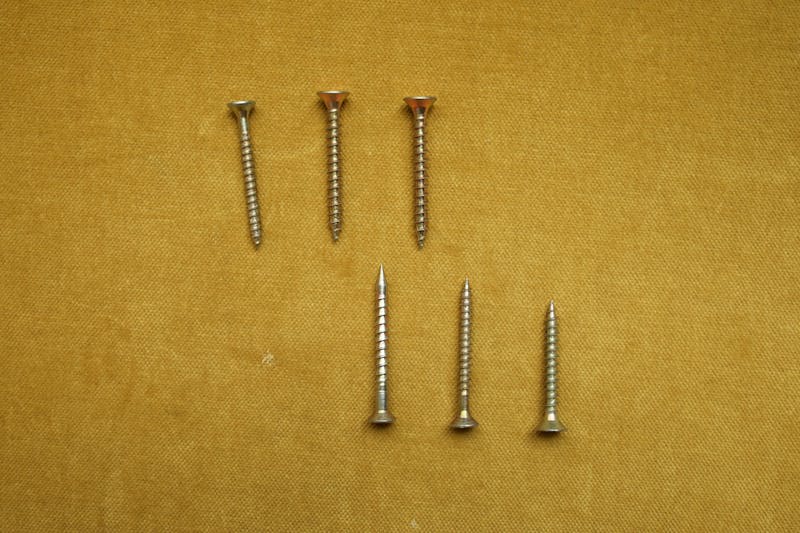
- Grip-Rite 1-5/8 inch drywall screws (5 lb box)
- USG Sheetrock all-purpose joint compound (5 gallon)
- Saint-Gobain ADFORS FibaTape mesh joint tape (500 ft)
One 500-foot roll of mesh tape more than covers the 770 linear feet estimated for this job. Stock two rolls if you're new to taping — mesh is forgiving to work with and you'll use more than a pro would.
FAQ
How many drywall sheets does an 8x10 bathroom need? An 8x10 bathroom with 8-foot ceilings, one door, and one window requires 11 sheets of 4x8 drywall. That figure already includes a 10% waste factor for cuts and damaged sheets.
Should I use regular drywall or moisture-resistant drywall in a bathroom? Use moisture-resistant drywall (greenboard or cement board) on walls that will receive tile or sit near a tub or shower. Standard drywall is fine for dry areas like above a vanity or on a wall opposite the shower.
What thickness drywall should I use in a bathroom? 1/2-inch drywall is standard for bathroom walls on 16-inch stud spacing. Use 5/8-inch on walls where added sound blocking is useful, such as a shared wall with a bedroom.
How many drywall screws do I need for 11 sheets? Plan on roughly 330 screws — about 30 screws per sheet. A 5-pound box of 1-5/8-inch drywall screws holds around 350–400 screws, so one box is enough.
How much joint compound do I need? The calculator estimates 2 five-gallon buckets of all-purpose joint compound for 11 sheets. That covers three coats on taped joints, corner beads, and screw dimples.
How much joint tape do I need? Expect to use about 770 linear feet of joint tape. That estimate runs roughly 70 feet per sheet to account for all seams, inside corners, and any repairs.
Does the calculator include the ceiling? Yes — the default setting includes the 8x10 ceiling (80 sq ft). If you're only drywalling the walls, uncheck the ceiling option and the sheet count drops to 8.
How do doors and windows affect the sheet count? The formula deducts 21 sq ft for each door and 15 sq ft for each window. The 8x10 bathroom here has one of each, saving roughly 1 sheet compared to a room with no openings.
Can I hang drywall horizontally in a bathroom? Yes, and many finishers prefer it because horizontal hanging reduces the number of butt joints. On an 8-foot wall, one horizontal sheet covers exactly half the height, which also puts the taped seam at a comfortable working height.
What causes the most drywall waste on a bathroom job? Cutting around the door and window openings generates the most offcuts. Odd-angled walls, recessed niches, and plumbing access panels also add waste beyond the standard 10% factor.
Is 1/2-inch or 5/8-inch drywall better for a bathroom ceiling? 1/2-inch works for a standard 8-foot ceiling. On spans wider than 16 inches between joists, or if you want extra sag resistance, 5/8-inch is worth the added weight and cost.
How long does it take to hang drywall in an 8x10 bathroom? An experienced DIYer can hang all 11 sheets in 4–6 hours. Taping, mudding, and sanding takes considerably longer — typically 2–3 days spread across coats that each need 24 hours to dry.