Short answer
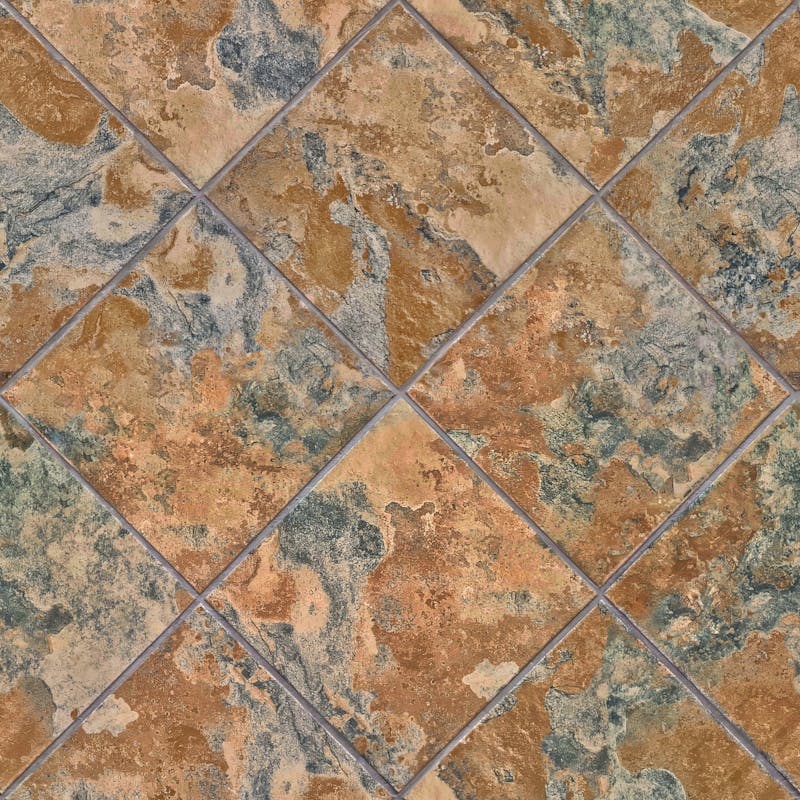
A 10×12 entryway tiled diagonally with 12-inch square tiles requires 138 tiles. That count applies a 15% waste factor—the standard allowance for diagonal patterns—to the 120 sq ft floor area. You'll also need 3 bags of thinset, 2 bags of grout, and 8 sheets of cement backerboard.
How this calculator works
The calculator takes four inputs and produces a tile count plus material quantities for thinset, grout, and backerboard.
The four inputs:
- Floor length and width — measured in feet. For this variant: 10 ft × 12 ft = 120 sq ft of floor area.
- Tile size — entered as the side length in inches for square tiles. This example uses 12-inch tile, so each tile covers 144 sq in (1 sq ft).
- Waste factor — a percentage added on top of the net tile count to cover cuts, breakage, and unusable off-cuts. Diagonal layouts use 15%, straight grid uses 10%, herringbone uses 20%.
The tile count formula:
The floor area in square feet is converted to square inches (multiply by 144), then divided by the area of one tile in square inches. The result is multiplied by 1 plus the waste factor, then rounded up to the nearest whole tile.
For this floor:
(10 × 12 × 144 × 1.15) ÷ (12 × 12) = 138 tiles
Breaking that down: 120 sq ft × 144 = 17,280 sq in of floor. Multiply by 1.15 for waste = 19,872 sq in. Divide by 144 sq in per tile = 138 tiles (already a whole number in this case).
Why 15% for diagonal?
Every tile touching a wall has to be cut at a 45-degree angle to fit the corner. That cut produces a triangular piece roughly half the tile's area, and those triangles almost never fit anywhere else on the floor. The more perimeter you have relative to floor area, the more acute the waste problem. A 10×12 room has 44 linear feet of perimeter, which translates to roughly 14–15 tiles worth of unusable off-cuts before you've even accounted for breakage.
A straight 90-degree layout only generates off-cuts at two walls (assuming you start centered), and those rectangular pieces often fill the opposite wall. Diagonal cuts don't offer that flexibility.
Secondary outputs:
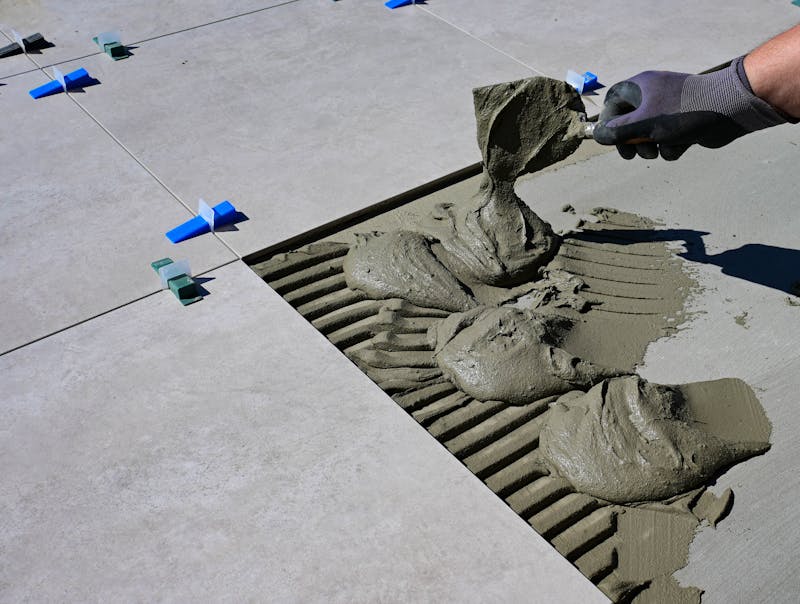
- Thinset: 1 bag of 50 lb thinset covers approximately 50 sq ft with a standard 1/4-inch V-notch trowel. At 120 sq ft, the calculator rounds up to 3 bags.
- Grout: A 25 lb bag covers roughly 75 sq ft for 12-inch tile with 1/8-inch joints. Two bags cover 120 sq ft with a small amount left over.
- Cement backerboard: 3×5 ft sheets cover 15 sq ft each. Eight sheets cover 120 sq ft exactly. If your cuts don't land perfectly, an extra sheet costs less than returning to the hardware store mid-project.
Using the outputs:
The tile count tells you what to load into your cart, not what to lay out. Always dry-lay a section before you mix any thinset—especially on a diagonal—to verify the layout looks right and the cuts at the room perimeter are acceptable. A cut smaller than half a tile at the edge looks wrong; adjust your starting point to avoid it.
The thinset and grout figures assume a flat substrate and standard joint width. A heavily contoured or out-of-level floor will consume more thinset. Larger joints (3/16 inch or wider) will consume more grout.
Common mistakes and gotchas
Recommended materials
For a 10×12 diagonal tile job, you're mixing, setting, and grouting 120 square feet—buy materials that perform consistently across the full install, not just the first few tiles. The products below match the quantities the calculator outputs and are widely available at tile and home improvement stores.
- Custom Building Products thinset mortar (50 lb) — polymer-modified formula bonds well to cement board and handles the slight lippage that diagonal layouts can introduce at cut edges
- Mapei Ultracolor Plus grout (25 lb) — stain-resistant and available in a wide color range; a good fit for high-traffic entryways where dirt and grit are constant
- USG Durock cement board (3x5 ft) — 1/2-inch thickness is standard for floor applications over wood subfloor; order 8 sheets to cover the 120 sq ft floor
FAQ
How many tiles do I need for a 10x12 entryway with a diagonal pattern? You need 138 tiles (12-inch square) for a 10×12 entryway laid diagonally. That figure includes a 15% waste factor to cover the extra cuts diagonal layouts require at every wall edge.
Why does a diagonal pattern need more tile than a straight lay? Every tile along a wall edge must be cut at a 45-degree angle, producing two triangular off-cuts that typically can't be reused. The resulting waste runs 15–20% versus 10% for a straight grid. A 120 sq ft floor that needs 110 tiles straight-laid requires 138 tiles when set diagonally.
What tile size works best for a 10x12 entryway? 12-inch tiles are the standard choice for an entryway this size—they cover ground quickly and keep grout lines manageable. Larger formats like 18- or 24-inch tile look proportional in bigger spaces but generate even more waste on diagonal cuts.
How much thinset do I need for a 10x12 floor? Plan on 3 bags of 50 lb thinset mortar. One bag covers roughly 50 square feet, and your floor is 120 square feet. Always account for trowel ridges—a 1/4-inch notch trowel deposits more mortar than a 3/16-inch, so a third bag gives you a safe buffer.
How many bags of grout for a 10x12 tile floor? Two 25 lb bags of grout cover a 120 sq ft floor set with 12-inch tiles and standard 1/8-inch joints. Wider joints or a sanded grout with smaller tile will consume more product per square foot.
Do I need cement backerboard under entryway tile? Yes, unless you're tiling over an existing concrete slab. Wood subfloors flex enough to crack tile and grout over time. Eight sheets of 3×5 ft cement board (15 sq ft each) cover the 120 sq ft floor with minimal leftover.
Can I use the off-cuts from diagonal tile anywhere? Occasionally. If a cut produces a triangle larger than half a tile, you can sometimes use it in a corner or closet. In practice, most diagonal off-cuts are too acute to reuse, which is exactly why the 15% waste factor is built into the count.
How do I find the starting point for a diagonal tile layout? Snap two chalk lines through the center of the room at 45-degree angles to the walls. Set your first full tile at the intersection and work outward in quadrants. Starting off-center is the most common cause of lopsided diagonal installations.
Should I rent a tile saw or use a snap cutter for diagonal cuts? Rent a wet saw. Snap cutters work for straight cuts on ceramic but struggle with the long bias cuts diagonal layouts demand. A wet saw makes clean 45-degree cuts and handles porcelain without chipping.
How long does it take to tile a 10x12 entryway? For an experienced DIYer, expect a full day for setting the tile, then 24–48 hours of cure time before grouting. Grouting and cleanup typically takes 2–4 additional hours. Add time for backerboard installation if your subfloor is wood.
Does grout color affect how many bags I need? No, grout color doesn't change coverage. Coverage depends on tile size, joint width, and tile thickness. What changes is that darker grouts show efflorescence less and lighter grouts show staining more—relevant for a high-traffic entryway.
What's the difference between sanded and unsanded grout for a tile floor? Use sanded grout for joints 1/8 inch or wider, which covers most floor tile installations. Unsanded grout is for wall tile with joints under 1/8 inch. Running sanded grout in a narrow joint causes it to shrink and crack; running unsanded in a wide joint produces a weak, crumbly fill.