Short answer
A 14×16 living room needs 247 tiles when using 12-inch square tile on a straight lay with a 10% waste factor. That covers 224 sq ft of floor area. You'll also need 5 bags of thinset, 3 bags of grout, and 15 sheets of backerboard.
How this calculator works
The calculator takes four inputs: floor length, floor width, tile size, and waste factor percentage. Here's what each one does and why it matters.
Floor dimensions (length × width) The length and width are entered in feet. Multiplied together, they give the floor area in square feet — in this case 14 × 16 = 224 sq ft. Measure to the walls, not to the edge of existing baseboards. If you plan to remove the baseboards before tiling (which is the cleaner approach), measure wall to wall.
Tile size The calculator uses a single dimension in inches and treats the tile as a square. For this variant, that's a 12-inch tile, which has an area of 144 sq in. If you're using true plank tile — say 6×24 inches — the shape is not square, and you'll need to convert: find the number of pieces per square foot from the product specs and work backward. Most tile boxes print "X pieces covers Y sq ft," which is the most reliable number.
Waste factor The 10% waste factor is added on top of the net area before dividing. It accounts for cuts at walls, corners, and around obstacles like thresholds and vents. The standard guidance:
- 10% — straight lay (tiles parallel to walls)
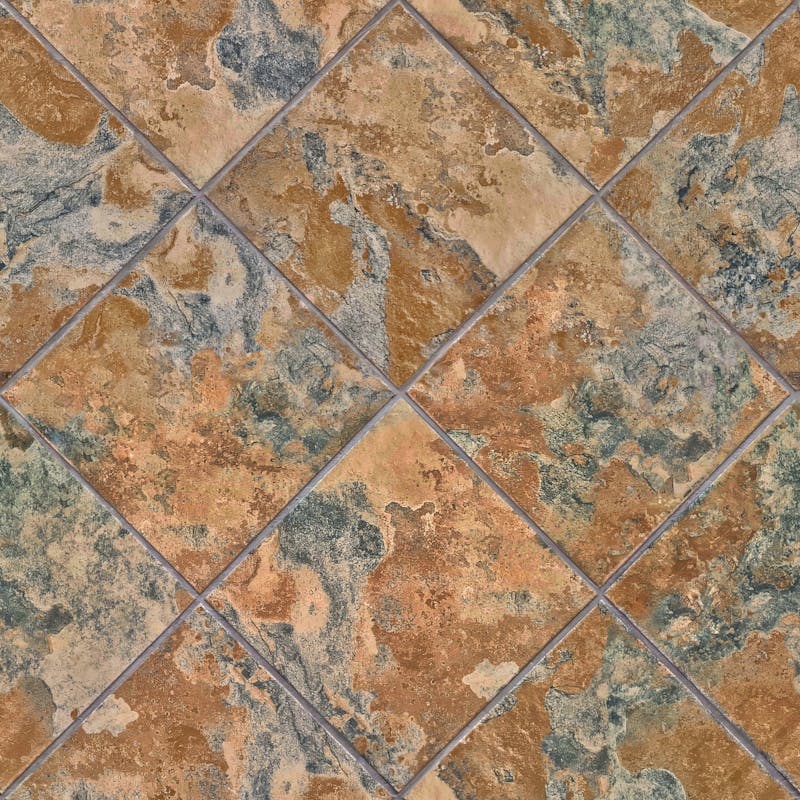
- 15% — diagonal lay (tiles rotated 45°)
- 20% — herringbone or other complex patterns
For this 14×16 room on a straight lay, 10% is appropriate. The formula multiplies the total area by 1.10 before dividing by tile area.
The formula in plain English
- Convert the floor area to square inches: 224 sq ft × 144 = 32,256 sq in
- Apply the waste factor: 32,256 × 1.10 = 35,481.6 sq in
- Divide by the area of one tile: 35,481.6 ÷ 144 = 246.4 tiles
- Round up to the next whole tile: 247 tiles
The ceiling function (rounding up, never down) is critical. Rounding down would leave you short on the last row.
Secondary outputs
Beyond the tile count, the calculator produces three material estimates:
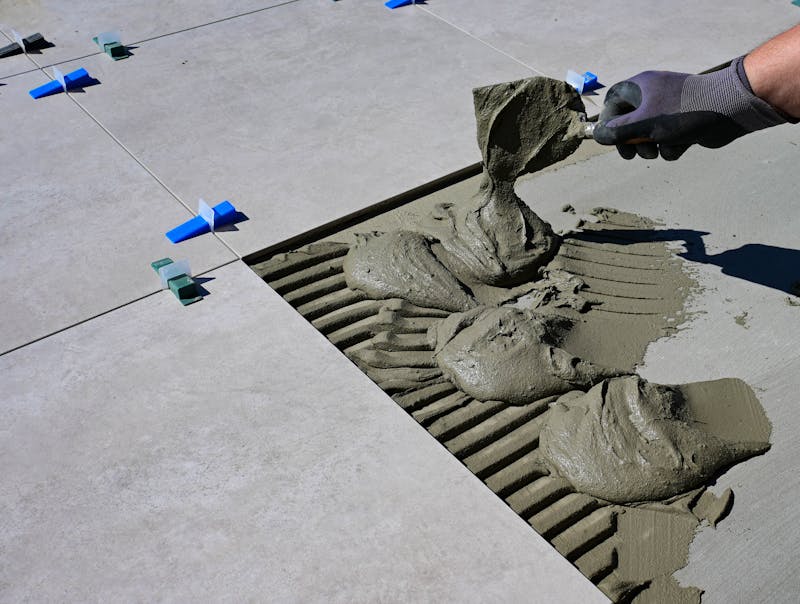
Thinset mortar — 5 bags (50 lb each). Coverage assumes a standard 3/8-inch V-notch trowel and consistent back-buttering. Large-format tile or a heavily textured substrate will reduce coverage and may require a 6th bag. Buy 6 if you're tiling over a questionable subfloor.
Grout — 3 bags (25 lb each). This estimate is calibrated for 12-inch tile with a standard 1/8-inch joint. Wider joints or unsanded grout (used for joints under 1/8 inch) have different coverage rates — always check the manufacturer's label.
Cement backerboard — 15 sheets (3×5 ft, 15 sq ft each). Backerboard is the recommended substrate over wood subfloors. The count is a straight ceiling division: 224 ÷ 15 = 14.9, rounded up to 15. Cut sheets efficiently — a half sheet left from one cut can fill a different section.
One thing this calculator doesn't account for: the layout starting point. In a 14×16 room, snapping a centerline and dry-laying a row before committing to thinset will tell you whether the cut tiles at the edges will be uncomfortably narrow (less than half a tile). If they will be, shift your starting point by half a tile width. That adjustment doesn't change the tile count materially, but it changes the result dramatically.
Recommended materials
For a 224 sq ft floor, you'll work through thinset, grout, and backerboard before the first tile goes down. Using products rated for floor applications — not wall-only formulas — matters here because foot traffic loads are different from vertical installations.
- Custom Building Products thinset mortar (50 lb) — a polymer-modified mortar suitable for ceramic, porcelain, and stone on floor applications
- Mapei Ultracolor Plus grout (25 lb) — a sanded grout rated for joints 1/8 inch and wider; the "Plus" formula has built-in stain resistance
- USG Durock cement board (3×5 ft) — standard cement backerboard for wood subfloor installations; requires 1-1/4 in backerboard screws and alkali-resistant mesh tape at joints
FAQ
How many tiles do I need for a 14x16 room? With 12-inch square tiles and a 10% waste factor, you need 247 tiles for a 224 sq ft floor. Buying a few extra boxes above that number is standard practice since dye lots change between production runs.
What waste factor should I use for plank tile laid straight? 10% is the standard waste factor for a straight-lay pattern. Diagonal layouts call for 15% and herringbone calls for 20% because more cuts are required at walls and corners.
How many bags of thinset do I need for a 14x16 floor? You need 5 bags of 50 lb thinset mortar for 224 sq ft, based on a coverage rate of roughly 50 sq ft per bag at a 3/8-inch notch. Large-format tiles or uneven substrates may require a bit more.
How many bags of grout for a 14x16 room? Plan on 3 bags of 25 lb grout for 12-inch tile at standard joint widths. Wider grout joints or smaller tiles will increase grout consumption significantly.
How many sheets of backerboard do I need? A 14×16 room requires 15 sheets of 3×5 ft cement board. Each sheet covers 15 sq ft, and you should cut from scrap pieces before opening new sheets to keep waste low.
Does tile size affect how many I need for the same room? Yes. Larger tiles cover more area per piece, so a 24-inch tile requires far fewer pieces than a 12-inch tile for the same floor. The waste factor stays the same for a given layout pattern regardless of tile size.
Should I round up to the nearest full box? Always round up to the nearest full box rather than buying exactly 247 tiles. Most boxes contain 10–15 tiles, and having leftover tiles is valuable for future repairs using the same dye lot.
Can I use this calculator for wall tile in the same room? The formula works for any rectangular surface. Measure the wall length and height as your length and width inputs, then subtract openings like windows and doors before entering the dimensions.
What is plank tile and does it change the tile count? Plank tile is a rectangular tile designed to mimic wood planks, typically in formats like 6×24 or 4×24 inches. The calculator uses square tile dimensions by default; for non-square plank tiles you need to adjust the tile size or use the actual piece count per square foot from the product label.
What is the formula used to calculate tile count? The formula is: ceiling((floor area in sq in × waste multiplier) ÷ tile area in sq in). For this room: ceiling((14 × 16 × 144 × 1.10) ÷ (12 × 12)) = 247 tiles.
How do I handle cuts around doorways and hearths? Irregular features like hearths, columns, or curved doorways add cut waste beyond the standard 10%. For a room with multiple such features, bump the waste factor to 12–15% even on a straight lay.
Is thinset coverage the same for all tile sizes? No. The Tile Council of North America recommends larger notch trowels for large-format tile, which increases mortar consumption. A 1/2-inch notch trowel used on 24-inch tile can drop coverage to 35–40 sq ft per 50 lb bag.