Short answer
A 12x14 bathroom floor requires 740 six-inch tiles when you apply a 10% waste factor to a straight-lay pattern. That accounts for the 168 square feet of floor area, with 68 extra tiles beyond the bare minimum to cover cuts along walls and around fixtures.
How this calculator works
The calculator takes four inputs — floor length, floor width, tile size, and waste factor — and returns a tile count you can bring to the tile shop.
The formula, plain English:
- Convert floor area to square inches: 12 ft × 14 ft = 168 sqft × 144 = 24,192 square inches of floor.
- Add waste: 24,192 × 1.10 (10% waste) = 26,611 square inches needed.
- Divide by one tile's area: a 6-inch tile covers 6 × 6 = 36 square inches.
- 26,611 ÷ 36 = 739.2, rounded up to 740 tiles.
Rounding always goes up — you cannot buy 0.2 of a tile.
Why 10% waste for a straight layout?
Every row of tile that meets a wall needs to be cut. Bathroom floors also have a toilet flange, a vanity base, and usually a door threshold, all of which demand additional cuts. On a 168 sqft floor, 10% equals about 17 sqft of buffer — enough for a competent DIYer to absorb breakage, bad cuts, and a few tiles flagged as defective from the box.
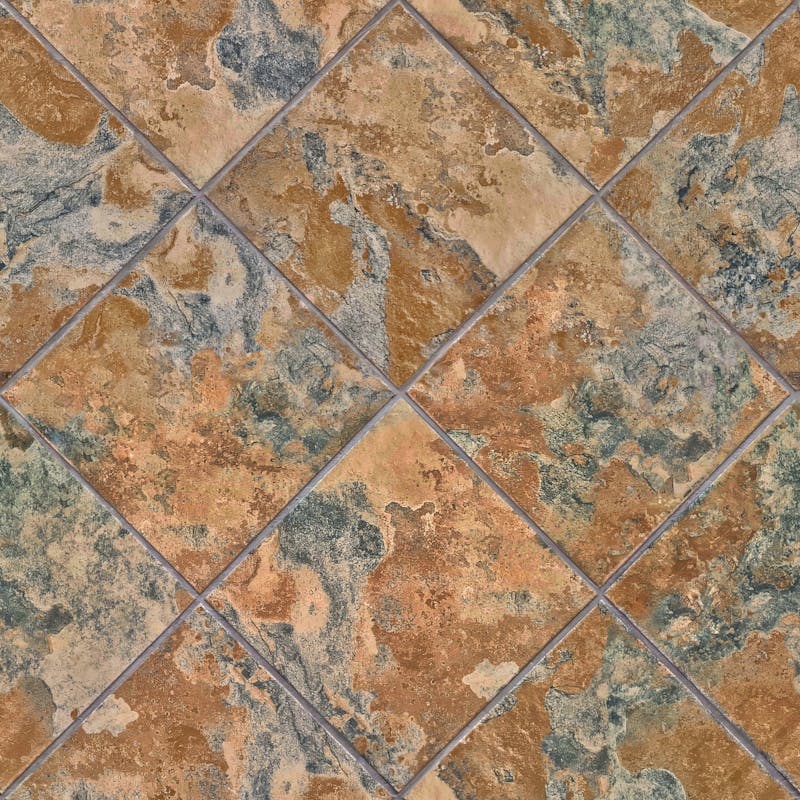
If you plan a diagonal layout, change the waste factor to 15%. Herringbone needs 20%. Those patterns require cuts on every single perimeter tile at an angle, which doubles or triples the offcut pile.
Waste factor isn't optional. Order exactly 672 tiles (the no-waste count) and you will almost certainly run short. Tile from the same SKU can vary slightly between dye lots. If you return to the store two weeks later for 10 more tiles, the new lot may not match what's on your floor.
Secondary outputs this calculator provides:
- Floor area: 168 sqft. The raw measurement before any waste adjustment. Use this for flooring underlayment, radiant heat mat, or LVP comparisons.
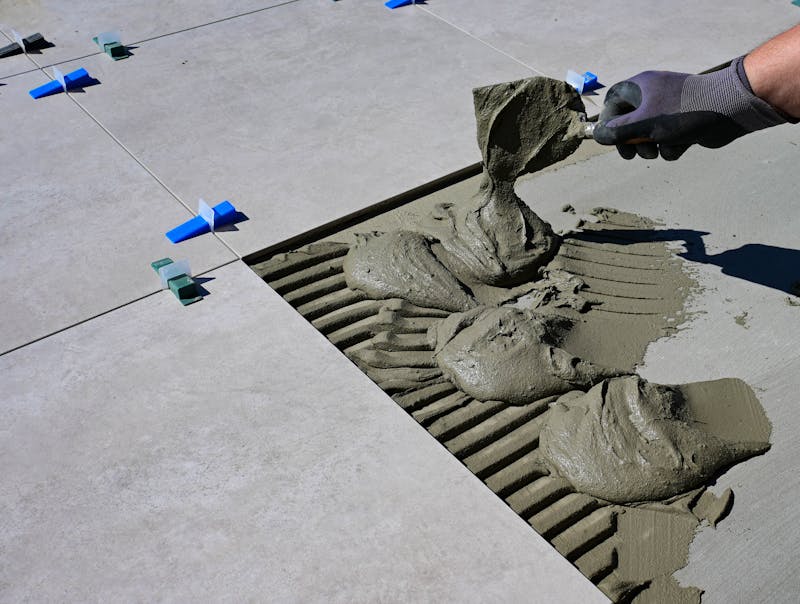
- Thinset: 4 bags (50 lb each). One bag covers approximately 50 sqft when combed with a 3/16-inch V-notch trowel. Use a larger notch trowel for tiles larger than 12 inches; smaller tiles like this 6-inch size can use a 3/16 or 1/4-inch square-notch.
- Grout: 3 bags (25 lb each). Coverage is calculated at the 12-inch tile rate of 75 sqft per bag. Because 6-inch tiles have roughly twice the linear grout joints per square foot compared to 12-inch tiles, you may need a fourth bag depending on your joint width. If your joints run wider than 3/16 inch, budget 4 bags.
- Backerboard: 12 sheets (3x5 ft, 15 sqft each). Cement board is required under tile in wet areas. Twelve sheets cover exactly 180 sqft — a 12-sheet order gives you about 12 sqft of spare material for cuts around the toilet flange and door jamb.
Inputs to double-check before ordering:
- Measure the room in two places — rooms are rarely perfectly square. Use the larger measurement for each dimension.
- Confirm your tile size. A "6-inch" tile from one manufacturer may actually be 5-7/8 inches with a grout joint designed to fill to 6 inches nominal. Your tile count doesn't change, but your layout planning does.
- The waste factor is a minimum, not a maximum. Odd room shapes, alcoves, or shower curbs that share the same tile should be added to the square footage before calculating.
Recommended materials
For a 168 sqft bathroom floor tiled in a straight pattern, you need a polymer-modified thinset rated for wet areas, a sanded floor grout, and cement board backerboard. Pick products that are compatible with each other — some grout warranties require a specific thinset brand.
- Custom Building Products thinset mortar (50 lb) — a gray polymer-modified mortar suitable for porcelain, ceramic, and natural stone on floor applications
- Mapei Ultracolor Plus grout (25 lb) — sanded grout with a built-in stain inhibitor; available in a wide color range to match 6-inch floor tile
- USG Durock cement board (3x5 ft) — the standard 1/2-inch cement board for bathroom floors; score-and-snap cuts with a carbide scoring tool
FAQ
How many 6-inch tiles do I need for a 12x14 bathroom floor? You need 740 tiles with a 10% waste factor applied. The floor covers 168 square feet, and each 6-inch tile covers 0.25 square feet, so the base count before waste is 672 tiles.
Why do I need a waste factor for tile? Cuts at walls, around fixtures, and along the perimeter mean many tiles are used only partially. A 10% waste factor covers straight-lay patterns; diagonal or herringbone layouts waste more material and need 15–20%.
How much thinset do I need for 168 square feet? You'll need 4 bags of 50 lb thinset mortar. One bag covers roughly 50 square feet, so 168 square feet divided by 50 rounds up to 4 bags.
How much grout do I need for 6-inch floor tiles? Plan on 3 bags of 25 lb grout. The coverage estimate here uses the 75 sqft-per-bag rate based on 12-inch tile joints; 6-inch tiles have more grout lines per square foot, so treat 3 bags as a minimum and have a fourth on hand.
How many backerboard sheets do I need? You need 12 sheets of 3x5 cement board (15 sqft each) to cover 168 square feet. Buy 1–2 extra sheets to account for cuts around door jambs and toilet flanges.
Should I use cement board or foam backerboard for a bathroom floor? Cement board (Durock, HardieBacker) is the standard for wet areas like bathroom floors. Foam backerboard is lighter and warmer underfoot but check the tile manufacturer's spec sheet to confirm compatibility before using it.
Does tile size affect how much grout I need? Yes. Smaller tiles have more grout joints per square foot, so 6-inch tiles use noticeably more grout than 12-inch tiles of the same area. The formula here is conservative — budget for 4 bags of grout if your joint width exceeds 3/16 inch.
Can I use unsanded grout for 6-inch floor tiles? Only if your grout joints are 1/8 inch or narrower. Most floor tile installations use 3/16 to 1/4 inch joints, which require sanded grout. Check the grout manufacturer's joint-width chart before buying.
What tile pattern adds the most waste? Herringbone adds the most waste — plan on 20% extra. A 45-degree diagonal layout adds about 15%. Straight grid layouts are the most efficient at 10%.
Is 168 square feet a lot for a bathroom? A 12x14 foot room is larger than most residential bathrooms, which typically run 50–100 square feet. At 168 square feet this is likely a master bath or a combined bath-and-laundry space.
How do I account for a toilet, vanity, or tub in my tile count? You don't deduct fixtures from the tile order. Tile is cut around them, not eliminated, and the waste factor already accounts for partial tiles. Subtract fixture footprints only if they are very large (a freestanding tub over 20 sqft, for example).
Should I buy all 740 tiles at once? Buy everything from the same dye lot. Tile color shifts between production runs, and even tiles from the same SKU can look noticeably different lot-to-lot. Order all 740 tiles — plus your waste cushion — in a single purchase.