Short answer
For a 12x16 basement floor using 12-inch square tiles with a 10% waste factor, you need 212 tiles. The floor covers 192 square feet, and the waste allowance accounts for perimeter cuts and breakage. You'll also need 4 bags of thinset, 3 bags of grout, and 13 sheets of backerboard if you're going over a wood subfloor.
How this calculator works
The calculator takes four inputs—floor length, floor width, tile size, and waste factor—and runs them through a single formula to give you a tile count you can take to the store.
The inputs explained
Length and width are the actual floor dimensions in feet. For this variant, that's 12 ft × 16 ft = 192 square feet. Measure to the longest wall on each axis; don't subtract door openings or small bump-outs. Tile cuts cost material whether or not a tile ends up under the door frame.
Tile size is entered in inches as the side length of a square tile. This calculator handles square formats only—12-inch, 16-inch, 18-inch, and so on. A 12-inch tile covers 144 square inches (1 square foot), which is why the formula multiplies the room's square footage by 144 before dividing: it converts everything to the same unit (square inches) so the arithmetic stays clean.
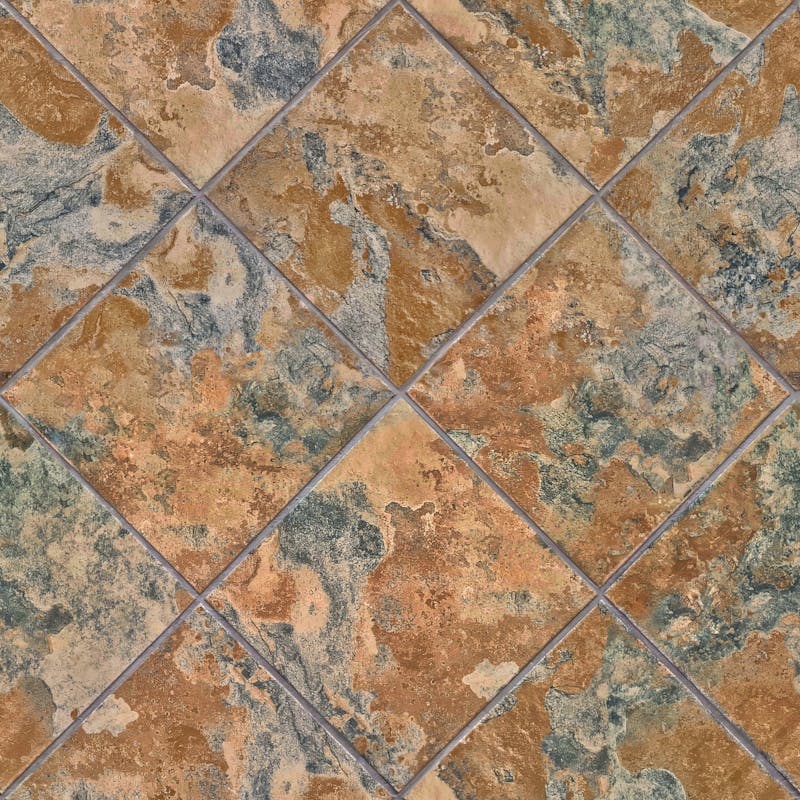
Waste factor is the percentage of additional tiles you purchase beyond the raw count. The defaults built into the label tell you what each pattern demands: 10% for a straight grid lay, 15% for a 45-degree diagonal, 20% for herringbone. A 12x16 basement with a straight lay uses 10%, which is what this variant assumes.
The formula, plain English
- Multiply length × width to get floor area in square feet: 12 × 16 = 192 sq ft
- Multiply by 144 to convert to square inches: 192 × 144 = 27,648 sq in
- Multiply by (1 + waste factor): 27,648 × 1.10 = 30,412.8 sq in
- Divide by the area of one tile (tile_size_in²): 30,412.8 ÷ 144 = 211.2 tiles
- Round up to the next whole tile: 212 tiles
You never round down on tile—partial tiles can't be returned once cut, and you need a complete tile for every position in the layout even if you only use three-quarters of it.
Secondary outputs
The calculator also computes three material quantities based on the 192 sq ft floor area:
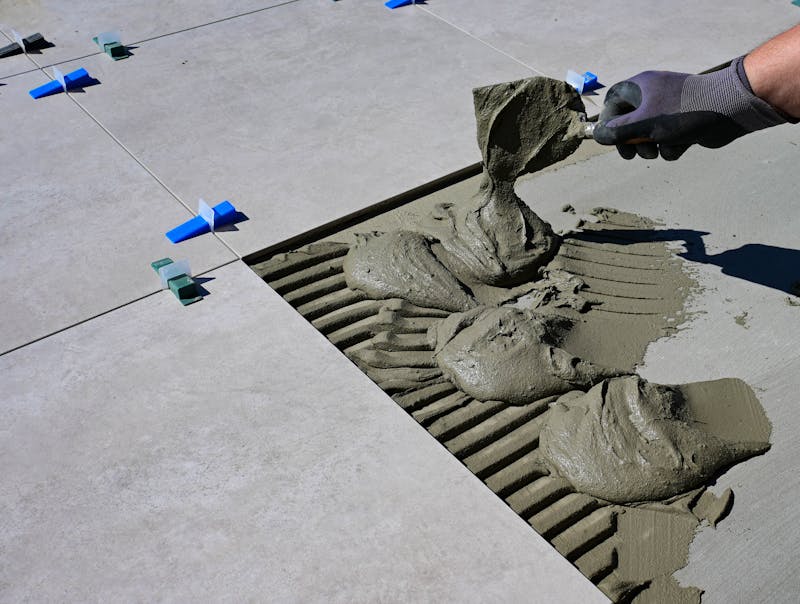
- Thinset: 4 bags of 50 lb mortar. One bag covers roughly 50 sq ft when applied with a ¼-inch notched trowel at standard thickness. Larger notch sizes reduce coverage; always check the bag's coverage chart for large-format tile.
- Grout: 3 bags of 25 lb grout. Coverage is roughly 75 sq ft per bag for 12-inch tile with a 3/16-inch grout joint. Narrower joints stretch coverage; wider joints reduce it.
- Backerboard: 13 sheets of 3×5 ft cement board (15 sq ft per sheet). Over concrete slab, this step is often skipped. Over wood subfloor—common in above-grade basements or basement additions with a raised wood floor system—backerboard is non-negotiable. Tile over unbraced plywood will crack grout joints within a year.
What the output doesn't include
The tile count is for field tile only. It doesn't include any decorative border tiles, transition strips, thresholds, or specialty pieces for floor drains. Add those separately once you've finalized the layout.
Recommended materials
For a 192 sq ft basement floor, you're working with modest quantities—4 bags of thinset, 3 bags of grout, 13 backerboard sheets—so buying exactly what the calculator outputs makes sense. Stick with products that have consistent coverage rates so the secondary output quantities stay accurate. Custom Building Products and Mapei are widely stocked at home centers, and USG Durock is the standard backerboard reference in tile industry specs.
- Custom Building Products thinset mortar (50 lb) — polymer-modified formula works on both concrete and backerboard substrates
- Mapei Ultracolor Plus grout (25 lb) — pre-mixed colorant throughout the bag; mix only what you'll use in 30 minutes
- USG Durock cement board (3x5 ft) — 1/2-inch thickness for floor use; fasten with backerboard screws, not drywall screws
FAQ
How many tiles do I need for a 12x16 basement floor? You need 212 tiles when using 12-inch square tiles with a 10% waste factor. The floor covers 192 square feet, and the extra tiles account for cuts, breakage, and minor layout adjustments.
Why do I need more tiles than the square footage suggests? A 12x16 floor is 192 square feet, which would be exactly 192 tiles at one per square foot—before waste. The 10% waste factor adds 20 tiles (rounded up to 212) to cover cuts at walls, cracked tiles, and future replacements.
How much thinset do I need for a 12x16 floor? You need 4 bags of 50 lb thinset mortar. One bag covers approximately 50 square feet, and 192 square feet divided by 50 rounds up to 4 bags.
How much grout do I need for a 12x16 floor? Plan on 3 bags of 25 lb grout. At roughly 75 square feet of coverage per bag for 12-inch tile with standard grout joints, 192 square feet requires 3 bags.
Do I need backerboard for a basement tile floor? It depends on your subfloor. Over a concrete slab, backerboard is often optional if the slab is flat and in good condition. Over wood subfloor, cement backerboard is required to prevent flex-related cracking. For a 12x16 floor you'd need 13 sheets of 3x5 ft backerboard.
Should I use a 10% or 15% waste factor for a basement floor? 10% is appropriate for a straight lay with few cuts—a simple rectangular room like a basement fits this well. Use 15% if you're cutting around columns, floor drains, or irregular features. Use 20% for diagonal or herringbone patterns.
What tile size works best for a 12x16 basement floor? 12-inch tiles are a common choice and work well on a 12x16 floor because the dimensions divide evenly, minimizing awkward cuts at the perimeter. Larger tiles like 18x18 or 24x24 can also work but require a flatter subfloor.
How do I account for a floor drain when calculating tiles? Add at least 5% to your waste factor beyond whatever pattern baseline you're using. Every tile that touches the drain requires a custom cut, and the circular opening means you'll scrap portions of several tiles.
Can I use the same tile count for a wall installation? No. This calculator is for floor area. Wall installations use the same square footage logic, but vertical surfaces often have more obstructions—outlets, windows, niches—that increase waste significantly. Use a dedicated wall tile calculator.
How long does it take to tile a 12x16 floor? An experienced DIYer can typically set tile on a 192 square foot floor in one long day, then return 24 hours later for grouting. Factor in time for layout, mixing mortar, and troweling—rushing any of those steps causes problems.
Should I buy extra tiles beyond the 212 calculated? Yes. Buy at least one extra box beyond what the calculator recommends, and store it. If a tile cracks years later, you'll want an exact match from the same dye lot. Manufacturers discontinue styles frequently.