Short answer
A 20×20 great room (400 square feet) with 18-inch tile and a 10% waste factor requires 196 tiles. That accounts for cuts at walls and normal breakage on a straight-lay pattern. You'll also need 8 bags of thinset, 6 bags of grout, and 27 sheets of cement backerboard.
How this calculator works
The core problem is converting a room's area—measured in square feet—to a tile count measured in individual pieces, then accounting for the material you'll lose to cuts and breakage.
Inputs used for this calculation
- Floor length: 20 ft
- Floor width: 20 ft
- Tile size: 18 inches square
- Waste factor: 10%
Step 1: Floor area
Multiply length by width: 20 × 20 = 400 square feet. That's your gross area. No deductions for doorways or columns are made here—if you have large fixed obstacles, subtract their footprint before entering dimensions.
Step 2: Convert to square inches
Tile is measured in inches, so the formula converts square feet to square inches: 400 sq ft × 144 = 57,600 square inches of floor.
Step 3: Tile coverage per piece
An 18-inch square tile covers 18 × 18 = 324 square inches. Dividing floor area by tile coverage gives the theoretical minimum: 57,600 ÷ 324 ≈ 177.8 tiles.
Step 4: Apply the waste factor
No tile job uses exactly the theoretical minimum. Cut tiles at walls, tiles cracked under a wet saw, and mis-set pieces pulled up before grout cures all consume material. A 10% waste factor is appropriate for a straight (grid) layout. Multiply the raw count by 1.10: 177.8 × 1.10 = 195.6, rounded up to 196 tiles.
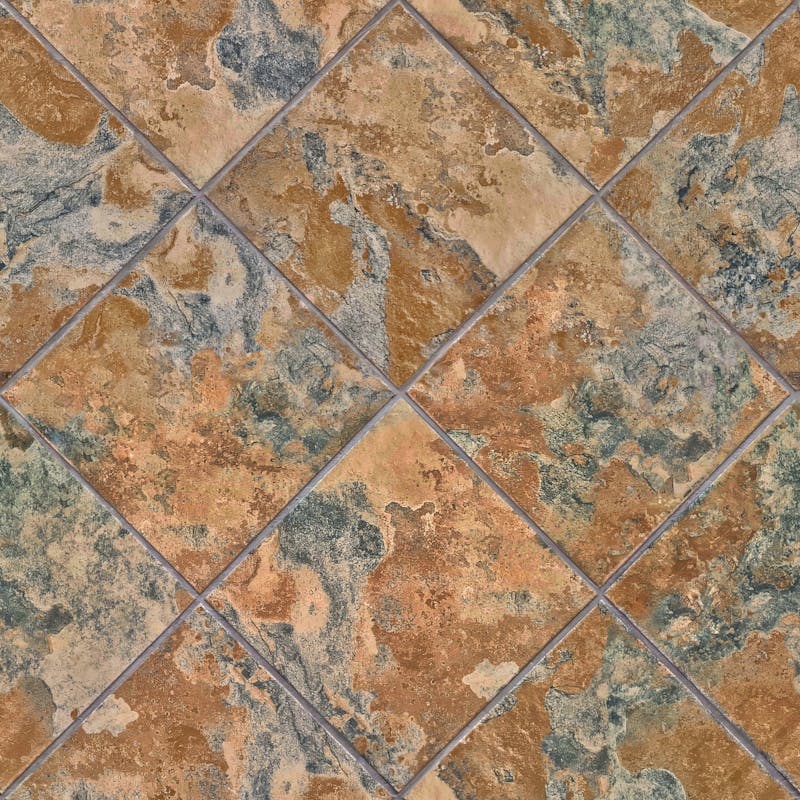
If you were running these 18-inch tiles on a 45-degree diagonal—a popular choice for large great rooms—bump the waste factor to 15%, which would push the count to 205. Herringbone pattern requires 20%, bringing it to 214.
Secondary outputs
Once you have floor area, the calculator derives three more quantities:
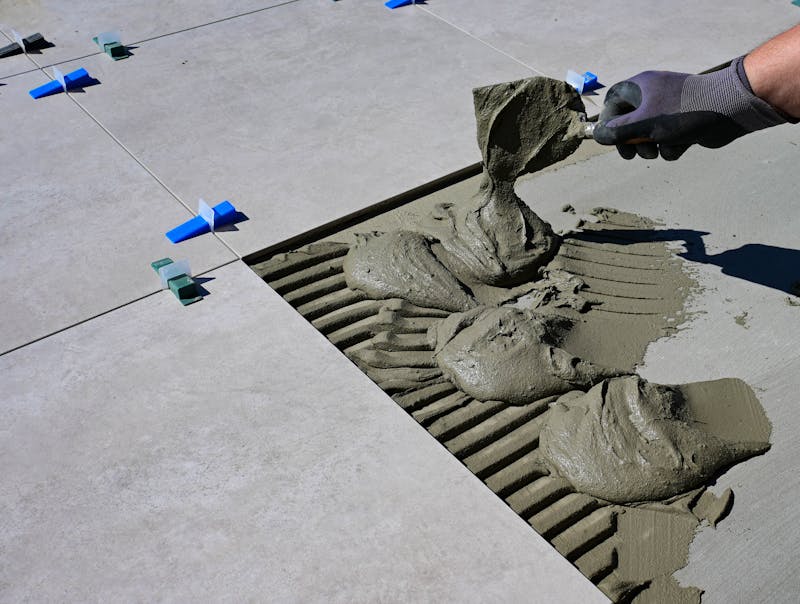
- Thinset: One 50-lb bag covers approximately 50 sq ft at standard 3/16-inch notch trowel depth. 400 sq ft ÷ 50 = 8 bags. For large-format tile (anything over 15 inches), many installers use a larger notch trowel (1/2 inch square) for better back-butter coverage, which increases thinset consumption—buy 9 bags to be safe.
- Grout: One 25-lb bag covers approximately 75 sq ft for 12-inch tile with a standard 3/16-inch joint. Large-format 18-inch tile has fewer linear feet of joint per square foot, so coverage is similar or slightly better. 400 ÷ 75 = 5.3, rounded up to 6 bags.
- Cement backerboard: USG Durock and equivalent 3×5-ft sheets cover 15 sq ft each. 400 ÷ 15 = 26.7, rounded up to 27 sheets.
What the output represents
The tile count is the number of full tiles to purchase before any job-site cuts. It is not the number of full tiles that will be physically installed—some of those 196 tiles will be cut into partial pieces for the perimeter. The count already includes enough overage for those cuts.
One layout decision that changes everything
Before finalizing your order, snap a chalk line down the center of the room both ways and do a dry layout to check how the border tiles land at the walls. If the cut at one wall would be less than 3 inches wide, shift the layout half a tile. A 2-inch sliver is both difficult to cut cleanly and looks unprofessional. Adjusting the layout costs nothing; it may slightly change how many full tiles you need.
Recommended materials
For a 400-square-foot great room floor, you'll want products rated for floor duty—not the lighter-weight options sold for backsplash work. Thinset should be polymer-modified for wood subfloor applications, grout should be stain-resistant for a high-traffic room, and cement board needs to be rated for floor use (some thinner boards are wall-only).
- Custom Building Products thinset mortar (50 lb) — polymer-modified, suitable for large-format tile on wood subfloors; 8 bags covers this job
- Mapei Ultracolor Plus grout (25 lb) — unsanded grout for joints up to 1/8 inch, sanded for wider joints; stain and efflorescence resistant
- USG Durock cement board (3x5 ft) — 1/2-inch thickness for floors; 27 sheets needed for this room
FAQ
How many 18-inch tiles do I need for a 20x20 great room? With a 10% waste factor, you need 196 tiles. The room covers 400 square feet, and each 18-inch tile covers 2.25 square feet, so the raw tile count is about 178—waste brings it to 196.
Why do I need a waste factor at all? Tiles get cut at walls, around obstacles, and occasionally crack during installation. A 10% waste factor is standard for straight layouts. Diagonal or herringbone patterns need 15–20% because more cuts are required per row.
How many thinset bags do I need for 400 square feet? A 50-lb bag of thinset mortar covers roughly 50 square feet, so you need 8 bags for this room. Buy a ninth bag if you're new to tile work—spread consistency varies with experience.
How much grout do I need for 18-inch tiles in a 400 sqft room? Six 25-lb bags will cover the job. Grout coverage depends on tile size and grout joint width; larger tiles mean fewer joints, so coverage per bag improves compared to smaller mosaic tiles.
Do I need backerboard for a great room floor? On a wood subfloor, yes. Tile laid directly on OSB or plywood will crack as the wood flexes. You need 27 sheets of 3×5 cement board for a 400 square foot room.
What's the difference between 18-inch tile coverage versus 12-inch tile coverage? An 18-inch tile covers 2.25 sq ft; a 12-inch tile covers 1 sq ft. You need fewer 18-inch tiles for the same area, but each cut wastes more material, which is why the 10% waste factor still applies.
Should I add extra tiles beyond the 196 calculated? Order a full extra box—typically 5 to 10 tiles—and store them after the job. If a tile cracks in a few years, matching a discontinued color or dye lot is nearly impossible without leftovers.
Can I use this calculator for a non-square great room? Break the room into rectangles, calculate each section separately, and add the tile counts together. Deduct any fixed features like a hearth or built-in cabinets if they're permanent and tile won't go underneath.
How does grout joint width affect the tile count? Joint width doesn't change the tile count meaningfully for large-format tile on a standard floor—it shifts grout quantity slightly but not enough to add a full bag at this scale.
What subfloor deflection limit is safe for 18-inch tiles? The Tile Council of North America recommends subfloor deflection no greater than L/360, where L is the joist span in inches. Exceeding that causes tiles and grout joints to crack over time regardless of installation quality.
Is 18-inch tile harder to install than 12-inch tile? Large-format tile is less forgiving of an uneven subfloor because lippage—where tile edges don't line up flush—is more visible. Use a self-leveling underlayment or grind high spots before setting.
How long does it take to tile a 20x20 great room? An experienced DIYer should plan 2–3 days: one day for backerboard and layout, one day for setting tile, and time the next day for grouting after thinset cures (typically 24 hours).