Short answer
A 6x8 mudroom needs 53 tiles when using 12-inch square tiles with a 10% waste factor. The room covers 48 square feet, and the calculator rounds up to account for wall cuts and breakage. You'll also need 1 bag of thinset, 1 bag of grout, and 4 sheets of cement backerboard.
How this calculator works
The tile calculator takes four inputs and runs them through a single formula to give you a box-ready tile count plus the supporting materials.
The four inputs
- Floor length and width (ft): Enter the room dimensions from wall to wall. Measure at the longest points—if the room has a bump-out or alcove, measure the full bounding rectangle first, then subtract any sections that won't be tiled.
- Tile size (in): The side length of a square tile in inches. This calculator handles square tiles only. For a 12×12 tile, enter 12.
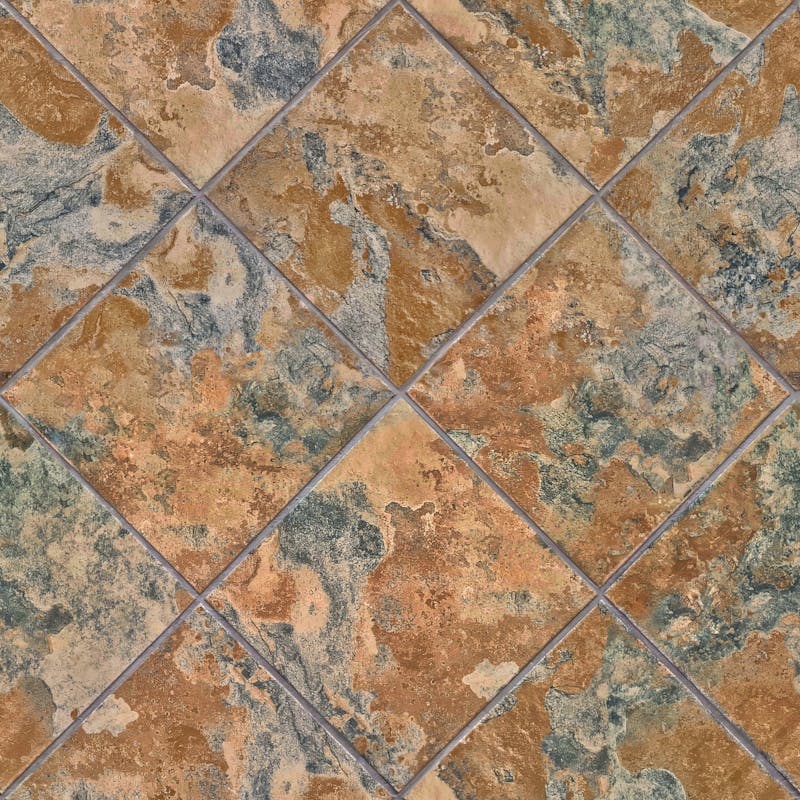
- Waste factor (%): The percentage of extra tiles to order beyond the exact square footage. The default is 10% for a straight grid lay. Use 15% for diagonal patterns and 20% for herringbone, because angled cuts produce larger offcuts that can't be reused.
The formula
The core calculation converts square feet into individual tile counts:
- Room area in square inches: Multiply length × width × 144 (there are 144 square inches in a square foot). For a 6×8 room: 6 × 8 × 144 = 6,912 sq in.
- Tile area in square inches: tile_size × tile_size. For a 12-inch tile: 12 × 12 = 144 sq in.
- Raw tile count: Divide room area by tile area. 6,912 ÷ 144 = 48 tiles—exactly matching the square footage.
- Apply waste: Multiply by (1 + waste factor). At 10%: 48 × 1.10 = 52.8 tiles.
- Round up: Ceiling function bumps 52.8 to 53 tiles.
You can't buy 0.8 of a tile, and running short mid-installation is far worse than having two extra tiles left over.
Secondary material outputs
The calculator also estimates three supporting materials based on the 48 sq ft floor area:
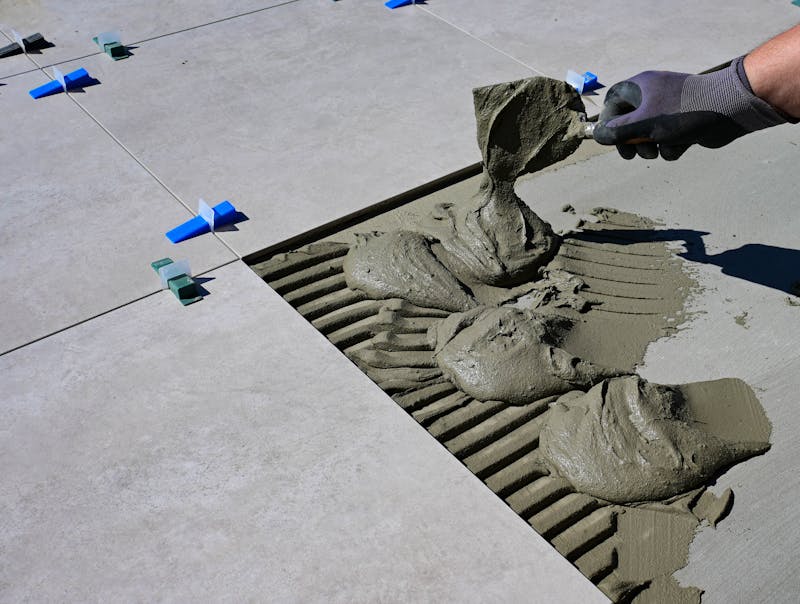
- Thinset: One 50 lb bag covers approximately 50 sq ft at standard 3/16-inch notch trowel depth. This room needs 1 bag (48 ÷ 50 = 0.96, rounded up to 1). If you're back-buttering large-format tiles or working on an uneven substrate, have a second bag on hand.
- Grout: A 25 lb bag of sanded grout covers roughly 75 sq ft for 12-inch tiles with 3/16-inch joints. One bag handles this room with room to spare.
- Cement backerboard: 3×5 ft sheets each cover 15 sq ft. Four sheets (4 × 15 = 60 sq ft) cover the 48 sq ft floor with a small overlap buffer for cutting waste.
What the output doesn't tell you
The calculator gives you quantities, not layout. Before you order tiles, sketch your layout on paper or use a chalk line to dry-fit the first row. Centering the layout avoids tiny slivers along both walls, which look bad and chip easily. In a 6-ft wide room using 12-inch tiles, you get exactly 6 full tiles across—no cuts needed on that axis, which makes this room straightforward to tile.
Also note: the formula assumes the tile size divides evenly or nearly so. Very large tiles (24×24) in small rooms produce proportionally more waste because each cut-off piece is a bigger fraction of the tile. Bump the waste factor up to 12–15% in that scenario.
Recommended materials
For a 48 sq ft mudroom floor, you're working with modest quantities—one bag of thinset, one bag of grout, and four sheets of backerboard. Buy from the same manufacturer's system when possible; grout and thinset from the same brand are formulated to work together and make warranty claims simpler if something goes wrong. The products below are standard at most tile supply and home improvement stores.
- Custom Building Products thinset mortar (50 lb) — one bag handles this room; polymer-modified formula works for floor and wall tile on backerboard or concrete
- Mapei Ultracolor Plus grout (25 lb) — single-component sanded grout with built-in stain resistance, appropriate for 3/16-inch joints on 12-in tile
- USG Durock cement board (3x5 ft) — four sheets cover the floor; screw to subfloor at 8-inch intervals and tape seams before setting tile
FAQ
How many tiles do I need for a 6x8 mudroom? Using 12-inch square tiles with a 10% waste factor, you need 53 tiles to cover a 6x8 mudroom floor. The room is 48 square feet, and the extra tiles account for cuts, breakage, and layout adjustments.
Why does the calculator round up? Tiles are sold as whole units—you can't buy half a tile. The formula uses a ceiling function, so any fractional tile gets rounded up to the next whole number. This prevents you from running short mid-installation.
What waste factor should I use for a straight lay pattern? Use 10% for a standard straight (grid) lay. That means 10 extra tiles for every 100 you'd need in a perfect cut-free room. It's enough buffer for typical cuts along walls and 2–3 broken tiles.
How much thinset do I need for a 6x8 mudroom? One 50 lb bag of thinset covers about 50 square feet, so one bag is enough for a 48 sq ft mudroom floor. Buy a second bag if you're back-buttering tiles or setting on an uneven substrate.
How much grout do I need? One 25 lb bag of grout covers roughly 75 square feet for 12-inch tiles with standard 3/16-inch joints, so one bag covers a 6x8 floor with room to spare. Larger grout joints or smaller tiles consume grout faster.
Do I need backerboard under floor tile in a mudroom? Yes, unless your subfloor is a concrete slab. Over wood subfloor, cement backerboard prevents flex that cracks grout and tile. A 6x8 mudroom requires 4 sheets of 3x5 backerboard to cover 48 sq ft.
What if I'm using a diagonal or herringbone pattern? Diagonal layouts waste more tile because edge cuts produce large triangular offcuts. Use a 15% waste factor for diagonal and 20% for herringbone. For this same 6x8 room, that bumps your tile count to 55 (15%) or 58 (20%).
Can I use a tile size other than 12 inches in this calculator? Yes—change the tile size input to any square tile dimension in inches. Smaller tiles like 4x4 produce more cuts per row and often need a higher waste factor (12–15%) even for straight lay.
Should I buy extra tiles beyond the calculator's result? Order at least one extra box from the same dye lot if the project allows. Dye lots vary, and replacement tiles bought later may not match exactly. Leftover tiles also cover future repairs.
How do I calculate tiles for an irregular mudroom shape? Split the floor into rectangles, run the calculator for each section separately, then add the tile counts together. Don't apply the waste factor twice—apply it once to the total.
Does the calculator account for grout joint width? No—grout joints are thin enough (typically 3/16 inch for 12-in tile) that their effect on tile count is negligible. At 3/16-inch joints across a 6x8 room, you'd save less than one tile, which the waste factor already absorbs.
What's the standard tile size for mudroom floors? 12x12 and 18x18 are the most common for mudrooms because they're durable, easy to clean, and keep grout joint counts manageable. Mosaic or small-format tiles work but require significantly more labor and grout.